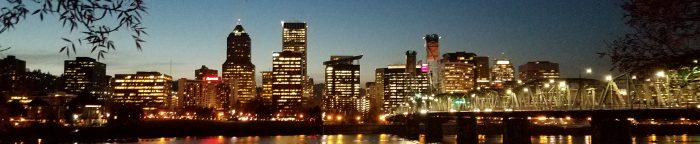
I have a lot of pictures. Too many. Some of them are no longer meaningful. Some of them are reminders of times and people perhaps best forgotten or allowed to fade into the seldom recalled past. It’s strange that most of these pictures only reach back into the relatively recent past, around 2004 or so, and most are since 2010, when I got my first smartphone. Technology allowed me to accumulate clutter in the form of images. My hard drives and cloud storage are further cluttered by copies of backups, trying to preserve something meaningful of a life lived. I spent a lot of years struggling to account for the risk my poor memory represents, and admittedly overreacted quite commonly by saving yet another backup of something I’d forgotten I’d already backed up.
…More than 50k unique images, in 2800+ folders, across multiple drives, a cloud storage service, and a NAS on our home network, amounting to about 2TB of stored images, and a few gigs of written work, and I’d lose it all if humanity lost the power grid upon which we are so reliant….

… What is it all good for? What will become of it when I am gone? Will any of it matter at all? Who even gives a fuck about a random photograph from a walk along a trail on a sunny summer day, or yet another picture of a rose?

The pictures are not the experience (or even the memory). The map is not the world. Moments are unavoidably fleeting, and each is unique like a step on a trail, or a rose. Trying to capture them all in pictures so that I “don’t lose my memories” is (rather sadly) a wasted effort. I catch myself surprised again and again when I look over old pictures. Where was that? Who is that in this picture? Where did I live then? What was I doing at that time? Oh! I remember that – I’d forgotten all about that. The details are lost, in spite of having the picture. The pictures, then, would likely benefit from somewhat stricter curation, perhaps? I have too many pictures of some given moment, and too many that I’ve kept in spite of being poorly shot, out of focus or composed badly. In some cases, the backups of backups are (hilariously) nested within each other, pointlessly taking up digital space. Very few exist in any printed format at all. Once I’m gone, more than likely, someone at some point will simply “hit delete”, and it will all be gone.
I thought about this a lot over the weekend. I spent time cleaning up my archive of art images specifically, and while I was at it, I deleted several redundant backups (after checking carefully that they were truly copies of the one valued, useful backup). I looked at pictures of moments I’d forgotten, and enjoyed the refreshed recollection. I found moments for which I’d taken far too many nearly identical pictures, and kept the one I liked the best and deleted the rest. I found pictures of times long past I’d just as soon forget about, and deleted those without concern or trauma. I found entire folders of pictures that weren’t actually my own; I’d held on to them for some other person no longer part of my life, and happily deleted those too. No rumination, tears, or heartache, it was simply time to let a bunch of this garbage go. Digital hoarding is just as objectionable and problematic as any other sort; evidence of chaos and damage. I let a lot of stuff go, and it felt good.
The strangest ones were moments captured that lacked any sort of context at all. Why had I taken that picture of that moment? It wasn’t always clear what the point was, or what was going on. A picture of a lovely flower is reliably a beautiful thing of its own, and needs no explanation, but… a picture of a thing, place, or person that isn’t well-composed or interesting or beautiful on its own? What then? What was that about? What have I forgotten – and does it even matter now?
Creating order from chaos is nearly always time well-spent. It provided helpful perspective to be reminded that there will always be things forgotten, and that not everything is worth preserving. Moments are fleeting – and it is a common characteristic of a moment. Fighting it doesn’t change that. Living the moment creates the memory. Being present is what matters, I think. I smile over my coffee, remembering the peculiar feeling of satisfaction and sanity that came of tidying up my digital archives. There’s more work to do there; there are so many pictures. I take fewer, these days, and I think about that too. I’m more likely to select a well-considered few on a particular theme, and create a wee photo book for someone (or for myself) to keep or share the memories that matter most, and provide them with some amount of context along the way. One day, perhaps when I’m quite old, those photo books will be a lasting thing I can hold in my hands and enjoy, and the digital images may be long gone and forgotten. There’s something to learn from that.
As the calendar turned toward 2023, I took a moment to let my paper journals of many years go. It was a process of “putting down baggage” and letting go of past moments and trauma, and beginning again. It was a way of reducing the clutter in my life and in my mind. It was about giving up a body of written work that had become “content without context”. As with the photographs, those journals had lived beyond their value to me. It was a strange moment to reach, and I’ve rarely regretted the choice at all. This process of sorting through old images and doing some digital “tidying up” feels quite similar, with fewer tears being shed, and less hesitation or uncertainty.
We become what we practice. If we practice clinging to images and words (or objects) without context or value, we become… hoarders. That’s not healthy. Isn’t sufficiency enough? Creating order from chaos, and keeping only what is useful and what matters most seems a much healthier practice. I sip my coffee and think my thoughts. Useful perspective.
Time to begin again. Again.

 Evening Light