Archives for category: Logic & Reason

Be kind. It’s a simple enough suggestion. It’s not expensive to be kind to people (or animals, or celebrities, or nice things you may have acquired along life’s path). Further, what good reason is there to be unkind? Oh sure, there’s a lot of wiggle room between ‘kind’ and ‘unkind’ that isn’t so clearly defined. Can we accept that both kindness and unkindness are likely active choices or processes, rather than just fumbling along doing and being? If so, and we also recognize that most of us living in the U.S. probably heard the ‘be kind’ message, the ‘play nicely’ and ‘do unto others’ messages pretty repetitively growing up…what the hell is the matter with us as adults? Have you seen the way people treat each other? The nastiness? The negativity? The vicious unending criticism of self and others? The callousness and cruelty built on foundations of self-righteous entitlement and us/them thinking? So…um…if this is our idea of ‘kindness’ or ‘good treatment’ of our fellow man…maybe we would do well to be kinder than that? Seriously.

Sorry. I’m sick with a head cold, and feeling out of sorts. Life’s day-to-day bullshit and drama are more easily tolerated, avoided, or managed more skillfully when I’m not ill. My emotional resilience is limited – and when I’m sick, my default reaction is often anger; I honestly just want to be treated gently, supported, and cared for – because I’m sick.  Of course I’m not alone in that; it’s spring, and the second significant wave of illness has hit the area (there’s ‘flu’ season, then just as spring gears up, we often see a major short-term increase in people out of office with colds).  I’m pretty sure I picked this cold up either in the office or on the commute. (Cover your coughs/sneezes, people, please!) Hell, I’m not even the only person in the household who is ill this week.

Here’s the thing about kindness that I notice most often; people aren’t doing it. A lot of people, totally not investing even the slightest effort to be kind, and instead actively investing will, intent, emotion, time, choice, and action into treating people poorly – not just any people, the people they say matter most! I regularly see or hear people being total dicks, seriously hurtful and unkind, to friends, lovers, even family. What the hell? These are people we care about? What’s the thinking there?

What does kindness really look like?

What does kindness really look like?

I’ll take a real-life example – a stranger from a recent bus ride – to illustrate. A woman gets on the bus, she is on a phone call. She is talking very loudly, and it is not possible to avoid overhearing every word of her phone call (at least her end of it). So, okay – that’s our first moment of unkindness; she seemed utterly unaware that this behavior could be disruptive or unpleasant for other passengers at all. As the call progressed I learned way to much about her, but it fuels the writing this morning. 🙂 She was angry, and venting to a friend about her resentment that her current lover expected her to shower before sex (note, this is happening late in the afternoon on a Wednesday) and observes “I just had a shower on Sunday morning, and it’s not like I’ve had sex since then!”. I’m struck by her resentment… we live in a pretty hygiene conscious society, and my own perspective in this context was to feel just a little shocked that she’d admit to ‘being so nasty’. lol (I am aware that different standards exist in other cultures, and that the frequency of bathing in other circumstances could reasonably be quite different.) She goes on from there to rant about his many other lovers that she is sure exist, and all manner of vengeance she is inclined to enact due to the existence of these other lovers. The conversation continues. In the space of a few minutes she rather self-righteously exclaims a variety of fairly criminal acts to be within reason for her, in her circumstances: stealing her lovers phone to go through his address book without his consent, contacting people she doesn’t know to say derogatory things about him (specifically untrue, and she’s quite clear about that, too), physical violence against her lover or his potential lovers, arson, homicide, assault, gas-lighting, stalking… and all delivered in a tone of utter self-righteous entitlement, and clear anticipation that her position is rationally supportable and justified. It was actually pretty  horrifying to listen to. I could not help but wonder why anyone would have sex with someone who would say such things about them, or potentially behave in any of those ways! She directed an equal measure of implied invective toward herself stating assumptions about other women with similar characteristics reflecting her self-defined short-comings, and the imagined advantages held by women of others sorts. (She was very concerned about the weight of her lovers potential paramours, and made it clear that ‘skinny girls don’t have these problems’ – which goes well beyond any acceptable lack of social awareness for an adult, I think.)

Am I gossiping? I hope not… I am also doing my best to avoid being (or sounding) judgmental… I’m trying to get around to making this point; be kind. Treat yourself and others well. Sure – but if you don’t understand that being loud on a cell phone on the bus is unkind to other passengers, will you know not to do it? If I don’t understand that making threats of violence when I am angry is unkind to people for whom that level of acting out causes anxiety, will I know to work on handling my volatility differently? If we live in a culture where we regularly see people treated as property, will we understand that people are not property – and that assault and arson are not appropriate responses to another human beings sexual decision-making? That it isn’t okay to kill people because we’re angry with them? The woman on the bus very clearly believed in her cause, and that she had been wronged, and that any action she might take to redress that wrong would be acceptable – who taught her that? Who taught her that her lover becomes her property because they have a sexual relationship? Who taught her that someone else’s needs are of less importance than her own? It really got me thinking about me – about what I do or don’t expect from people, and what I find appropriate day-to-day – and why. I can do better, day-to-day, to be kind. I can’t find any reason not to.

Many years ago I was admittedly not particularly concerned about kindness. I didn’t ‘get it’. (Righteous rage doesn’t make much room for compassion or kindness, honestly.) I think about kindness a lot now. I am not able to make a good argument against being kind – but I see a lot of ‘traps’ along my journey; it is tempting to rationalize very good sounding reasons to exclude one person or another from being treated with kindness. It isn’t easy to maintain kindness toward others when I’m having a difficult moment, or feel angry at that person I am tempted to be unkind towards. It is sometimes difficult to be skillful at not permitting myself to be taken advantage of or treated badly in the face of kindness; I know I have much to learn, and I also know that kindness is possible without sacrificing good self-treatment, consideration, and self-respect, too.  Life’s curriculum is rich, complex – and rewarding. I am still a student. I am still a beginner. “I am only an egg.”

What does it take to build a beautiful life?

What does it take to build a beautiful life?

Today is a good day to be kind. It’s also a good day to be kinder than that. It’s a good day to take being the woman I most want to be to another level. We are each having our own experience; a kind moment might be all that other person needs to thrive. It’s a good day to be the change I wish to see in the world.
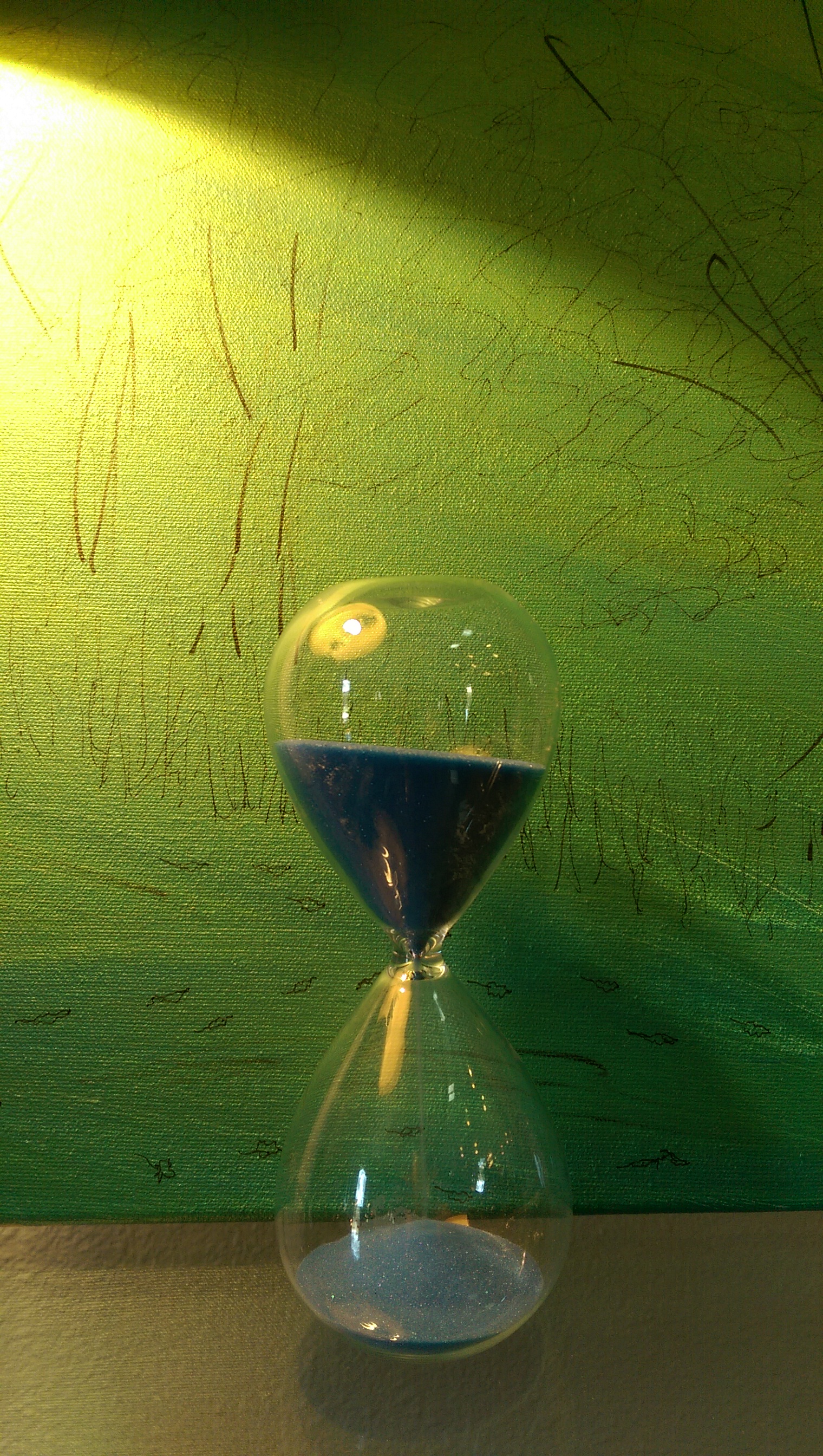
Sometimes when I write I begin with the idea – a sort of trajectory of thought exists before I get started. Other days, like this morning, I dash off a title first, and realize it has meaning for me; in this case it stalls me for a moment, because it’s a title I ‘don’t want to waste’. Title-first writing works just fine for me, and having a meaningful title to begin with is fine; I build the trajectory of thought on the title. 🙂

There are a lot of articles here and there these days about ‘being present’, ‘being engaged’, ‘good communication’, really all manner of relationship building articles exist on a worthy spectrum of relationship types, styles, and purposes. Most of them include at least an honorable mention for ‘being engaged’ and ‘communication’. There’s no coincidence there, and it’s pretty obvious day-to-day that human beings are social primates with fairly clear hierarchies, most of the time. This stuff must be challenging, though, for so much to be written about it… or… is it?

Taking a few moments to consider an idea.

Taking a few moments to consider an idea.

Sometimes the most valued practices are not difficult to do, only challenging to practice reliably. I find the idea of ‘being engaged’ with another person, during a shared interaction to be that sort of thing; engaging another person on a topic of shared interest isn’t hard to do; practicing the skills that result in doing it well is another matter. It gets more complicated for me in small groups. Engaging one person lets simple things like eye contact create that intimate shared space with one other person… but what if there are two, three, four or more people (but not quite a crowd, or audience)? What then? Suddenly, eye contact focused on just that one person seems to exclude the others in the group. Powerfully positive interactions with others, of the sort that reliably support, nurture, and encourage require practice (what doesn’t?). Balancing attention and a sense of being engaged, and approachable, across a small group is its own thing.

I’ve noticed some things about being ‘engaged’:

  • People enjoy and appreciate being heard; this requires attentive, active listening – which means stop talking, and stop considering what to say next, and just listen.
  • People enjoy connection, intimacy, kindness, and encouragement, bringing things back to ‘being heard’, then requiring a response that is relevant, and shows consideration.
  • Eye contact reliably creates a connection – staring intently into someone’s eyes in a fixed unyielding way is not that. lol
  • When I am focused on what I want to say, I am not listening to someone else’s words, and they are not being heard.
  • Intimacy in conversation is personal, connected, and engaged – and not exclusive to words being exchanged continuously; being there is sometimes sufficient.
  • People are emotional beings far more than they are rational beings, but generally see themselves (and each other) as rational over emotional; this has the potential to create conflict, simply due to mismatched expectations of outcome.
  • We are each having our own experience; invalidating someone’s experience because it differs from our own is a short cut to terminating intimacy and engagement, and generally ending the interaction with hurt feelings, anger, frustration, or distance.
  • Interrupting people when they are talking is another short cut to terminating intimacy and engagement, and results in that person potentially feeling they lack value in the relationship.
    • And what a complicated and painful sideshow this one becomes with a disinhibiting brain injury – trust me on this. 😦
  • Mindfulness practices and actively being engaged – practicing putting myself ‘on pause’ to really hear someone else – take continuous practice, application of will and intention, and readiness to learn and improve and listen and practice… and repeat; and are totally worth the payout in better relationships.
  • The world does not revolve around me, and pursuing ‘being right’ over ‘being there’ results in being right more often… alone. LOL
  • Almost anything can be practiced, with the result of changed behavior, thinking, and implicit memory over time; it is important to choose wisely what we practice each day.

So, there it is. A few things I’ve observed about ‘the rules of engagement’ among human primates. I’m not expert… but it looks pretty simple from this vantage point. Today I will improve my experience by listening attentively without interrupting (practicing, practicing…), and by making eye contact with each person I am sharing conversation with. Today I will be mindful that we are each having our own experience, and that ‘the opposite of what I know is also true’, and avoid invalidating someone’s experience with dismissive or disagreeable remarks – or inattention. (Mockery is straight out; I don’t do that, it’s simply rude and unkind.) Today, as with so many days, practicing the practices is the investment I count on paying off over time.

What love looks like this morning.

What love looks like this morning.

If practice makes perfect…what are you perfecting today?

Well, or maybe not – especially if you haven’t asked, or I haven’t told you, or we don’t spend much time together…right? Assumptions tend to result in people having relationships and interactions with rather different people than the people involved are thinking they are, themselves. Like a lot of thinking, it isn’t ‘real’; it’s all completely made up. When I approached turning 50, I made a choice to take a much more genuine approach to my experience, generally, and I’m glad I did. It hasn’t been the easiest change to make; I can adjust my own thinking, and refrain from making assumptions, but I can’t do a damned thing about the thinking, or assumptions, of others – not even to wake them up to the rather significant changes in my approach to my own life and experience. I will be taking The Four Agreements with me out into the trees. It seems a good time to reread it.

Pop songs make so much of life, love, and sex sound incredibly easy. I don’t even find ‘being easy’ particularly easy in practice. It’s fortunately more amusing and bewildering than anything else, most of the time.

Do you know what I like? Even if you know me personally (and some of you do), even if you are an intimate associate or partner, what chance is there that you actually know me sufficiently well that you know what I like – right now, after a couple of years of intense growth and change, without actually asking me? Experience tells me that it is quite rare to be so well-known as a human being, even by the most connected and intimate associates, even after years of interacting, without at least some exchange of explicit communication.  To expect to be known so well in the midst of change, or at the end of a period of profound growth, doesn’t sound likely at all, and seems likely to cause all kinds of suffering.

I also notice that it is very uncommon for people who already know each other to make much effort to update their knowledge and expectations of their friends, lovers, or partners identities, preferences, aesthetic; the details that express the heart of soul of who we are. That seems very strange. I know assumptions have survival value – or we probably wouldn’t have developed to make so many of them – but they are not a particularly useful intimacy building tool… and yet, we cling to them, argue to defend our assumptions – even in the face of actual information.

Do you know what I like? More to the point – that person walking beside you in life, how about that person – do you know what they like? Do you listen when they talk about it? Are you interested? Does it matter to you? And you – do you feel heard? Recognized? Valued? Encouraged in your endeavors? Do you face holidays and gift occasions eager, and content in the knowledge that you are known, and understood? That what matters to you is significant in their experience because it does matter to you? Do you still look love in the eyes eagerly wanting to know more?

Oh, Baby, you knoooow what I like!

Oh, Baby, you knoooow what I like!

It’s a lovely gentle Saturday, spent on art, lattes, meditation, and some words – and questions. Today is a good day for questions. Today is a good day for presence. Today is a good day to be genuinely this woman I am; who else could do it better than I can? Today is a good day to change the world.

Yesterday was a pretty good day. The evening, too, was gentle and pleasant. My overall level of pain felt manageable, and by the end of the day my anxiety had almost entirely dissipated. I enjoyed the walk between the office and the train station, taking time to appreciate the subtle colors of the cloudy sky.

Evening sky on a strangely warm winter evening.

Evening sky on a strangely warm winter evening.

Initially, it seemed quite nice to hear from a faraway old friend on such a mellow evening. Life’s curriculum isn’t always an obvious lesson at the outset. My boundaries were quickly tested with OPD (Other People’s Drama), and firmly reinforcing those boundaries resulted in conversational strategies I find objectionable: manipulation, wild assumptions used as ‘proof’, personal attacks, assertions regarding the thoughts or intentions of others unsupported by confirmation, and even deceit – followed up by a demand that I involve myself in this friend’s personal drama by taking actions on their behalf, in the context of circumstances I am not part of, have no exposure to, and do not care to participate in, regardless. I ended the conversation when it was clear it was not a frank one; hidden agendas irritate me.

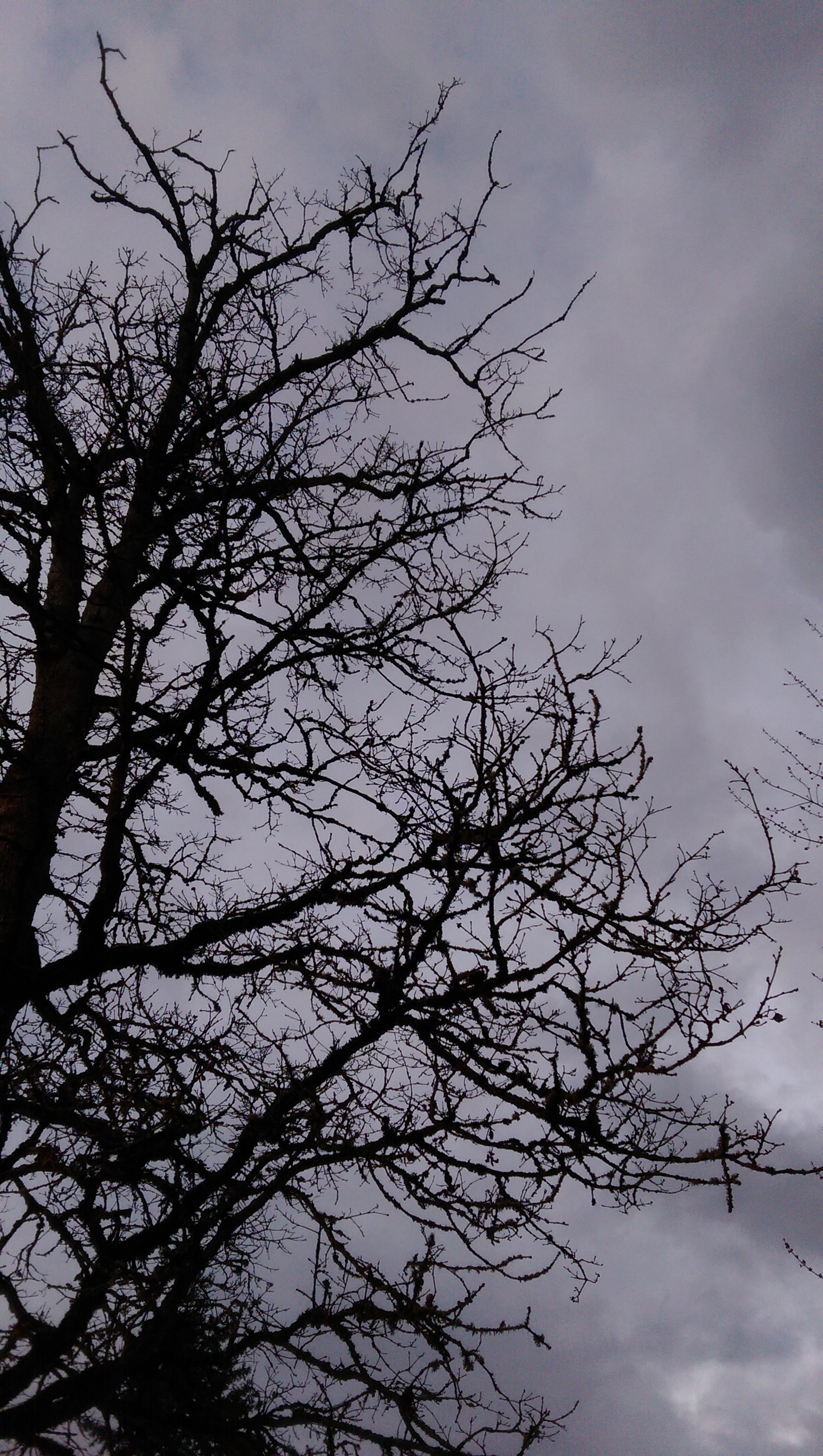
Like a tree silhouetted against the sky, I see that I am no longer who I once was.

Like a tree silhouetted against the sky, I see who I am now.

I found it relatively easy not to become involved. Setting those boundaries didn’t feel as difficult as it once might have. I didn’t get sucked in – although I am contemplating the conversation, itself, even now (learning from it matters that much). Considering the potential end of a friendship doesn’t feel very comfortable – but I am not to be used, taken advantage of, or made into a tool or weapon for someone else’s gain, without my explicit consent and willingness to participate. I would have thought that was an obvious thing – but to be fair, it wasn’t obvious ‘before’, so why assume it is now?

I didn’t go on the offensive with my friend in conversation, but I did ask clarifying questions about the assumptions being made, and point out where life experience (my own) suggested specific assumptions must be verified, rather than acted upon, because they didn’t seem rational, or likely to be correct. Admittedly, pointing out logical fallacies isn’t always the most tactful choice in conversation, but it can be done gently and with reasonable good-nature and a positive approach, to further the conversation with greater clarity – and a disinhibiting TBI makes it damned difficult not to point an obvious logical fallacy, at least for me. When clarifying questions result in personal attacks, I know it’s time to set a firm boundary and walk away.

Perspective matters; we are each having our own experience.

Perspective matters; we are each having our own experience.

Now what? Well, now I have more information than I wanted to about this friend’s circumstances, behavior, and thinking on some sensitive topics – about which we clearly have very different values and understanding. Now I am aware that this friend may be more interested in how I can be useful, than how I’m doing these days. I found the conversation so off-putting in both content and outcome, that I am wondering what the state of this friendship really is…and whether it is actually a friendship, at all.  When we change and grow our friends don’t always come along on the journey; I still find that very hard to take, sometimes.

Sometimes there's more to it than circumstances; we choose much of our experience.

There’s more to it than circumstances; we choose so much of our experience.

It’s a lovely morning, and a new day. I slept pretty well, and woke feeling rested. No anxiety this morning, which is always a nice thing. Always. My coffee cup is hot in my hands, a pleasant sensation in the morning chill. The house is quiet. The weekend is only hours away. Today is a good day to accept change, and turn the page on life’s text-book to the next lesson.


The time comes when practices and tools and new skills aren’t just convenient, or a nice quality of life improvement, or appreciated growth and self-improvement; they aren’t about that, and never were. The time comes, sooner or later, almost inevitably, when practices, tools, and skills are what I am counting on to maintain not just balance, or contentment, or comfort dealing with others – they save me from myself, they put boundaries on a surreal recurring waking nightmare that is the result of my PTSD flaring up. Over time, when the time comes, they become something I can (hopefully) count on to give me a moment to change a reaction to a response, when my PTSD and my disinhibiting brain injury cross paths in a moment of stress.

The time will come…does come…when I will find myself facing me, facing a challenge – that much I know, from a lifetime of experience; “this too shall pass” applies equally to the moments of calm and joy, as it applies to the moments of panic, and terror.

These practices I write so much about, talk so much about, and frankly practice so much for many minutes of this finite mortal life are not just conveniences or cool things to do – they saved my life. This morning they proved their worth, and I proved that I am not wasting my time learning to practice the practices.

There’s not much more to say about this morning, in any specific way. I have PTSD. My symptoms are sometimes triggered by very specific domestic scenarios; one of the lasting effects of domestic violence decades ago (so don’t act violently toward people you say you love, okay?). I also have a brain injury that severely limits the ‘inhibiting’ and regulatory executive functions that most people can count on to avoid saying the wrong thing, or acting on impulse – or releasing the full visceral power of their emotional experience in the moment. This morning I found myself disadvantaged by those characteristics of my experience, and leaning heavily on new practices, new understandings of mind and practical emotional neuroscience, and the love and good-heartedness of my traveling partner, who handled things – and me – so tenderly. This morning, it was enough. (Huge win there, frankly.) The hours of study, meditation, practicing good self-care, more meditation, getting more exercise, taking better care of my physical health, and still more meditation, the hiking, the talk therapy, learning cognitive practices that improve implicit memory, more meditation still…and the miles and miles of walking, and being; every bit of it is worth the effort, the life-force spent, the time taken just to have it pay off this one time, this morning.

You know, it isn’t even about ‘proof of concept’ in any especially grown up way – it’s more like the scene in Harry Potter “Prisoner of Azkaban” when Harry realizes he can cast the Patronus charm – because he already had (nothing like time travel to get a leg up on the future, I guess…). I am hopeful I can go forward more easily able to take advantage of new practices to manage my PTSD and my TBI…because this morning, I did. Oh, wait…That’s exactly what ‘proof of concept’ actually is. LOL Go, Brain. Proof of concept…but ‘in a Harry Potter way’; I may never actually be a proper grown up. 🙂

Sometimes this can feel a very lonely journey; we are not alone. <3 Detail of "Communion" 24" x 36" acrylic on canvas w/ceramic, 2011

Sometimes this can feel a very lonely journey; we are not alone. ❤
Detail of “Communion” 24″ x 36″ acrylic on canvas w/ceramic, 2011

So…it’s another day to treat myself and others well, and a good day to stay aware of how easily a comfortable seeming recovery from a bad moment can go awry without continuing to practice the practices. Today is a good day for self-compassion, and acceptance that these are called ‘invisible injuries’ for a reason. Today is a good day to trust love. Today is a good day to enjoy a better outcome, and to say ‘thank you’ – because better outcomes are rarely a solo endeavor.