Archives for posts with tag: mindfulness

It’s a Monday morning. It’s a slow, somewhat sluggish, rather disorganized Monday morning. I’ve been up for nearly an hour and only now sitting down with coffee in hand, and somehow having managed to show and meditate, and even get the dishes started, but… my consciousness is foggy, and I am not at my best. I woke during the night more than once with a stuffy head and dry throat. The dry throat from snoring, which is likely what actually woke me, but also probably worsened by the stuffy head. It doesn’t feel like a head-cold, yet, and I muddle through the morning.

I’m okay with the slow morning; I have all the time I need to appreciate the excellent weekend that just finished. End to end it was just an exceptional weekend of extraordinary contentment and joy. More than enough, and built on basics like ‘perspective’, ’emotional self-sufficiency’, ‘good self-care’, ‘awareness’, ‘listening deeply’ – and all the verbs that each of those implies.

I had not been here before, but it was not an uncommon experience to have.

I had not been here before, but it was not an uncommon experience to have.

My walk yesterday lead me through the neighborhood down unfamiliar streets, past houses and yards and families. I found it interesting to see differences in the qualities of order and chaos from home to home. There were homes with untidy winter gardens awaiting spring, the elaborate trellises, supports, and remains of summer past telling a tale of sunshine, labor, and good food. Other homes had only a fierce green expanse of utterly perfect lawn from curb to stoop – artificial lawn. Still others with the disordered arrangement of various unfinished projects communicating lost momentum, despair, lack of funds, lack of will, lack of hope… It isn’t always easy to finish what we begin. Beginnings often come in a moment of hope, embraced change, or good fortune; impermanence quickly ends them unfinished without commitment – and verbs. We seem to have taught ourselves too well how ‘hard’ things can be, and it has become an easy excuse to move on from one project to another, without completion. Me, too. Still human.
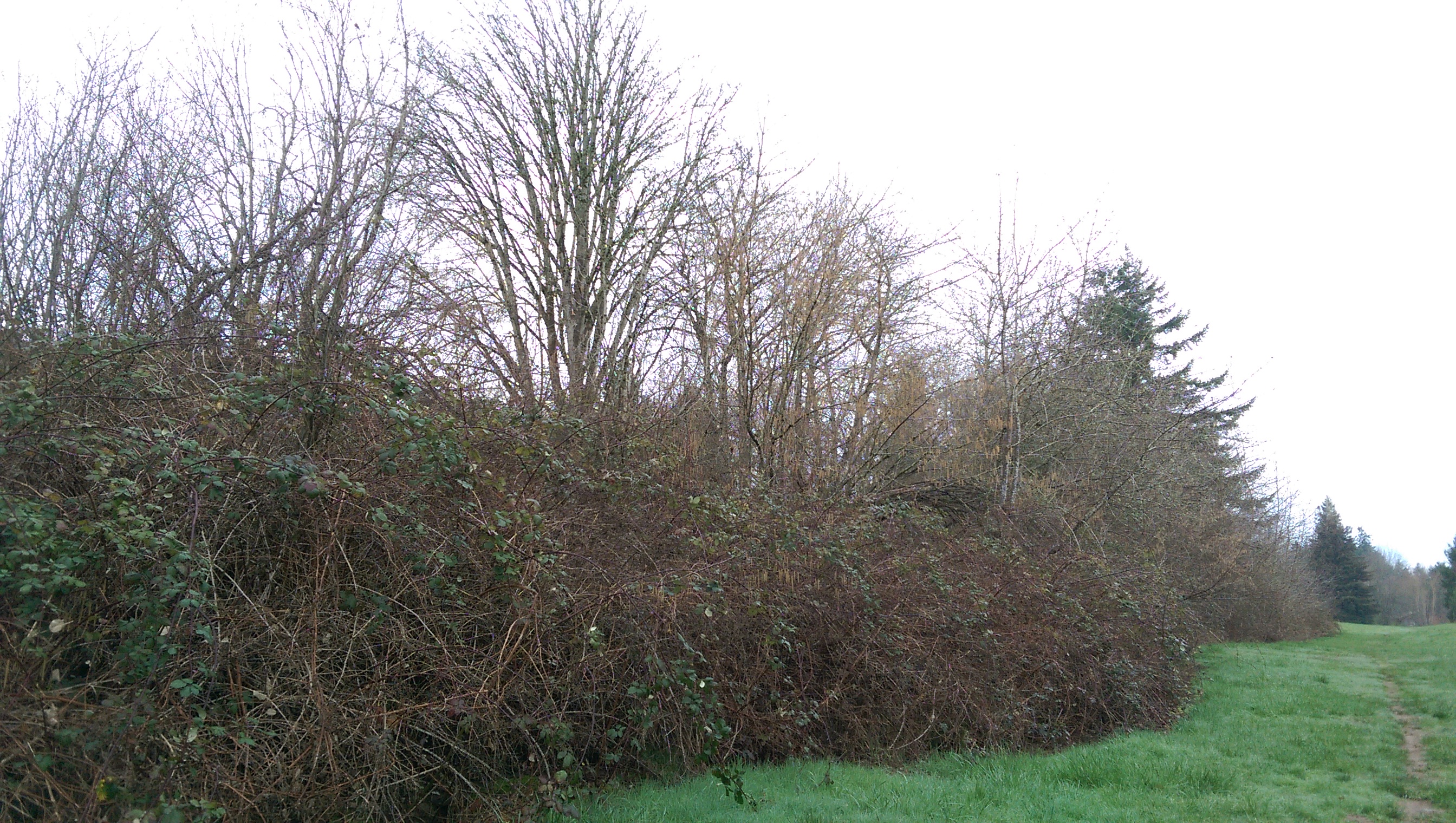
Impermanence - a blackberry hedge that will be removed when the road goes through.

Impermanence – a blackberry hedge that will be removed when the road goes through.

I arrived home from my walk feeling uplifted (fresh air, sunshine, and arriving home ahead of the rain) and the first thing my eyes landed on was the assortment of paintings yet to hang. My errands Saturday afternoon included getting the remaining pieces I plan to hang in the dining space framed. I had been on the edge of allowing the desire to see more of the work I love best well-framed stop me from hanging unframed work ‘in the meantime’ (‘meantimes’ can grow very long left unattended, speaking from experience). I reconsidered and hung work in my bedroom that is not intended to be framed; the two canvases I’d selected for either side of the bed were just waiting to be hung, and no reason to delay. My comfort and delight at the more finished feel of the space encouraged me further, and I hung work in the hallway for consideration, enjoying some leisurely minutes swapping this for that, moving one here, or there, until the hallway also felt ‘finished’ – although these works will need to come down one-by-one over the course of the year for their own turn at the framer’s. I thought no more of it, yesterday, once I’d done with it.

I woke this morning, sluggish to be sure, and when I stepped from my bedroom into the hallway myΒ smile tore across my face unexpectedly in a moment of unreserved childlike joy – “home!” is what the smile says, without words. It matters that much to see my work hanging in my space. I listen to the rain fall, sip my coffee, and feel wrapped in comfort and contentment – and some portion of that is built on these small choices to make this space visually comfortable, based on what I enjoy myself. “Home” and comfort go so far beyond a thermostat setting. Self-knowledge and awareness are important character qualities to cultivate; tubes of paint willy-nilly in apparent disorder on the drop cloth at the foot of my easel don’t disturb or distress me, and there’s no reason to fuss with them. A tissue carelessly dropped next to a trash can is a very different thing; I pick it up in passing and return order. Dishes in the sink are annoying to wake up to, and I generally load the dishwasher before bed to ensure I don’t wake up to dirty dishes; good self-care suggests I start the dishwasher in the morning before I leave for work, to avoid having to listen to the machine run (which can aggravate my tinnitus and make me more noise sensitive). Small details that ‘don’t matter’ are often the details that matter most [to me].

One peculiar thing about being a human primate is how difficult it is to share ‘what works’ – because there’s no reason, really, to suppose it will work universally, at all. We are each having our own experience. On the other hand… we’re the same species, living on just this one planet (so far, and as far as we know), and we have so much in common that we have a word for it: ‘common’. Funny how commonly we feel so all alone in our experience, isn’t it? Reason suggests it is rarely the ‘true truth’ about our circumstances – or even how those circumstances feel to us as an individual in the moment. Odd that. I am learning the value of listening deeply for closing that gap in mutual understanding, and it is currently the most important relatively new practice I am practicing. I find the best simple descriptions for practices associated with listening deeply in Thich Nhat Hanh’s “How to Love” and in “The Happiness Trap” by Russ Harris – they’re both linked on my reading list. πŸ™‚ It often seems as though the heart and soul of much of the strife in the world is a lack of real listening to one another, with a lack of compassion for our fellows nipping at it’s heels for first place in the race to be the most insensitive human being possible. We could so easily choose to care, instead. I wonder what that would be like for the world – to be cared for, I mean.

The morning moves on, so do I. Monday. A rainy Monday, and one on which I will come home to a space that has had strangers in it, making changes; I moved into the unit before the new closet doors were hung, and those have arrived and will be installed today while I am at work. I feel a little queasy thinking about stray humans without supervision moving through my space with paintings on the walls, and stacked here and there, and breakables out… where they could so easily be broken. I take a deep breath and let the fear fall away. It’s not always easy to trust. Another breath, and a reminder to myself how careful the landlady has been with such, thus far. Another breath, and I recall how many more times – seriously – someone living with me, meaning well, and knowing the value of the things around us, has broken something, damaged something, or very nearly so; it is far far more often than any workman has ever put my breakables or art at risk. and sometimes actually done willfully in anger. I feel myself relax; workers on the premises are not a legitimate cause for concern, they are being paid, and can be relied upon to behave as paid professionals in my space.

Today is a good day to be present in this moment, doing what I am doing right now – whatever that is. Today is a good day to be appreciative for what works, and taking advantage of the learning opportunity when something doesn’t work as well. Today is a good day to take care of me, with the tenderness and compassion with which I would care for anyone dear to me. Today is a good day to listen deeply.


It’s Friday, early;

writing must wait for later.

I smile and walk on.

I'd rather be sleeping...

I’d rather be sleeping…

I woke early this morning. It was with some effort that I fell asleep last night. Between those events I slept well and deeply, and I am appreciative of the good rest more than I am moved in a Β negative way by the lack of sleeping in. My thoughts at the end of yesterday picked up where they left off this morning, with the fragment of an idea worth further contemplation; prohibition, ‘being’ positive or negative, and the many layers of rules, rule breaking, fault-finding and reinforcement on which so much human experience is built.

So many times my traveling partner and I have spoken about words, language, and communication, and it is not uncommon that my use of ‘phrasing things in the negative’ comes up as a linguistic quirk with some potential to frame more of my experience in negative terms (potentially further influencing my thinking and decision-making). “How are you doing?” might be the question. “Not bad.” I might say in response. It’s pretty easy to see the use of negative there – did you notice it a sentence earlier on when I observed that this use of language is ‘not uncommon’ for me? It’s a subtle thing sometimes. I don’t know with any certainty whether it is of genuine significance in any way but one; it causes my traveling partner some stress. I don’t know why, but it is a linguistic form that he is uncomfortable with, and this gets me thinking about ‘positive’ and ‘negative’ people – human beings for whom a clear state of one versus the other seems to be prominent in the day-to-day interactions we share, as a defining characteristic. We all choose, but the choices are not always obvious in the moment – or easy to change once we’ve built habitual uses of language and behavior (whether toward others or ourselves), and then there’s the humor thing; people often behave in a specific fashion for a laugh. That can be pretty confusing sometimes. Sarcasm as humor isn’t accessible for every ear; I am a bit ‘tone deaf’ in the sarcasm spectrum – particularly in text – and make an effort to avoid using it, myselfΒ (somewhat unsuccessfully if I am feeling angry or frustrated).

I think about a former colleague so negative in day-to-day demeanor that sometimes working with him was enough to cause my PTSD to flare up, forcing me to just go home to be out of that environment. Strangely, he’s a friend, and a really sharp guy, educated and an astute thinker – all but for his practice of pushing every perception, every observation, and every experience through an intensely negative filter and the resulting depression, resentment, cynicism, bitterness and expressions of futility are a huge downer. Finding out later that he isn’t actually saturated in that experience, but communicating in that fashion as a form of self-expression much of the time was actually really disturbing for me; he seemed unaware that it affected others.

I am often unaware of how my use of language affects others. I am having my own experience. (Aren’t we all?) Holding this thought in my awareness I understand that life’s many prohibitions reach me through many voices over a lifetime – voices that may not be aware of how the words, tone, and implications of each prohibition may affect me. I reached adulthood understanding that the choices in life were now entirely my own, but without any understanding of what that means, or how deeply I might have to dig to make the choices that would matter the most. This morning I sip my coffee listening to jazz, and wondering how to ‘end prohibition’ in my experience and live more positively – not just on the surface, with my words and actions in the most mindful moments, but also in those dark corners where damage lurks, replacing the negatives with positives.

Have you really thought about this, yourself? How many prohibitions are you living with? I think that over for myself and make a quick list… that becomes a majorly long list very quickly. Some of the items on that list are mundane, some are no longer practical or relevant, and some just sound… mean. Where did this bullshit come from? Don’t interrupt. Don’t fidget. Don’t swear so much. Don’t walk away while I’m talking to you. Don’t leave dishes in the sink. Don’t leave papers piled up everywhere. Don’t leave paint out open. Don’t leave half full coffee cups lying around. Don’t leave that door open. Don’t be late. Don’t be early. Don’t cry. Don’t yell. Don’t talk so much. Don’t let the laundry pile up. Don’t watch so much tv. Don’t spend all day in your room. Don’t ignore me while I am talking to you. Don’t procrastinate. Don’t sigh so much. Don’t play games with me. Don’t forget this. Don’t talk about that. Don’t miss the bus. Don’t eat with your elbows on the table. Don’t flop down on the sofa. … And don’t expect help sorting all this bullshit out later. For real.

The prohibitions of childhood become, overtime, manners and good conduct within social norms – or baggage. Some of the prohibitions we grow up with make a lot of sense; ‘don’t put your hand on the hot burner of the stove’ is one example of a very practical admonishment likely to save one a trip to the ER. On the other hand, ‘don’t talk so much’ just… hurts. It’s literally not ever stopped hurting, and every time someone dear to me shuts me down in conversation the message I hear is ‘your words don’t matter to me’, which sounds a lot like ‘you don’t matter to me’ in later moments of isolation or despair. We’ve built a culture that is both insensitive to the power of words, and insensitive to the delicacy of our human hearts; we’re fucking mean sometimes, to ourselves and to each other. Similarly; my lack of sensitivity with regard to how much I may be talking is equally at risk of cutting someone dear to me off from being able to express themselves, to converse with me, or may prevent them feeling heard. This awareness alerts me that it’s a more complicated puzzle – and I find myself wondering at the ‘why is this on my mind right now’ piece a bit distractedly.

Can all of life’s prohibitions be framed up in positive terms? Some surely can – ‘don’t leave dishes in the sink’ can be compiled with a whole bunch of detailed small prohibitions about housekeeping and life basics and pinned on the fridge with a magnet as ‘Live Beautifully’ – nicely positive. Will it remind me to take out the trash and recycling, vacuum, and do the dishes? So far, it generally does – because those are my choices, consistent with my own understanding of ‘living beautifully’. Clearly – your results may vary.

On reflection, I struggle to fit all of the prohibitions lurking in my background ‘programming’ into positive terms – some don’t seem to want to fit. I turn ‘don’t cry’ over in my head… I feel the lifetime of frustration and dismissal begin to rise as visceral emotions; hard to manage comfortably. I breathe and let that one go for now. I look at ‘don’t talk so much’, ‘don’t just keep talking’, and the correlated criticisms phrased as irritated questions like ‘are you every going to shut up?’ ‘are you even going to take a breath?’ and ‘can I just get a word in edgewise?’ – legitimate expressions of frustration heard with fair frequency over the years. Funny thing about this one; I rarely hear these expressed in this way from colleagues or strangers (because sociallyΒ it’s rude) but still occasionally hear similar from loved ones. The words linger in my programming as remnants from other times in life, other relationships. My traveling partner is the most likely human in my experience at this time in life to express frustration with the stream of consciousness flow of near continuous talk – it stops being a conversation, realistically, if he is not also talking. He is eager to enjoy conversation with me. I don’t exactly make it easy with this injury; the executive functions responsible for managing social cues that drive the give and take of conversation are affected. I am learning to listen deeply, and engaging in listening as a verb of its own, to improve my ability to control rapid speech, and continuous talking. There are verbs involved. It takes considerable practice. I still mostly suck at it unless I am very mindful indeed; my results vary. I am a student. Listening deeply is a nice positive approach to counter the damaging prohibitions directed toward my flow of speech. Incremental change over time may be a thing – sometimes it is frustratingly slow. πŸ™‚

I finish my first coffee of a lovely Saturday morning feeling like a kid that figured out a new math problem all on her own – a little triumphant, a little eager to go further, a lot humbled by all that I do not know. Making aΒ connection between the subtle negatives of language, and the ‘programmed’ prohibitions still complicating my experience day-to-day seems useful. If my thinking is filled with prohibitions, rather than encouragements, it’s no wonder I use so much negative language; I’m overly focused on not doing, and not thinking, and eager to confirm that I am not… something. It is, at least, worthy of further consideration generally.

I can’t say I’m traveling this path without a map. I am reading a very good book that nudges my thinking in new directions, positively, and I’ve chosen to set Proust aside briefly to focus on it, finish it, and wring from it all the inspired thinking I am able to. “After Buddhism: Rethinking the Dharma for a Secular Age” is definitely making my reading list. From the book:

Dharma practice exposes the limits of human thought and language when we are confronted with the puzzle of being here at all. All people, whether devoutly religious or avowedly secular, share this sense of unknowing, wonder, and perplexity. That is where we all begin.”

How many times might I begin again?

How many times might I begin again?

Moving is a process that is pretty much entirely all about changes. Sometimes moving is is also associated with a lot of ‘forced choices’; things decided upon in the moment that are either imposed by someone else’s decision-making, or by details in the circumstances that seem to limit the available options. (I say ‘seem to’ because sometimes I find myself making a choice based on it being ‘the only thing I can do’, which while it does immediately ensure that my perspective is that there is ‘no choice’, in reality ‘no choice’ is a rare condition.)

Last night I slept deeply and well in the old apartment, even crashing quite early, utterly exhausted. I woke earlier than my usual waking time, and although I was contentedly committed to returning to sleep for as long as I needed to rest, the attempt was wasted. I was awake. My thought, when I crashed out last night, was that I would wake later – probably after 7:00 am (the hour at which the community ‘quiet hours’ end). The intention was to immediately finish loading up the van and drive it down the hill, unload it, then have my morning coffee. I woke at 4:00 am, much too early to futz around with moving things, and a noisy truck. People were definitely still sleeping. (Yes, that matters to me; Consideration is Β one of my Big 5 relationship values – are not my neighbors also sharing a relationship with me? That of neighbor?) I decided to dress, and take the frozen food down to the new apartment, and have my coffee while I watch the dawn slowly unfold over the park, from the new view.

The darkness before dawn is dotted with bright  lights.

The darkness before dawn is dotted with bright lights.

What a lovely morning, and what an excellent bit of decision-making! I returned to the old apartment some time later – after coffee number two, and 7:00 am. The rainy morning has prolonged the early morning gray misty skies, and dim lighting that might put my footing at risk. I choose a healthy breakfast, a few minutes at the keyboard, and no rush; I am up so much earlier than I planned that I am still entirely ‘on plan’ for the moving bits without rushing at all.

The choices I am making with regard to handling the move in this peculiarly slow deliberate way is also resulting in feeling more immediately moved in at the place. This morning felt right;Β I had my morning coffee ‘at home’ – and that was there, at the new place, sitting on the love seat in the living room, watching the sky lighten beyond the treeline on the other side of the park. Meditation. Yoga. A shower. I make no promises to myself about how this is going; it is enough to experience it.

A metaphor for change: the mantle shelf covered with treasured things that will not remain in this location. Sometimes the choices and changes are momentary.

A metaphor for impermanence: the mantle shelf covered with treasured things, safer on the shelf than on the floor, they will not be here long.

Isn’t that still what this is all about? Choices…changes… enough? πŸ™‚

Sipping my coffee on a quiet comfortable morning, and I am musing at lessons learned on other days, in other moments. I am thinking about the crackling fire in the fireplace that kept me smiling much of the weekend. I am thinking about a camping trip last March in which I experienced a real moment of dread and anxiety – because I wasn’t easily able to make a fire. I am thinking about the distance I have traveled between those events, and what it has taken to grow from one to the other.

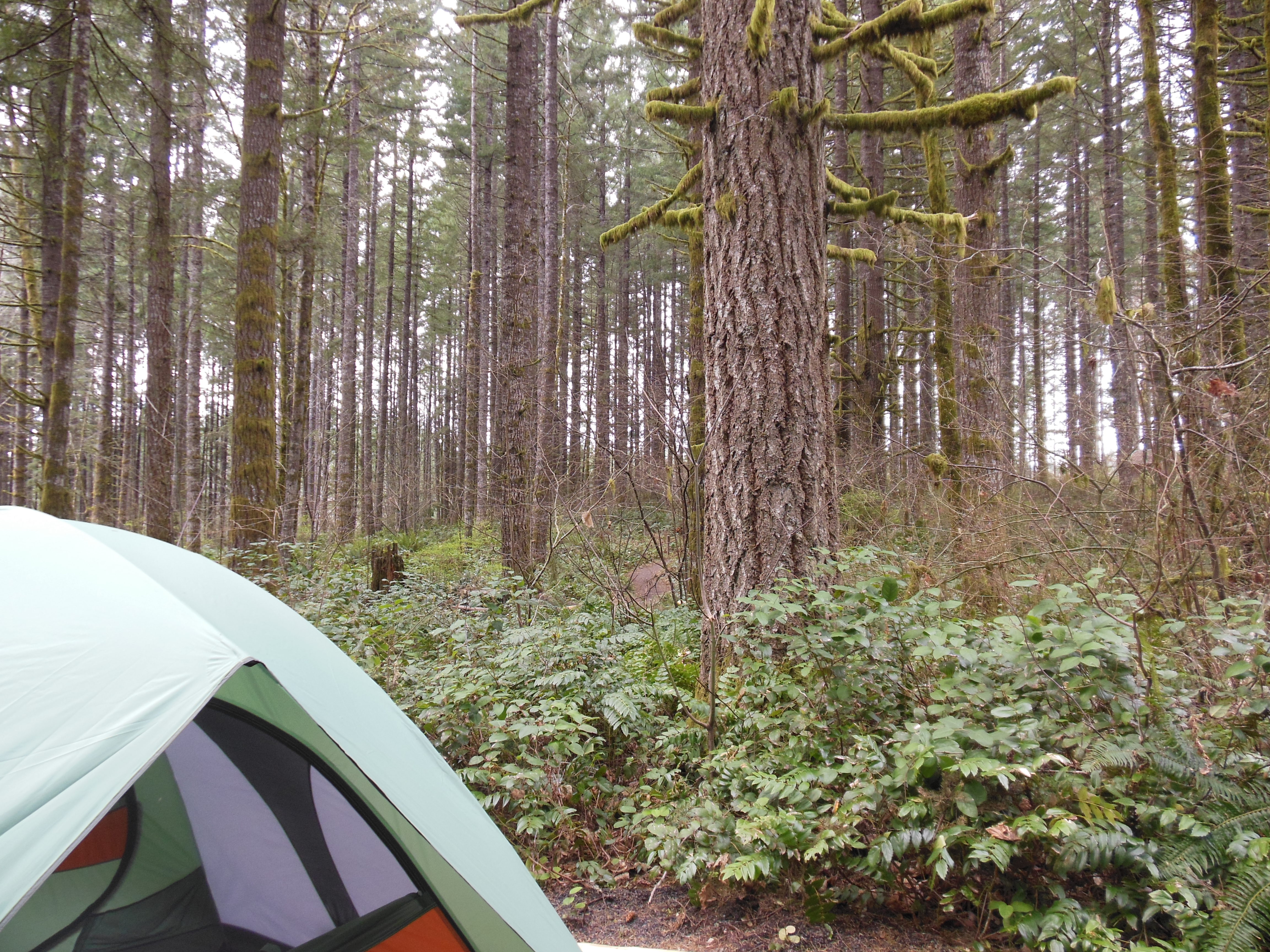
I wasn't as prepared as I felt.

I wasn’t as prepared as I felt.

In March, I had planned a camping trip of 4 days to gear-test new gear, and find out whether I was up to colder weather camping (newsflash: it’s not my preference to camp if low temperatures are below 45 – it’s an important planning detail). I headed for the trees thinking I had everything I needed. Truthfully, the lack of coffee wasΒ what kicked my ass emotionally (I’d also overlooked tea), and looking back it was a huge opportunity to overcome that limitation, but the headache spoke louder than reason. I had also not packed my bee sting kit, thinking that the weather was not yet ‘bee weather’. Being wrong about that was a safety issue, and that was the deciding factor to ‘call it’ only two days in and return home. My traveling partner retrieved me from the forest, and although he genially teased me just a bit about my lack of readiness, we both knew that was why I went out there for that particular trip; I’m planning much longer ones, solo, more remote – and on those occasions, it’s pretty urgent that obvious mistakes not be the mistakes I am making when I am too far from home to call for a ride. But this is simply some context on the experience; the lack of coffee may not have kicked my ass if I had been easily able to make fire from on-hand resources, no cheats.

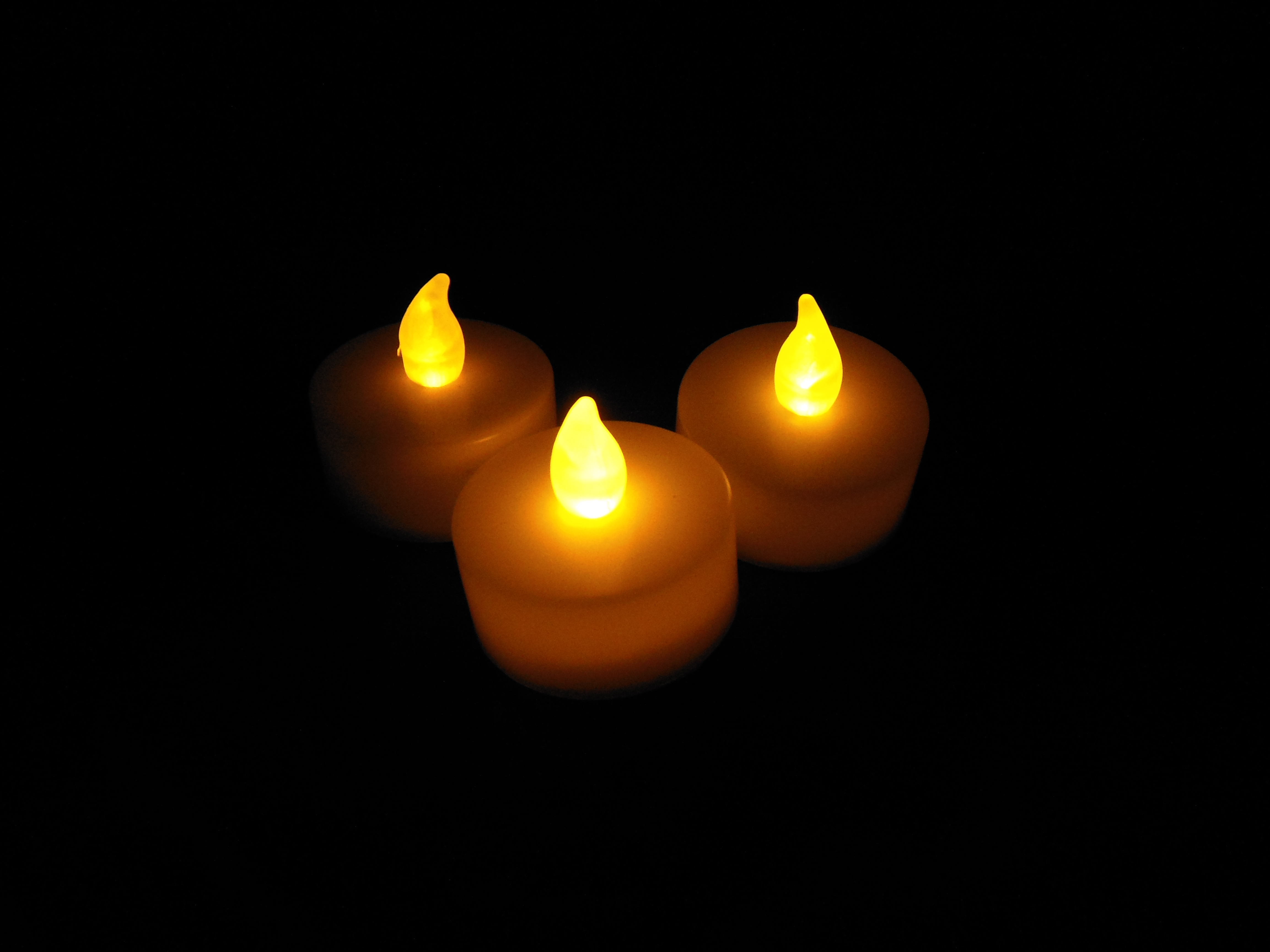
Light without heat won't cook dinner.

Light without heat won’t boil water.

I camp fairly light, and I make sure I have flint and emergency fire-starting gear, but generally rely on Esbits for quick fuel to boil water. Doing so let’s me travel fairly light, and doesn’t place a requirement on me to actually build a fire and burn wood traveling through forests, or in places where a fire is a bad idea. It had been so long since I actually made a wood fire I had entirely lost those skills – and was wandering around in the world unaware of that (far more important than the loss of skillΒ was the fact that I was unaware of the short-coming). It was an embarrassing discovery. I had brought along an alcohol stove, another common hiker/camper favorite, but one I wasn’t so familiar with using and didn’t have a lifetime (any time) of personal experience; my use of fuel was inefficient, even wasteful, and I didn’t bring enough fuel to account for that. I used up my fuel figuring things out (and setting my cook pot handle on fire – don’t ask). To prevent myself from ‘falling back on favorites’ on this particular trip I hadn’t packed as many Esbits – Β and I “knew” I had enough alcohol. (I was wrong.) These sorts of things add up to potentially life-threatening fails under extreme circumstances, and it was wrecking my nerves even after I returned home. (I thought I could count on myself for fire for crying out loud!) I had some work to do. There would be verbs involved.

No skill required - yet.

No skill required – yet.

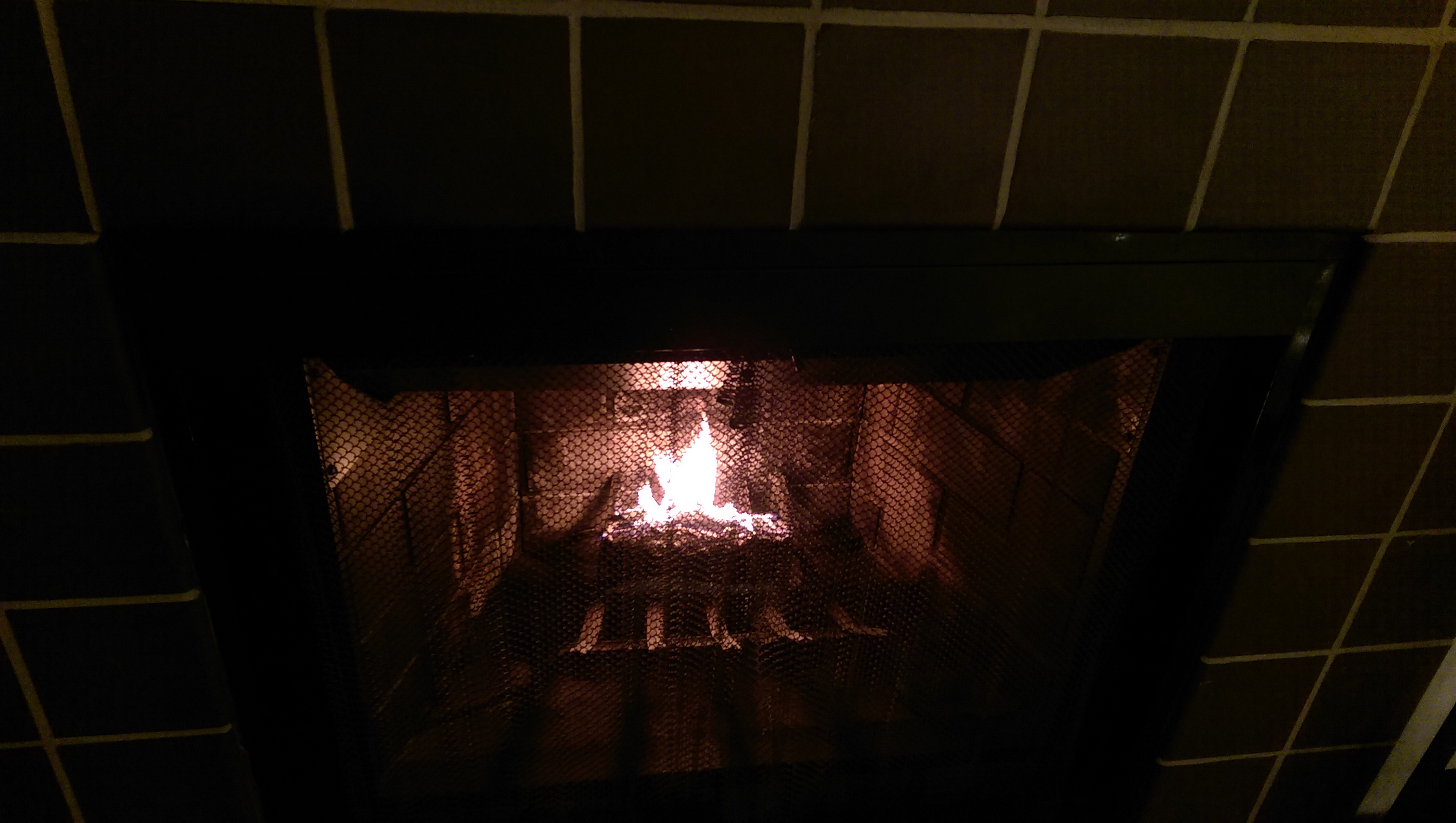
Over the winter holidays, I enjoyed a number of fires in the fireplace, and have continued to do so. Each new fire in the fireplace became an adventure, a learning experience, and part of a progression – the first one was just a Duraflame log, lit and enjoyed for a couple of hours (and an opportunity figure out the flue with confidence). Each successive fire has been more reliant on skill, until this past weekend I started a lovely warm fire without cheating it at all – lit with a lighter meant for lighting fires, but aside from that nothing made it effortless, and success was not assured. I learn from each stumble, each mistake, each new transition toward being more fully reliant on the basics (wood, oxygen, and spark or flame to begin it). This weekend I explored a variety of tweaks on placement of wood on the grate, size of kindling, timing of putting heavier wood on the fire, and had quite a lot of fun with the experience, and ending each day with a bed of coals banked and ready to begin again.

The cozy warmth of a fire built with purpose and skill.

The cozy warmth of a fire built with purpose and skill.

In between my March camping, and my lovely warm fire this past weekend there has been quite a lot of study, and some practice (with more practice yet to come – because a fire in the fireplace is not 100% analogous to making a fire in the cold, or the rain, or the wind, and there is much more to learn about fire, about readiness, and about self-sufficiency and interdependence). I’ll probably continue to hike and camp relying on what works best (and most reliably) for me, and what feels most comfortable, but I’ll be heading to the trees far more prepared to take care of me when circumstances don’t allow for what feels most comfortable, and more aware of what I may really need to enjoy the experience.

Taking care of me has a lot of verbs... and some nice perks. :-)

Taking care of me has a lot of verbs… and some nice perks. πŸ™‚

Today is a good day to be a student of life and love, open to new understanding. Today is a good day to put aside assumptions, and ask clarifying questions. Today is a good day to look suffering in the face with a mind open to understanding what my needs really are. It’s a journey worth taking. πŸ™‚