
It would be a humble enough victory to end life described as ‘reliable and unbiased’, but I do think it would stand as a victory of sorts, and a lifetime of which a human being could be proud. I mention it because so much of our information isn’t either of those things, and we are often unaware of it. It isn’t enough to suggest a better source of information; most news sources globally are tainted with bias of some sort. I suspect the best most of us can hope for is to select a broad variety of sources and source material, of a variety of known biases, and do our own homework; fend for ourselves, intellectually.

What value is a lifetime of study without reflection?
I am, and have long been, the sort of person who will gently inquire as to the source of information, and even ask friends and loved ones to cite their references in a friendly discussion. I try to avoid unfriendly discussions, contentious dialogue, arguments, and hostile diatribes entirely; I have no time to waste with bullshit, or conversation on controversial matters that severs any possible connection with reason, in favor of sound bites, slogans, and invective. I recognize that conversation built on emotional judgments can become arguments quickly, and generally without the possibility of resolution; emotions can’t actually be argued with effectively. Emotions are subjective, in every case, and not subject to proofs. It’s rude to argue with someone’s feelings, and disrespectful, inconsiderate, and diminishing of their value as a being. Like it or not, we are each having our own experience.
It’s also rude to use ones emotions to support a seemingly fact-based position on an issue, because there is no room for discussion; each of us is having our own experience, and we are utterly free to feel however we do about the experience we are having, and to evaluate past experiences in any way we choose. (It may be quite unavoidable.) It’s sort of a logical ‘dirty trick’, but I doubt most people do it willfully; they simple react to what they read or hear, with the full weight of their convictions, which are sometimes based entirely on their emotions, without any underlying personal experience, study, or vetted information, at all.
It can be challenging to untangle this puzzle. I suggest a bit of study on the subject of E Prime, if you haven’t already. I’m not advocating the full time use of E Prime, myself, although I did for a number of years. I suggest, rather, that understanding the basics of E Prime is illuminating and holds potential to improve general use of language. Admittedly, I also think any excuse to read Quantum Psychology has value; it is a book that holds potential to improve ones thinking in a number of ways. 🙂
There’s something unstated here, that is important [from my perspective]; I’ve had this knowledge a long time. Reason, logical discussion, E Prime, and awareness of bias in language have been part of my experience for a while – and did nothing to ease my suffering, or increase my happiness, contentment, or ability to connect on an intimate level with other human beings. At best, it gave me a glib (and false) experience of certainty that I was ‘more right’ than someone else, that really wasn’t particularly helpful, or accurate, and did little to improve my experience. Being ‘right’ hasn’t turned out to have much value at all. So…I share these words today with the further observation that although ‘being right’ often feels incredibly important, that hasn’t held up under scrutiny for me, and hasn’t been what brings me contentment, joy, or balance. Certainly, ‘being right’ has not one damned thing to do with love, and loving.
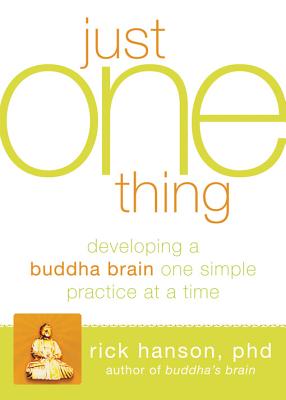
If there is ‘just one thing’, it is far likelier to be ‘about’ emotion than reason. It is our feelings that define our experience.
So…I continue, myself, on this journey of studying emotion. Emotional intelligence, emotional intimacy, and emotional self-sufficiency seem to hold more promise on my journey toward wholeness, and wellness, and meeting my needs over time, than my old ally ‘reason’ has ever delivered. Emotion has more to do with the ‘who I am’ pieces of my experience than any opinion on a controversial cultural matter, by addressing who I am directly, instead of reflecting back from current events and filtered through social norms. Emotion is hard sometimes. It is visceral, raw, and immediate. It is ‘unarguable’. It is incredibly real – but so often treated as second-class in our experience, or unworthy of our attention and consideration. Our emotional experience is ‘reliable and unbiased’ – it is reliably ours, and it is our own real reaction to… something. That’s where it gets sticky for me, and why I invest so much study, contemplation, and mindful observation in the experience of emotion, these days, over reason. So many times I have been bamboozled, not using reason, or logic, or facts, but by playing on my emotions and relying on my lack of skill, and lack of understanding, of emotion to achieve the persuasive win.

Reading the books does not create change. It is our actions that change us, even the action of thinking differently.
I enjoy logic, and reason. I value them. That hasn’t changed, but I now recognize that my emotional life is likely the much greater part of my humanity, and left unattended I am a savage – however educated I may seem to be.
Life isn’t all logic and reason; we are emotional beings. It only makes sense to invest time and study in such an important part of our experience.
Today is a good day to feel. Today is a good day to love. Today is a good day for compassion and kindness. Today is a good day to change the world.

 Evening Light