Archives for posts with tag: assumptions

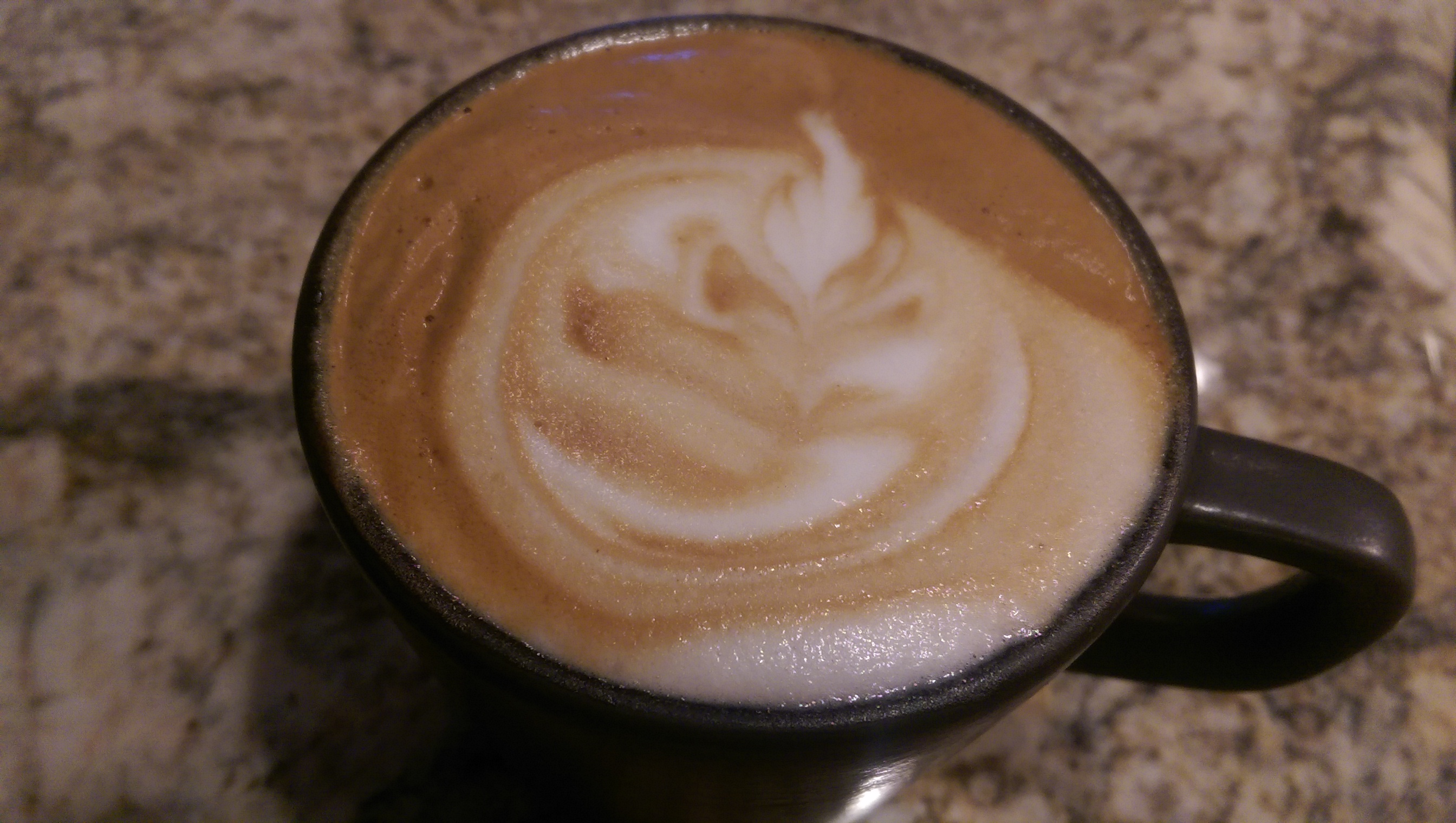
I sip my coffee quietly, considering the day ahead. I think for a brief moment that I have no plans, but realize it isn’t so. I dither, wondering if accepting an invitation to hike this morning would have been a better choice, instead of being here. Right now, here doesn’t feel very good…and I’ve no idea why. Humans being human. It happens.

Words are powerful tools for love. They are not always used that way. I try to use mine gently, wisely, well – with consideration. I try to use them a little more skillfully, and with greater care every day. I hold on to the hope that in doing so, I improve my own experience of myself, of the world I live in, and my relationships. It isn’t always a notably successful effort – still human – and I’m not certain sometimes that anyone else notices or cares much – they are still human, too. Each having our own experience.

Something has gone wrong with the morning. I don’t know what, and I examine my expectations, first; have I somehow crafted this experience with assumptions and expectations? I do a ‘self inventory’ with considerable tenderness, looking for where I may be struggling with something else in the background, or a missed self-care detail more important than I recognized. I feel myself earnestly wanting to connect with my traveling partner pleasantly, merrily, intimately; there is so much potential for joy in who we are together. Somehow, now is not the time. My gentlest approach this morning is met with a frown. I escape to my studio, hoping his morning gets better over his coffee. I contemplate going back to bed, which feels like a childish over-reaction to something that isn’t about me. I work on letting it go, and staying in the headspace I woke in; calm, rested, curious what the day holds, eager to enjoy the companionship of my partner, when he finds himself ready, too.

Expectations and assumptions are the Boss bad guys of relationships, aren’t they? I can’t know what someone is assuming (about me, about us, about the circumstances) but it quickly becomes clear that assumptions are being made when conversation lacks understanding. I sometimes find myself holding onto expectations, unstated, that later detonate and turn my pleasant moment into an emotional blast zone, when my unnoticed expectations are not met by real life.

Last night I expected to arrive home to my partner’s smile and a hug and some time hanging out; he’d already called it a night. I felt disappointed, but understanding – it’s not personal, or tragic, when someone takes care of themselves. I woke this morning looking forward to enjoying his company, talking about my evening, hanging out over morning coffee. He wasn’t yet up, and that didn’t bother me at all. Hell, it’s not personal that the morning is difficult now – we’re neither of us actually ‘morning people’. I find myself feeling rather lonely in this particular moment – also not personal, and definitely more ‘weather’ than ‘climate’. Difficult in the moment. Moments pass. This one, in fact, passes as soon as my traveling partner steps into the studio, shares a few words about his evening, and asks about mine.

Take the time to enjoy the moment.

Take the time to enjoy the moment. Be kind. Be gentle.

Today will likely be quite a nice day, most especially if I am willing to set aside expectations, refrain from making assumptions, and refuse to take things personally. Today is a good day to use some verbs.

I am sipping my coffee and considering the excellent work week that has ended, and the long weekend ahead. I am feeling eager and inspired, loved, and valued. It’s easy to bask in these lovely feelings and find myself soaking in what eventually could become an expectation that I feel this way, enjoy work weeks such as this one, evenings like those I’ve shared with my traveling partner this week, sleep of good quality, and the resources to continue it all quite indefinitely…only…life isn’t a painting and doesn’t stand still; what I enjoy in this moment may not be near at hand in the next. Allowing expectations to develop over time that are based on experience, but not confirmed explicitly, result in painful moments of disappointment, almost as if scheduled deliberately. When I allow myself to be open to enjoying what is, without projecting that it will always be so into future days, I’m largely free of those painful moments experienced when life finds it necessary to correct my departure from reality.

Assumptions are similar; if I make assumptions about what’s going on in someone else’s mind, or experience, I exist in a fictional narrative. When others make assumptions about me, incorrectly, I feel disregarded, invisible, unheard, or misunderstood. If both conditions occur together, life feels as if I am only visiting, unwelcome in my existence, and of little value. Plus – if I’m making all manner of untested assumptions moment to moment, I’m wrong a lot. A lot. How can I be so sure? Pretty simply, because I see it in my own relationships; people who make assumptions about me (what I think, what I like, how I feel, what I know, what I value, what I want…) are wrong a lot. It’s not always easy to avoid making assumptions; making assumptions is a cognitive tool improving our speed to decision-making. Certainly there are circumstances when deciding whether to run away, or taste that strange food, requires me to make some assumptions for safety’s sake. It easily gets to be a habit.

Making assumptions isn’t easily avoidable, which makes testing our assumptions entirely necessary before we rely on them for longer term understanding of our experience. Assumptions, like lies, don’t have their foundation in what is demonstrably real, or provable – and are no more likely to be innocent of purpose than a lie! The intent of the assumption matters; it says something about the person making it. Most assumptions are not of ill intent, they function for efficiency’s sake, and while that seems harmless enough, there are so many circumstances when asking the simple question would provide better data. Other assumptions are the hallmark of a consciousness that is not invested in knowing, understanding, or building – preferring to just move quickly through circumstances ‘successfully’ to reach a goal with minimal investment in connecting with any other consciousness involved. Assumptions – particularly assumptions about the state of someones mind, or content of their emotions or thoughts – are shortcuts for speed and efficiency, resulting in a significant loss of intimacy. Assumptions are no more real than day dreams, doubts, or fears, and not to be trusted.

In conversation, refusing to make commonplace assumptions can quickly derail dialogue (or meetings) in the most hilarious way; people are very used to making assumptions, and are often quite unprepared for any one member of a group to abruptly stop doing so, asking instead for confirmation of simple things typically assumed (and often incorrectly so, but generally unnoticed). I enthusiastically endorse exploring the amusing delights of refraining from making ordinary assumptions now and then, but must state clearly that the consequences of choosing to do so are also your own to explore; your results may vary. (Remember to keep Wheaton’s Law in play!) 🙂

It’s easy to demonstrate the value of not making assumptions by considering the puzzle of buying a gift for someone else. If I buy a gift based on what I know of my own taste, I am not likely to buy a gift that suits that other person well. If I buy a gift based on common assumptions about taste and current trends in the marketplace, I may have improved on whether I am able to buy a gift that suits that other person – but it’s not a certainty, though it often feels as though it is a better choice. When I buy someone a gift, with what I really know of them in mind, I am by far more likely to select a gift that truly suits them…only…what do I really know about that other person? Is it enough? It becomes tempting to begin to build additional assumptions about them, crafted from what I know, to create a sense of deeper knowledge… it isn’t at all real, or reliable. Then what? Settle for accepting that gifts are often received graciously, however unsatisfying the gifts themselves may be? I don’t really find that comfortable, either, personally. I would rather invest in the delight of the recipient, and put aside my assumptions and ask questions, build intimacy, gain deeper knowledge – both of that other person, and through emotional intimacy and connection, deeper knowledge of who I am, myself. Emotional intimacy is powerful, and nourishing. Sustainable lasting love has its roots in emotional intimacy.

Interacting with those dear to us on the basis of assumptions may actually be the direct opposite of emotional intimacy. This is a new thought for me, in these simple terms. I plan to spend some time considering it further.

My traveling partner was the first to point out to me that expectations are a relationship killer, and I have seen the truth of it. I throw assumptions onto that same bonfire; few things fuel the failure of intimacy with such efficiency. This particularly excellent week of living and working has been peculiar in how few expectations I have had – or held on to – and how few assumptions I have relied upon. It’s been telling, as well as exceptionally connected and satisfying in terms of my interactions with others. Refraining from holding onto implicit expectations, and refusing to make assumptions about others, look like valuable practices, from this perspective.

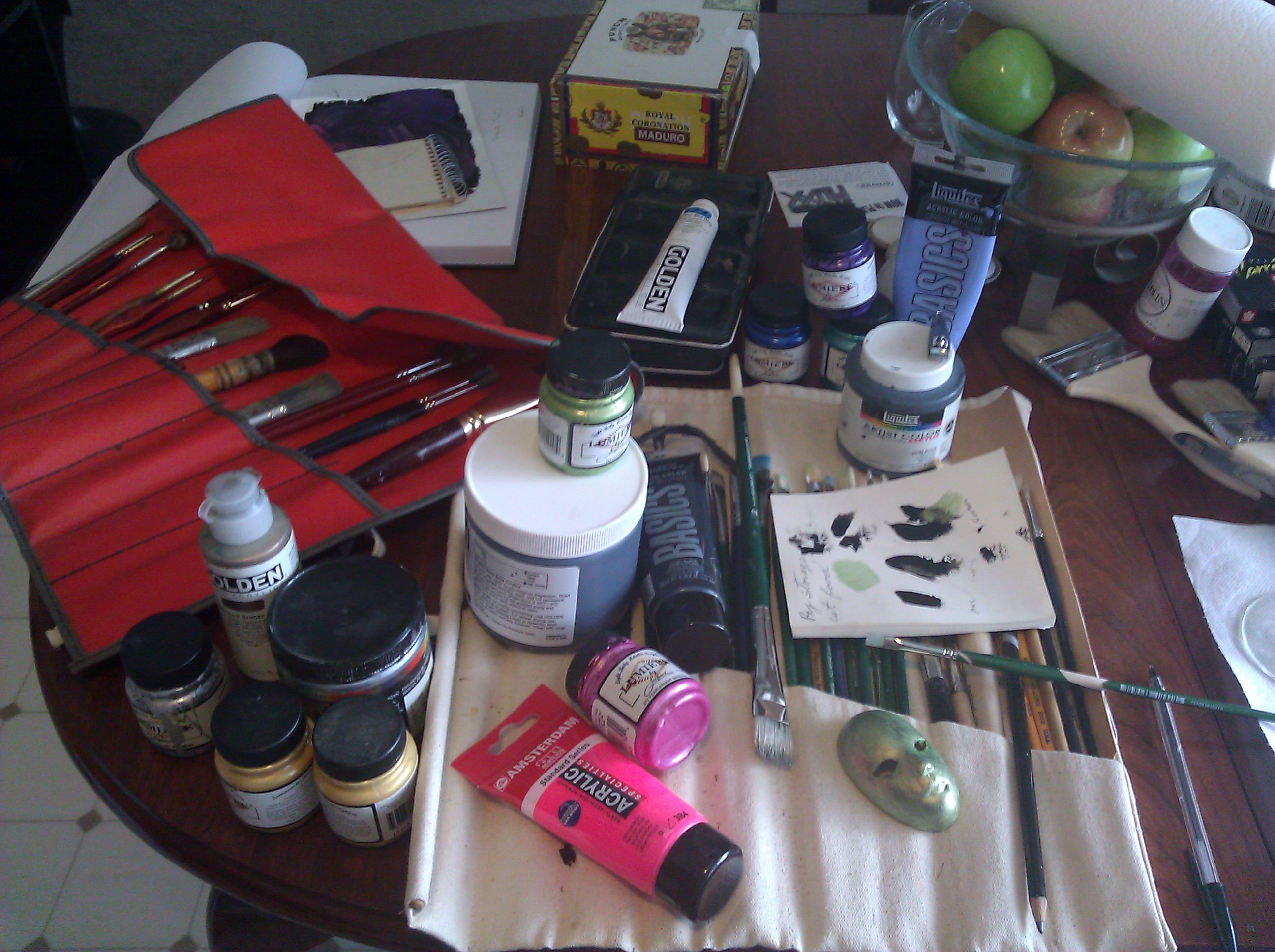
An artist at work? A student of life. I am having my own experience. (Your results may vary)

An artist at work? A student of life. I am having my own experience. (Your results may vary)

I’ve a long weekend ahead, and even without expectations about what it holds, it looks very promising creatively and emotionally. Where will the journey take me? I won’t assume I know. 🙂

Well, or maybe not – especially if you haven’t asked, or I haven’t told you, or we don’t spend much time together…right? Assumptions tend to result in people having relationships and interactions with rather different people than the people involved are thinking they are, themselves. Like a lot of thinking, it isn’t ‘real’; it’s all completely made up. When I approached turning 50, I made a choice to take a much more genuine approach to my experience, generally, and I’m glad I did. It hasn’t been the easiest change to make; I can adjust my own thinking, and refrain from making assumptions, but I can’t do a damned thing about the thinking, or assumptions, of others – not even to wake them up to the rather significant changes in my approach to my own life and experience. I will be taking The Four Agreements with me out into the trees. It seems a good time to reread it.

Pop songs make so much of life, love, and sex sound incredibly easy. I don’t even find ‘being easy’ particularly easy in practice. It’s fortunately more amusing and bewildering than anything else, most of the time.

Do you know what I like? Even if you know me personally (and some of you do), even if you are an intimate associate or partner, what chance is there that you actually know me sufficiently well that you know what I like – right now, after a couple of years of intense growth and change, without actually asking me? Experience tells me that it is quite rare to be so well-known as a human being, even by the most connected and intimate associates, even after years of interacting, without at least some exchange of explicit communication.  To expect to be known so well in the midst of change, or at the end of a period of profound growth, doesn’t sound likely at all, and seems likely to cause all kinds of suffering.

I also notice that it is very uncommon for people who already know each other to make much effort to update their knowledge and expectations of their friends, lovers, or partners identities, preferences, aesthetic; the details that express the heart of soul of who we are. That seems very strange. I know assumptions have survival value – or we probably wouldn’t have developed to make so many of them – but they are not a particularly useful intimacy building tool… and yet, we cling to them, argue to defend our assumptions – even in the face of actual information.

Do you know what I like? More to the point – that person walking beside you in life, how about that person – do you know what they like? Do you listen when they talk about it? Are you interested? Does it matter to you? And you – do you feel heard? Recognized? Valued? Encouraged in your endeavors? Do you face holidays and gift occasions eager, and content in the knowledge that you are known, and understood? That what matters to you is significant in their experience because it does matter to you? Do you still look love in the eyes eagerly wanting to know more?

Oh, Baby, you knoooow what I like!

Oh, Baby, you knoooow what I like!

It’s a lovely gentle Saturday, spent on art, lattes, meditation, and some words – and questions. Today is a good day for questions. Today is a good day for presence. Today is a good day to be genuinely this woman I am; who else could do it better than I can? Today is a good day to change the world.

It’s a weekend of quiet, spent mostly on housekeeping, meditation, and reading/studying. I spent some time, too, coloring in tiny squares on my Life in Weeks chart, which I started this year; it’s already an eye-opening project. I’m a very visual analyst, and I see patterns and trends fairly easily – especially painted with such a broad brush. I’m not imagining things; I’ve spent the largest portion of my life devoted to, and in support of, someone else’s agenda besides my own. Now, though, I also see the next 40 years laid out ahead of me – incomplete, unknown, and wide open with possibilities.

I’ve also been feeling fairly lonely. It’s odd. I’m not alone. I’ve spent considerable time in shared space with loved ones, too. The thing is…we’re not connecting easily. We’re each at such different places in life, with ourselves, with our understanding of the world; it is a season of change. I am learning to take care of me in moments when a conversation takes a turn that doesn’t really involved me, or isn’t the sort of thing I care to be all caught up in for one reason or another…by gently disengaging, or refraining from becoming involved in the first place. That’s a positive step for me…my tendency has been to be all up in everything, if it is within earshot, which over time feels more invasive than supportive for my loves, and for me quickly becomes a drain on my emotional resources, and just not much fun. There are other experiences I’d rather share with people who matter to me.

Taking a step back and letting other people’s business be other people’s business, and letting them have their moment – without me – feels like a better choice for my emotional wellness…but I had no idea just how much of what is going on around me has nothing whatsoever to do with me, at all. I am surprised to find that although I am aware that too little of my time supports my own agenda…I may not be prepared for what life holds if I stand firm on putting more of my emotional resources, and time, into my own needs and agenda; it could be very lonely indeed. This is a chapter in life’s curriculum I will study with great care; it looks like one of the more challenging bits. 🙂

OPD swirls around me in the background. I stay to myself. Sometimes it’s lonely, but it is less stressful, less emotionally fatiguing, and interestingly – I also seem to have far fewer, less intense, headaches. I don’t know that there’s any causality in there, but it’s an interesting coincidence.

When I started this journey I had some idea what I might find, built on assumptions and expectations.

When I started this journey I had some idea what I might find, seen through a veil of assumptions and expectations…

My traveling partner shared an article this morning, and I learned a new word that just delights me. The word is ‘listicle’ – you know, an article that is a list. I’m just delighted. It’s a needed word, that describes a real thing. It’s even in the dictionary. I feel like a child seeing a butterfly up close. lol I love words – they make it possible to communicate some very nuanced ideas. The article itself has value; it is a list of 7 traits the author suggests are common to chronically unhappy people. As I read the article, I felt a sense of forward progress, growth, and accomplishment, because there was a time when I definitely had all 7:

1. A default belief that ‘life is hard’ was definitely part of my experience until some relatively recent point. I’m not sure I really noticed when it changed, but reading the article this morning I feel keenly aware that it has. I would go so far as to acknowledge that I sometimes find life complicated, challenging, or moments when life feels hard, but it’s recognizably not my default experience.

2. A belief that ‘most people can’t be trusted’ most certainly describes how I used to feel about ‘people in general’; fearful, distrustful, and very very certain that if I dropped by guard for an instance, or turned my back, or shared a confidence, the consequences would be swift, severe, and painful. I don’t feel that way at all now. I find that generally, people mostly do their best, and are well-intended within the limits of their understanding of the world they live in. Well-meaning isn’t always enough for a good outcome, and I find that I am pretty accepting of that, too. I’m aware that people lie, that people are capable of fraud, bad acts, and real nastiness. I trust that each person I meet will likely behave very consistently with their nature, and underlying values, and that the best outcomes come from clear communication, awareness, and refraining from making assumptions, or holding on to expectations – or grudges – and that walking away from ‘toxic people’ is sometimes the only productive healthy choice.

3. Concentrating on what’s wrong versus what’s right is something I still struggle with. I get emotionally invested in something that seems unjust, unfair, unreasonable, and unnecessary, and my frustration with it can push me into becoming over-invested, and emotionally involved to a point that I lose perspective. I see this, too, as progress; I started in a very different place than I stand today. There is further to go.

4. Comparisons to others, and fostering jealousy are something I suppose most people struggle with; comparisons are an easy shortcut for measuring where we stand. The thing I’ve learned over time is that it’s not a competition, this ‘life’ thing. It’s more like a journey, and I take it pretty much alone – my own progress over time is my only measure of performance, really, and what that other person over there is doing with their time, money, heart, or intellect has little to do with me.  At the end of my life, when I look back, it won’t be to say “Well, compared to [insert name of celebrity or role model] I sure went far”; my life will have to stand on its own merits. Jealousy is new for me; I only recently learned what that feeling is, at all. I’m not really wired for it, and having finally experienced what it feels like, I’m okay with moving on as a being to a place where it is simply not likely to come up. Like ‘worry’ or ‘guilt’, ‘jealousy’ is a pretty pointless emotion that tends to start trouble, without offering any solutions. Having finally experienced what all the fuss is about, though, I am learning to use the feeling as a flare that pulls my attention to a specific need that I am not taking care of, and identifying that thing; making the underlying need, and taking care of that, a priority has tended to entirely satisfy any moment that feels like ‘jealousy’ – it nearly always turns out that some small thing I need isn’t being handled by me, and that I’ve made the mistake of assigning blame or responsibility to some other person, without being aware of it.

5. Striving for control isn’t something I have much problem with, at this point in my life, and it’s been a long while since it has. For me, letting go of the need to control everything in my experience turned out to be easily resolved by avoiding controlling or manipulative relationships; relationships of that sort tend to find me ‘pushing back’ to regain my freedom of will. It becomes an unpleasant see-saw of competitive power games that I find distasteful, and I went a different direction some years ago, and never looked back.

6. Considering the future fearfully comes up now and then. That’s sort of a given with anxiety. It’s not on the same order it once was, and these days I generally find that taking time to meditate kicks fear to the curb pretty handily. A better understanding of the value of thinking, of thoughts – and the understanding that thoughts have no ‘reality’ that I don’t give them, that I create them myself – has freed me to consider a ‘what if’ scenario to its conclusion – however ludicrous – and learn from it without being wounded by it; it’s not real.

7. Gossip and complaint filled conversations…yeah…just not my preference these days. Living in chronic misery, though, what else was there? It was a way to lift myself up…by comparing my experience to someone else’s. It was a way to make myself important…by venting about some unsatisfying thing or another. It was a way to get  and hold attention for some moment…and feel a little bit supported. It’s not honest, though, and it’s not … consensual. It also isn’t as effective as simple communication about my own feelings, and experience, using ‘I statements’ and just asking for a hug. Taking that more effective approach requires me to embrace a level of genuineness and vulnerability that was pretty scary, at first. It’s been worth it.

I don’t say much, above, about what I did to make these changes happen over time – because I’m not actually sure. Is it the meditation practice? Is it better health care? Is it taking care to get enough sleep? Is it a byproduct of changed perspective with time, and aging? Is it all the studying of the neuroscience of emotion, and the structured practicing of techniques intended to craft a more positive implicit memory? Is it love? Is it a coincidence? Is it my own idea – or someone else’s? I have no idea what specifically I’ve done that has amounted to so much change for the better, over time… I wasn’t even aware so much had changed, until I read that article (expecting to find myself nodding along and checking off all 7 as things characteristic of myself) and realized that it doesn’t speak to my ‘now’ experience.

...Without the powerful limitations assumptions and expectations place on my experience, I have found wide open vistas of possibility, and broad horizons of potential for change.

…Without the powerful limitations assumptions and expectations place on my experience, I have found wide open vistas of possibility, and broad horizons of potential for change. There are verbs involved, and your results may vary.

Today is a good day to share progress, and feel encouraged. Today is a good day to recognize change for the better. Today is a good day to say with conviction “I have come so far!” Today is a good day to see that I am changing the world…and to remind you that you can, too, and probably do. 😀


It’s Sunday, and today the travelers return. I love a good homecoming. It’s so easy to sabotage a wonderful moment with expectations, and assumptions… today I make my ‘to do list’ with an eye for the work week ahead, and ensuring returning travelers will have the laundry room for their own needs when they get home, and a tidy home to return to. Pain has made being productive around the house a challenge this weekend, but it’s somewhat less today, and I know that if I manage my self-care carefully, and mindful of my limitations, I will be able to meet my own needs for preparing for the coming work week, as well as meeting my own basic standard for household upkeep.

Expectations and assumptions are just about the fastest shortcuts to relationship misery ever. If I had set expectations that a certain amount of very specific housework would be done, then couldn’t do it, it could be disappointing or inconveniencing for other members of the household. Similarly, if they were to assume certain specific things would be done, and arrived to find that those things weren’t done, it could be irksome or inconveniencing, too. If I assume everyone around me knows how much pain I’m in – and how much that limits me – I set internal expectations with myself about how I will be treated, that may not be reasonable; pain isn’t visible to others as a quantity or magnitude of suffering, and the limitations it creates are not obvious at a glance.

Clear – and explicit – expectation setting has enormous value, generally, and I practice clear and specific expectation setting as much as I can. Ensuring that assumptions are quickly moved from ‘implicit’ and unconfirmed to ‘verified with clear communication and clarifying questions’ (resulting in assumptions becoming clearly set expectations), I reduce the stress and drama – and anxiety – of life and love. Seems simple enough in text…it isn’t always so simple in practice. I’ve done my best this weekend. Seems my family has as well. I’m eager to welcome them home.

It'll be evening when they get home... conversations over tea, anecdotes, laughter, the quiet warmth of family...

It’ll be evening when they get home… conversations over tea, anecdotes, laughter, the quiet warmth of family…I look ahead and fight the desire to hold expectations, or make assumptions about the evening to come.

I slept restlessly again last night. I’m not sure what’s disturbing my sleep; I wake frequently for no obvious cause, and I’m only getting 4-5 hours of sleep a night. This morning I just kept at it until daybreak, and managed almost 7 hours of sleep – in 90 minute to two-hour increments. Hardly ideal, but there’s no real distress in it, either.

Today I’ll spend the day in mindful service to home and hearth, and taking care of me with yoga, meditation, study, and working on my manuscript for NaNoWriMo. Today is a good day for all those things. Today is a good day to enjoy the day, this life, and this being I have worked so hard to become. The small details matter, and savoring the pleasant moments matters, too. It’s a good day to enjoy small delights. It’s a good day to enjoy the world.