Archives for posts with tag: be the change

I don’t generally get so many opportunities to simply relax in the good company of my Traveling Partner. The opportunities we do get don’t always work out ideally well (both of us being quite human, and dealing both with our own “baggage” and our own issues with being in physical pain). It’s been an extraordinary holiday season, filled with connected hang out time, together, enjoying favored content from here and there, relaxing, playing games, making conversation about topics of mutual (or separate) interest, and because it isn’t reliably an everyday experience, I’ve embraced it without any guilt or reservations about how I am spending my time – even when doing so may subtly undermine long-standing practices that support emotional wellness (like meditating), or “press pause” on routines and practices that create the foundation of this life that has become commonly characterized by contentment. πŸ™‚ So… without apology or excuse, I’m not writing as often, and I’m fully living in this moment much more, at least for the duration of the holiday season. It’s quite nice, and I am making a point to savor the opportunity, the experiences, and the moment-to-moment joy of being so well-loved, and having the chance to love so deeply, myself.

Today is a pleasant Saturday, in the middle of a long weekend (for me), planned well in advance as part of my holiday. My Traveling Partner and I are both in pain, today. It happens. No drama or bullshit associated with that; we’re both very much aware of each other’s physical limits and concerns, and we cherish each other’s efforts, and the shared will to explore joy in spite of pain. It is characteristic of this partnership that we do so, generally. Worth the effort (and yes, there is reliably effort involved).

Note to self: it’s worthwhile to make an effort at the things that you’ve determined matter most. Your results may vary, but the outcomes will prove to be reliably better than not making the effort. Sooner or later, effort goes into something – what better choice than to make that effort in support of the life you most want to live, the experiences you most want to have, or becoming the person you most want to be? Choices. (And verbs.)

I smile and think of cruise brochures, plans for our shared future, life right now, and all the things that have lead to this moment, here, which leads on to those moments as yet unexperienced. I think about potential life-style changes, wellness, and longevity. I pause a moment to celebrate this experience of being partnered with a human being I truly want to spend my life with.

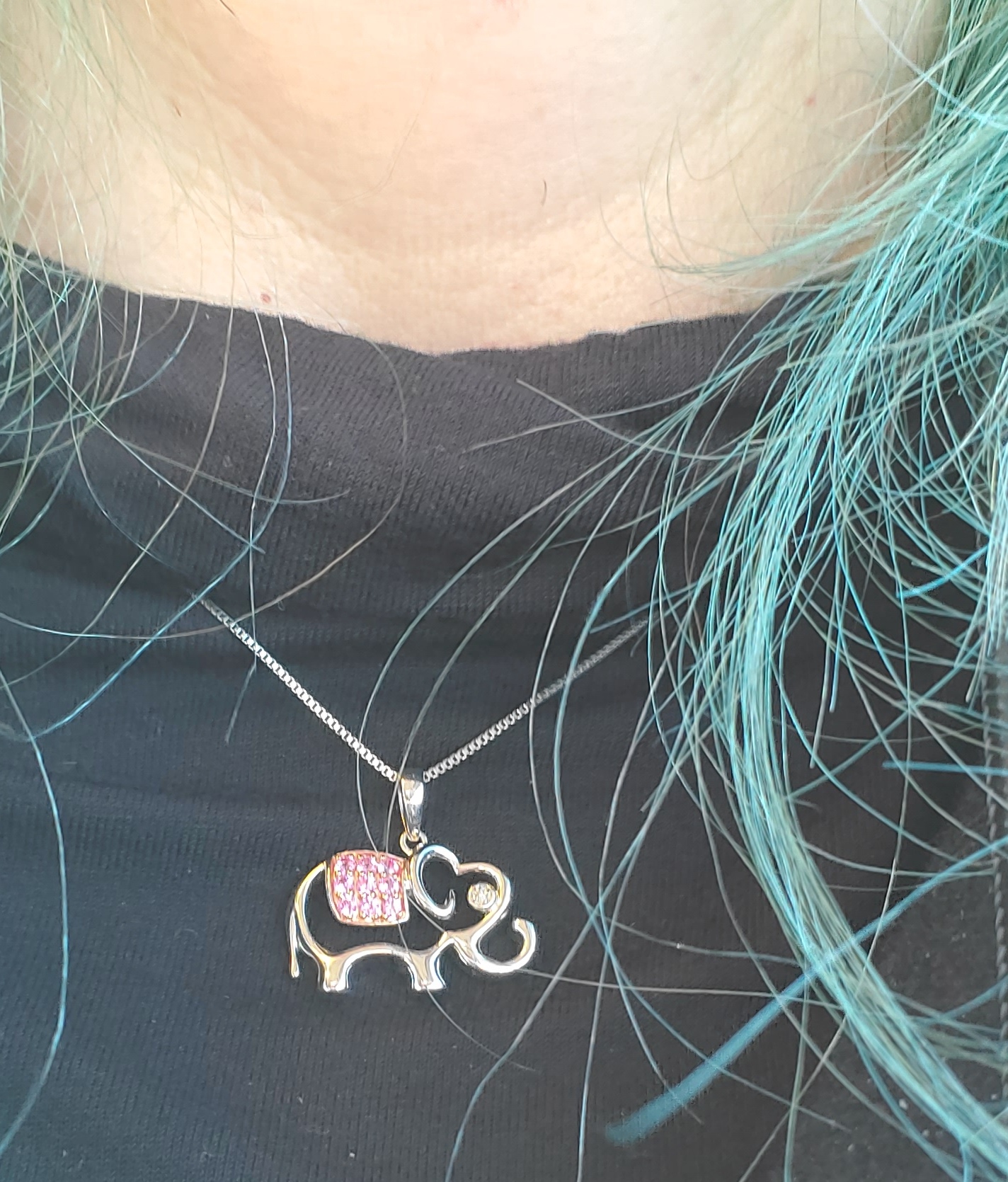
The smallest tokens of lasting affection can feel huge.

Giftmas has come and gone. It was lovely. Warm. Joyful. Loving. A delightful holiday. Precious mementos will remind me for some time to come just how exceptional this holiday was. I hope never to forget any detail, but… “always” and “never” aren’t concepts I feel comfortable investing emotional energy in. lol I’m content to smile when I do remember, and let the warmth of being well-loved wash over me, in that moment of recollection. Good memories. πŸ˜€

I sit quietly for a moment. I breathe. Exhale. Relax. I feel the pain… here. Over here. That one, there, too. This newer one. This one that has lingered far too long. This one that is so well-understood. That one, that I just don’t understand. I let each one go; recognized, accepted, and where possible, attended to as skillfully as I am able to do. Another breath. Another exhalation. A sip of water. A correction in seated posture. Moments tick by.

“This, too, shall pass.” Even pain is mostly fairly temporary, inasmuch as it is not truly unfailingly continuous. It matters to savor those moments in which pain is lessened, or isn’t there at all; doing so reduces the likelihood of becoming mired in an implicit experience of “always” hurting. “Always” isn’t very common. Neither is “never”. I smile and let them both go. They’re oftenΒ  just words for a more nuanced experience that takes ever so many more words to describe accurately. “Often” is useful, but less than satisfying when describing the experience of pain; I want the emphasis that is associated with “always”. So human.

…Being in pain is human, too. Way more people spend a lot of time in pain than people around them seem to recognize. Don’t be a dick to people; maybe they’re in pain. Maybe it would be more helpful to be kind, to listen deeply, and to refrain from taking people’s crossness or irritability at all personally? We are each having our own experience. πŸ™‚

The new year (2020, in this case) is approaching quickly. Just days away, now. I’m eager to embrace a quiet holiday, filled with meditation, and forward-looking thoughts. A refresh of the budget seems in order. A new “map” of the future, too, perhaps? An update to my “life in weeks” chart, also; it’s been an eventful year. Perspective on it is worthwhile. It’s time to contemplate what to keep – and what to cast aside. Time to consider what matters most, and commit to the effort to bring more of that into my life, and to the effort to stay focused and purposeful, over time.

What about you? What matters most? Where are you headed in life? What will you choose to do about any of that? (So many choices!!)

…It’s already time to begin again. πŸ˜‰


It’s been a wonderful weekend with much to celebrate and very little stress. πŸ™‚ Life doesn’t always hand out such lovely weekends, uninterrupted by bullshit and drama, characterized by laughter and love; warmth and affection saturated each welcome moment. It was beautiful. I’m sipping my coffee and smiling, and taking time for gratitude. I can even pin-point what made this particular weekend so incredibly delightful; kind words.

It is not an exaggeration to observe that when most people talk about giving “feedback”, they are talking about negative feedback. Let’s be real about that; negative feedback can also, generally, be called “criticism”, and being criticized, especially if it is a regular thing, is not pleasant. It’s quite difficult to give negative feedback in an encouraging way that lifts someone up, and promotes improvement and positive change. It fairly commonly feels like a beat-down, discouraging, punishing, and devaluing. Yes, even when well-intentioned, and particularly if there is no balancing positive feedback or encouragement offered. Negative feedback is hard to do skillfully, and can be damaging.

You know what isn’t all that difficult? Positive feedback – encouragement. You know what is also fairly easy to do skillfully, and rarely causes damage? Kind words. Yep. Negative feedback isn’t nearly as effective, but it does provide a certain something for the giver-of-feedback (that isn’t at all needed by the person receiving it); the satisfaction of insisting on being heard. Many people avoid clearly understanding what the negative feedback experience feels like for the recipient – until they are, themselves, receiving it. It’s a shame, because positive feedback, encouragement, and kind words, given honestly, and from an authentic place, work in the most remarkable way to actually change behavior over time. Seriously.

(No one is talking about “white lies” here! Or lies at all.)

The key to both positive and negative feedback is the honesty and authenticity, but without kindness and encouragement, negative feedback is often just… mean. Whether we intend it that way or not. It’s just that no one likes being criticized. Feeling rejected actually causes an experience similar to physical pain. It does not matter in the least whether we are “right”; negative feedback stings a little every time, and if it comes as a barrage of nagging and complaints, all the positive intentions in the world won’t ensure the person we are speaking to thinks of it as “helpful” or “welcome” or will recognize that we are well-intentioned, at all. It’s often what comes to our attention most commonly, and most quickly, though – all those things we see as “could have been done better”. We notice that immediately. We are irritated by things that aren’t “right”. We speak up quickly to offer “feedback” – or feel like we’re not being “heard”.

Kindness does take a bit more effort; it’s important to actually notice real things that please, impress, or support us, or which we want to acknowledge and reinforce. That means actually actively paying attention to that person we care enough about to give feedback to. It also means understanding what is important to us, and being very aware of words and actions that support what we see as something that “matters”. Where negative feedback has it’s own notification system in place to let us know when something isn’t quite right, positive reinforcement doesn’t seem to do that, and puts the burden of awareness in our relationships where it belongs; it our here and now, a practice we practice. Can you even count the number of kind things, encouraging words, that you’ve said to your partner or a dear friend in the past 24 hours? If you’re like most people, that number is pretty low, most of the time, and the number of criticisms, “negative feedback”, and back-handed compliments are probably pretty high. It’s a pretty sad state of things considering that there is science to support the need for healthy relationships to have a high ration of positive to negative interactions. Just saying. Do better. Be kind. Be present. Be encouraging. πŸ˜‰ Have pleasant weekends. πŸ˜€

…Now, having said that, it’s also a real thing that if we’re not playing the game of life by the same rules, within our relationships, it can get weird and unpleasant very quickly when we make a change in our behavior of this sort. If a person living in the context of a very negative, sarcastic, gas-lighting relationship starts trying to embrace positive feedback and kindness, it’s not going to “fix” the other person, or the relationship. It’s just not. (I’m not saying negative feedback and criticism are therefore the way to go; sometimes the way ahead isn’t easy, and a few small changes just aren’t adequate to put things right, generally.) What I am saying is that otherwise generally emotionally healthy people do well to treat each other truly well, placing more emphasis and priority on positive feedback, encouragement, and kind words, than on negative feedback.

This past weekend really proved that idea for me. The once or twice I was offered any sort of negative feedback in the moment completely fades from my recollection. I remember the points being made, and the suggestions, but not the negative words or moments. What I remember most about the weekend was the kindness, the compliments, the encouragement, the supportiveness, the listening, the connectedness, the shared humor… it was a wonderful weekend. I felt valued, appreciated, and loved. Words do matter. Assumptions do matter. How we approach each other as human beings does matter. All weekend long I’ve felt the heartbeat of this partnership in a warm, positive way, wrapped in love and held in high regard. So much kindness and tenderness. πŸ™‚

There are subtleties to consider. The difference between “a helpful suggestion” and “unwelcome criticism” is in things like tone, context, and intention; it’s super hard to make useful “rules” about how to do that skillfully, that I could share and someone else could make use of. I am painfully aware of the complexities and required nuance – I’m learning as I go, myself. (Sorry for the extra “homework”!)

Empty compliments are hollow, and don’t work as positive feedback. Content, authenticity, honesty, these things matter. The moment matters. The choice of words matters. Tone of voice matters. Sincerity matters (we can all hear a passive-aggressive “tone”, or sarcasm.) It does take some practice, particularly if we’ve tended to be very negative in our life (possibly framing our choice to be so as “taking care of myself” “expressing my needs” or “setting boundaries”). If you find yourself reading these words thinking “well, except for so-and-so, because I literally have nothing good to say to them”, well, now you’re in “if you can’t say something nice…” territory. Seems unlikely that any one individual could be someone with literally no redeeming qualities of any kind worth reinforcing or encouraging… certainly seems unlikely you’d have chosen to marry such a person, or build a life with them, or develop a deep friendship with someone like that, right? So, start where that positive feedback and those encouraging kind words will make the most profound difference; at home. This holiday season, don’t be a dick. πŸ™‚ Tell the people who matter to you that they do matter. Say nice things more often than you criticize or “correct” them. Trust me; it’s painless to be nice. πŸ˜‰

…And if you just have to offer up a “correction” or “criticism”, definitely try to at least soften your tone! Sounding angry or irritable is real communication of emotions. It’s helpful to be at least aware that the emotional experience we’re having is our own, and to acknowledge that honestly and not try to put it on the person we’re talking to in some kind of blame-laying way. πŸ™‚

Are you afraid of fucking this up? Are you worried about “being wrong” or “taken the wrong way”? I get it. Change – however necessary, or desirable, can be hard. Fortunately, there are a ton of opportunities to begin again. Go ahead – take a chance on being kind to people you care about. Hell, it’s the holiday season, be kind to everyone, as though each person you meet is human, and really matters. (They are, and do.) If you don’t like who you become, the new year is here, soon enough, and you can begin again, again. πŸ˜€

I’m starting the morning in a positive place. I feel well-rested. My coffee is hot and tasty – I assume; I haven’t actually tasted it yet, it’s still too hot. lol There’s the key, though; my assumption is positive. I’m grateful for the coffee I’ve got. Gratitude is a reliably good start to a day. (Cool thing about that? I can choose to start with gratitude, if I’ve the will to undertake it.) I sit awhile, feeling grateful. Grateful for love. Grateful for a great partnership. Grateful for indoor plumbing. Grateful that I’m not in pain this morning (well, mostly not). Grateful for the car in the driveway. Grateful for a great team at work. Grateful that there are mornings like this one.

Sometimes my day doesn’t begin so comfortably, or so easily. πŸ™‚

Gratitude is an excellent way to start a day.

I want to be super clear; I understand feeling angry. There’s a lot in the world truly worth feeling angry about. There’s definitely a fair few things that I feel angry about in life. There are challenges and hurdles and problems in the world that are certainly worthy of raising an angry voice. I feel it, too. It’s when feeling angry becomes being angry that things skew towards “the dark side”. “Angry” is a pretty horrible state of being (and fairly exhausting). We become what we practice. If anger is the only emotional state we embrace, we become damned good at being angry, and less and less able to experience much else. Anger gets a foothold and can begin dominating an emotional experience. Anger is “sticky” and immersive. We can become chronically predisposed toward being angry as a first reaction – to everything. That does not sound good to me, personally. (I’ve even given that a test drive. I found it… unpleasant, and worse.)

…I also found that I was more prone to earnestly needing to “be right”, while living a life infused with anger, and a peculiar tendency towards closed-mindedly thinking that I was right, as a default assumption. (Oh, and… I wasn’t. Not so much, no.) Earnest committed assumptions of one’s own righteousness seem to be most commonly associated with great measures of… wrongness. lol Damn. (Do better, Humans!) I’ll also point out, for folks who “tend to be right most of the time” (I see you out there!) – it doesn’t hurt to avoid the assumption of being right, and to leave room for error. Humble looks good on you. πŸ˜‰

Sometimes the wiser path is to”let it go”. To refrain from taking things personally. To make a point of assuming positive intent. To appreciate, to build, to encourage – instead of resenting, destroying, or belittling. (I’m not saying it’s easy.) To make willful choices to be the person I most want to be. Before I get a rousing chorus of “I can’t help how I feel!”, I’ll gently observe that indeed, the one thing we have reliable potential to “help” is our own experience, “how we feel” – it’s just not a matter of force or pure will. Force and pure will can certainly change behavior. Over time, emotions may catch up. Emotion needs a bit more subtlety and real care. Emotional resilience and well-being seem most durably built, over time, with commitment, and practice, and slowly becoming the person we most want to be. Through practice. That has lasting power well-beyond the immediate moment. πŸ™‚

This is a season of change, of transformation, and yes, of gratitude. What are you doing with that? Me, personally? I’m sitting here with my coffee and my thoughts, and a smile. πŸ™‚ (It’s enough.)

It can be as simple as this.

The Four Agreements are an old favorite of mine for new beginnings. There are other exceptional ways to seed new thinking, and provoke positive change. What will yours be? (It’s definitely time to begin again. Isn’t it always?)Β  πŸ™‚

I’ll start here. πŸ™‚ It’s not a bad starting point for restoring perspective, a reminder that we’re all human, all having our own experience – and that we’ve all got “problems”. The path we walk really isn’t paved. Life’s journey doesn’t have a map. We’re each having our own experience – literally so individual that it is pretty easy to wander around thinking “no one gets me” and feeling we are not being heard, or feeling attacked, while the person on the other side of that interaction feels exactly, precisely, very much the same way.

…That gets awkward when we’re sharing labels (but maybe not definitions, or experiences, in any practical way).

I’ve been giving a lot of thought to living with PTSD, lately. Not just mine. Yours, too. Ours. Theirs. Someone else’s. It’s not an easy thing to love someone who has PTSD. It’s not easy to live around it. It’s hard on our loved ones. Hard on our communities. Hard on familial relationships, friendships, and colleagues. None of that should derail any one of us from a committed effort to being our best selves in every moment in which we are able. Live around PTSD long enough, we may even begin to accumulate some damage of our own, related only to that experience.

I’ve been looking at this complicated puzzle for a few days, after a contentious moment with someone dear to me, whose PTSD may be as bad as mine (although as yet undiagnosed, it’s nonetheless very real, and a difficult complication in a relationship very precious to me). They were having an off day, and I missed the signs of symptoms flaring up. I overlooked a known trigger for this dear one. They “came at me” (verbally) reactive and confrontational, irritable over what looked like “nothing” to me, from my perspective on the outside looking in. I have PTSD, myself, and even after some years of managing my symptoms fairly well, I have my challenges, some almost daily. My dear friend’s flare up became confrontation, hostility, and words thrown at me that seemed absent the context of what was “really” going on. I could not recognize myself in their reflected perception of me. (I didn’t say that. I didn’t do that. That’s now “how it went down”!) I reacted. I became, myself, triggered by their anger and frustration. My own symptoms flared up. I had forgotten about the PTSD on both sides of our human equation. Fucking hell.

Aside from feeling like an insensitive asshole, I also managed to make things worse, simply by being myself in a difficult moment. It was hard. We got past it, but even now, I see that moment in my friend’s eyes, when we interact, and it’s been days. My feeling of emotional safety in the relationship feels shaken. (I’m not sure there’s any reason to feel that way, realistically, but PTSD isn’t about what’s real right now, and any tendency to treat it that way is likely to make matters worse, unfortunately.) I don’t know how to help my friend heal; we’re each having our own experience, and I too need healing. 😦

I know I have more to say about this, but I also know I have more thoughts to think, more to turn over in my head, more questions to ask and to answer. This? It’s advanced coursework in life’s curriculum. I do my best.

I’ll just say this one thing and move on for now; PTSD isn’t the same from one person to the next. It’s more like a fingerprint carved into who we are by the trauma we have survived. We can label a group of symptoms as “PTSD”, but it’s a long damned list, and each person suffering with lasting PTSD has lived their own experience. What triggers one, doesn’t trigger another. How we react, as individuals, to our very individual triggers, is a further complication; there are a lot of differences.

It did get me thinking about one thing that helps, generally; be the best version of ourselves we each can be. Be kind. Be willing to listen without jumping in with a correction. Be compassionate about just how fucking hard this is. Don’t try to make it a competition; our own pain nearly always hurts worse than anything we can really understand anyone else to be going through. Maybe avoid diminishing or diluting someone else’s message if they trust enough to share that they are in pain, or triggered, or overwhelmed; let it be about them, about their experience, and empathize through deep listening (instead of, for example, commiserating through “common experience”, which often misses the point of someone sharing in the first place).

Trust that these are things I consider myself; it’s a lot of work to look through, and beyond, my own symptoms, to “be there” for someone else who seems seriously unconvinced that anyone else could possibly have it as bad as they do. Let them have that moment. What they’re saying is more about the fact that they are in pain or struggling than about whether, or how much, you are. It’s not a fucking contest. I “get it wrong” every bit as often as I “get it right”, I think. I definitely need more practice.

…Having said that… Maybe also don’t overlook what is being communicated if someone is trying to connect and empathize by suggesting they understand through their own experiences. Maybe they really do. How much does that suck??

I’m just saying… be there for each other. Understand that the enormous variety in human experiences and perspectives really does mean that there’s a lot of shit going on in the world, that people endure every day, survive and move on from, that just really really sucks.

Did I mention being kind? It’s a good starting point… And it’s time to begin again.

I’m thinking about patterns and routines as I sip my morning coffee. Specifically, about a pattern I’m noticing rather a lot lately, one where I have something clear and complete to write in the evening, and such an evening seems regularly followed by a morning on which I’ve either entirely forgotten those thoughts, or can no longer hold the relevant circumstances also in my memory; either way, I’m not writing that post. It’s gone. lol

…But writing first thing feels so… natural…

I am having to consider that this particular timing of this particular practice is not suiting me well, at the moment. Changing the timing is something I’ve approached before. I used to write in the evening, very reliably. There was a time when writing at lunch time was the way I handled “when to write”. I’m considering returning to that one, for a while, at least. Maybe. Probably.

…Maybe…

…First things first? This post, and this cup of coffee. This moment. “Now”. I’m definitely into it. Lovely quiet morning. Delicious cup of coffee. I feel good in my clothes. I feel comfortable in my skin. It’s enough to start the day well.

…And it’s already time to begin again…