Archives for posts with tag: we don’t know what we don’t know

It’s come up a number of times as I transition out of this job, and certainly it has come up any number of times, an uncountable number of times, in life, generally; we don’t know what we don’t know. None of us do. I certainly don’t know what I don’t know. Demonstrably so. My colleagues don’t know what they don’t know. I can prove it.

I considered writing in detail about the painful professional reminders of this fairly predictable conundrum, but quickly tired of the mundanity of an experience I am living right now, and am also already so over. When we dismiss or diminish the hard-won experience and expertise of a friend or loved one (or colleague), we also undermine their interest in remaining emotionally invested in supporting our needs. That’s just real. Respect, consideration, listening to the answers to questions that are asked, taking time to be thoughtful and studious about information our experienced, expert, associates are willing to share with us, are great ways to demonstrate our appreciation, and to ensure their time is not wasted on us. Time is precious and limited.

Yes, it matters. We don’t know what we don’t know. We can’t. We literally can’t grasp the vastness of the information we just don’t have. Ideas we’ve never been exposed to. The potential negative consequences of the things we do not understand, or are not aware of. Showing consideration and respect for those among us who do know something more, and are willing to share that with us, is just an element of what could be called “common decency”.

Put down your opinion along with your ego for a moment, and be open to the idea that not only do you “not know everything” (easy enough to accept, generally), but also that there are others who do know more (a bit harder sometimes, perhaps). Our opinions don’t amount to knowledge. That can be so hard to accept. It’s still true. You want to be the expert? Gain the experience. Study. Gain the knowledge. Use it. Gain more experience. Fail some. Try things. Study more. Seek credentials where credentials are appropriate. Study more. Use that knowledge. Try more things. Ask new questions. Learn more things. See where this is going? You may have an opinion you feel strongly about, but unless your opinion is validated in some way, and proves to be quite correct, it has nothing whatsoever to do with “knowledge” and certainly nothing to do with expertise. Opinions, however firmly held, do not amount to facts – nor are they an assurance of understanding.

It’s okay not knowing. It predicts nothing about the future state of one’s knowledge or expertise; these are things that can be learned. We become what we practice. You want to be the expert? Gain some experience, seek knowledge. There are verbs involved. In the meantime, maybe get comfortable with the expertise of others. Ask them what they know. Listen when they tell you. Don’t assume that the appearance of ease is any indication that something is easy – maybe it is just well-practiced?

We can’t know what we don’t know – but we can pay attention, be open to learning, be willing to study. And we can begin again. 🙂
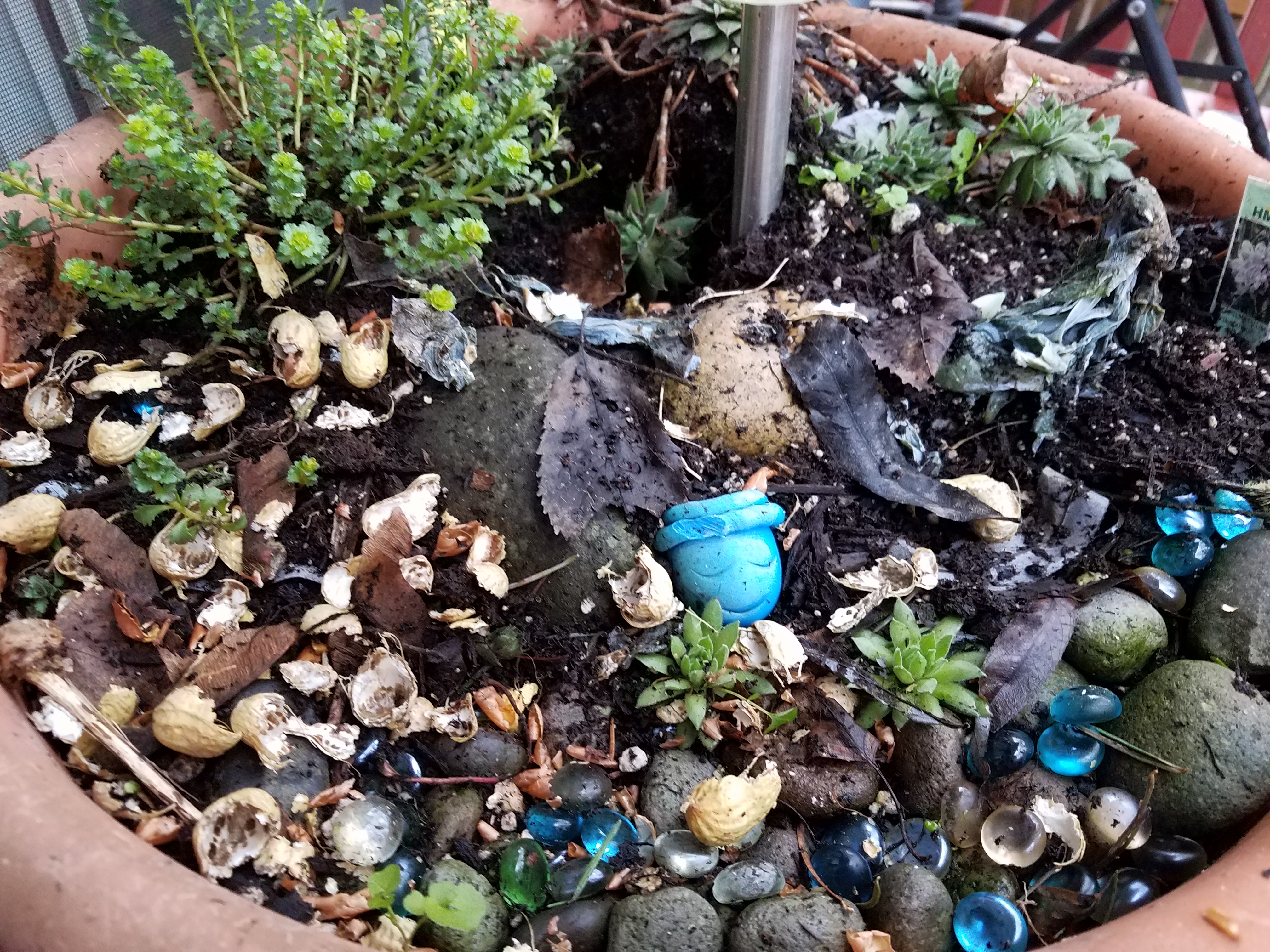
I had recently noticed that something’s been digging in my container garden. I know the squirrels, who are regular visitors, are likely suspects; I’ve seen them bury acorns in those same containers, so perhaps they’ve also been digging them up? Seems a safe enough assumption. It’s still just an assumption. If I hang on to that assumption long enough, it becomes a belief. As a belief, it sits in my head guiding my expectations of things to come. I expect, eventually, to see a squirrel digging up acorns from those pots, naturally.

A succulent garden in a large pot, thoroughly dug up, peanut shells littering the ground, carelessly left behind by a visitor.

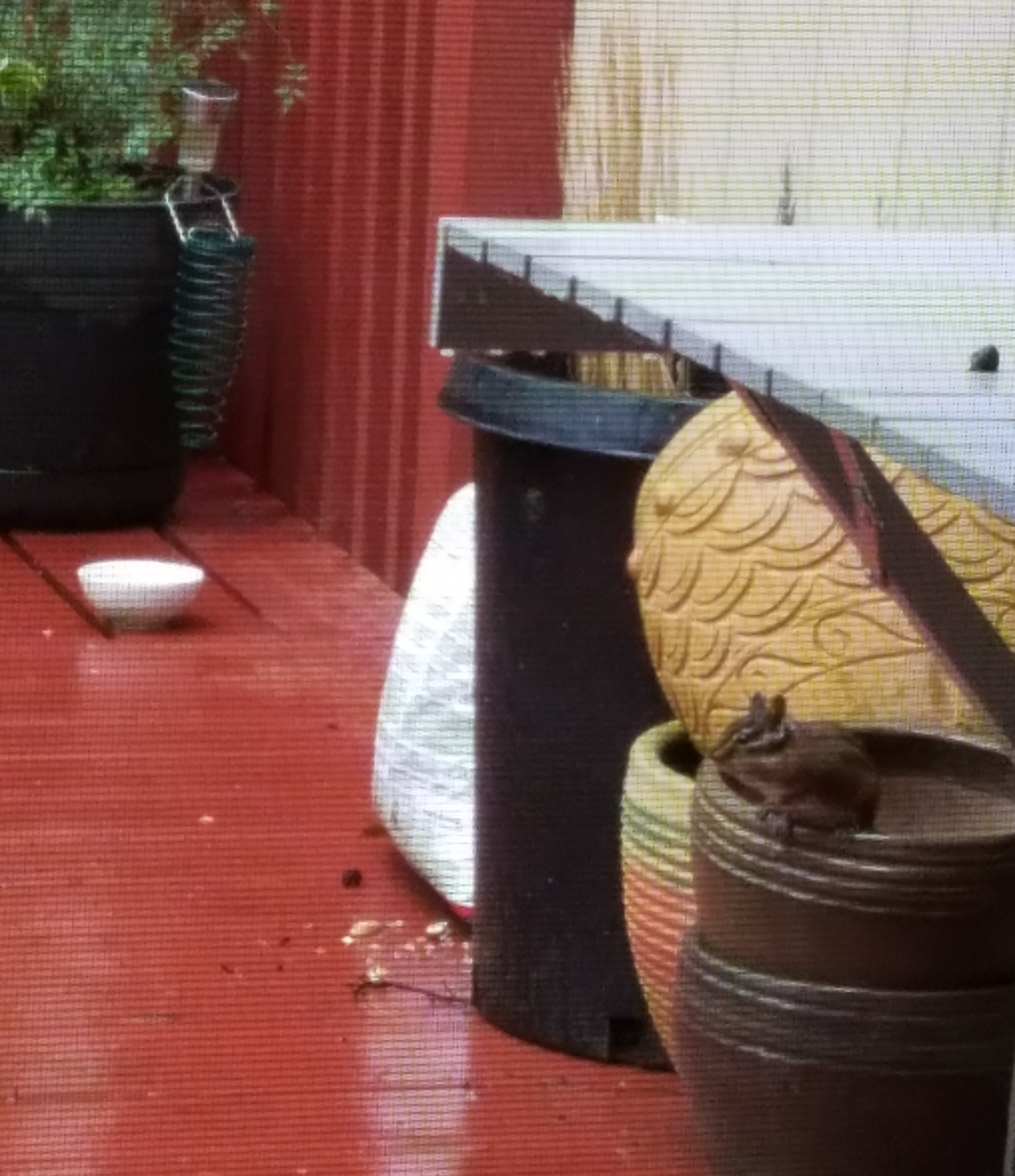
Funny thing about “reality”; it isn’t at all what we imagine, or assume, or expect it to be. It is what it is. (What it’s made of is a lofty topic for other days, and fancy experts, I can’t do it justice, here.) I happened to be relaxing with a cup of decaf, considering the afternoon ahead, and spotted movement on the deck out of the corner of my eye. Squirrels? Not quite squirrel like. And tiny. I turn slowly and watch carefully, waiting… waiting… waiting… My eyes adjust to the “pattern” of the container garden on the deck – there it is. A new visitor, or at least one I haven’t spotted before – a chipmunk. An actual chipmunk has come up onto the deck (which exists on the same level as the single level residence in which I make my home, but from the back of the house, would be “the second floor”, because the property slopes considerably). I sit and watch the chipmunk. The chipmunk darts here and there, behind pots, over pots, between pots, watching me. There is no opportunity to get my new camera, but my phone is at hand. I don’t reach for it right away, I just watch.

My chipmunk visitor pauses perched on a pot.

That’s when I spotted it, a snapshot of a reality I don’t generally see; the chipmunk is my digging visitor. My little visitor hopped up to the lip of first one pot, then another, and just dug like crazy, leaving pock-marked soil, divots, and craters behind. The chipmunk was digging up the peanuts the squirrels had recently buried and eating them, one by one. There’s even a chance it’s been happening right in front of me – the little chipmunk’s camouflage is very good. I sat and watched a good while longer, until my little visitor left.

Some movement startles the chipmunk, which grabs one last peanut and darts away.

I end up sitting quietly for some minutes, contemplating the ease with which I assumed the squirrels to be responsible for the “bad acts” of the wee chipmunks, who I hadn’t considered at all – because I didn’t know they would come up onto the deck in the first place, having never seen that behavior. I was limited by my lack of knowledge, and my reasoning was impaired by my assumptions. It’s worth thinking about. It’s worth getting all “meta” with that experience and recognizing the damage I potentially do to myself and to my relationships to allow unverified assumptions to become beliefs which inform my expectations and guide my decision-making. There’s something greater to understand in that, something that matters. I sip my coffee and stare into the rain.

I sigh contentedly. I don’t need more from this moment. This is enough.