Archives for posts with tag: words words words

Pleasure, delight, warmth, connection, intimacy, affection, regard… love…sometimes I feel so moved to say something about feelings. Do the joys and delights of human emotion ‘go without saying’? Well, sure, but… would they be more completely savored, relished with more thoroughness, or more powerful with a few words of review, commentary, or critique?

Pure and simple, without adornment, excuse, or context.

Pure and simple, without adornment, excuse, or context.


Yesterday I took a day to explore sufficiency in my emotional experience by not commenting about feelings, as much as I could find the will to resist doing so.  I worked on being present, feeling the feelings, enjoy my experience, being open to the moment, whatever it might be, and feeling the currents and shifts in my emotional experience without additional words – not just refraining from judging them, but also withholding stream-of-consciousness commentary moment-to-moment.

Like a cat in the sunshine; enjoy the moment that is.

Like a cat in the sunshine; enjoy the moment that is.

It was a hit and miss endeavor, and I’d be surprised if anyone noticed a changed outcome as much as I noticed the subtle change in will and effort, from within.

I did find that the effort to simply experience my experience without that added commentary (internal or verbalized) created a lot more awareness and presence for really listening with my whole attention, which seems very worthwhile, and had some lovely positive outcomes in improved intimacy, and engagement.  Getting to that wasn’t as easy as ‘well, I’ll just stop talking now…’. It’s a practice that goes a bit beyond that; I am learning to find sufficiency in living my experience in the moment, absent commentary. For now, that means my commentary, but at some point, I am hoping that my comfort with being present and open to my whole emotional experience without having to download critical commentary and analysis on some unwitting being will become, over time, a level of comfort within that reduces my vulnerability to suffering in the face of perceived criticism, generally.  I’m not just allowing myself to experience my emotional life without commentary, I’m doing so with acceptance and compassion.

This is an exercise that also highlights with extraordinary clarity how much of my day-to-day suffering is a product of my thinking, and nothing to do with my experience, at all.  That’s good stuff to know.

It began simply enough; I wanted to focus on hearing positive feedback in a positive way, and able to accept without disagreement, mitigation, or minimization the pleasant things my partner says about me, about us, about love.  My goal was to acknowledge compliments and positive feedback pleasantly, and appreciatively, without undercutting the moment with more words. It wasn’t any fancier than that. It wasn’t any more scientific or structured.  The results were worth the exploration, and I am very much inclined to continue to make an everyday effort to hear nice words, enjoy the moment, be appreciative, and then … move on, returning promptly to being.

Sometimes ‘being the change’ I wish to see in my world begins with a step in a direction I didn’t know to take…and sometimes taking a step is enough to illuminate the path ahead, at least a little bit. 🙂
Perhaps it goes without saying...

Perhaps it goes without saying…

Today is a good day to listen more, and talk less. Today is a good day to be grateful for small pleasures. Today is a good day for sincere thanks. Today is a good day to change the world.
We have language. It’s one of the interesting features of the creatures that we are, and of our experience. Words have extraordinary power; our understanding of the world, and of our lives and who we are, rest heavily on the words we choose to express that understanding.

We even understand how limiting that can be, and our understanding is portrayed in a simple bon mot, “A picture is worth a thousand words.”  We love words, we use words, even knowing our words cannot tell the entire tale.

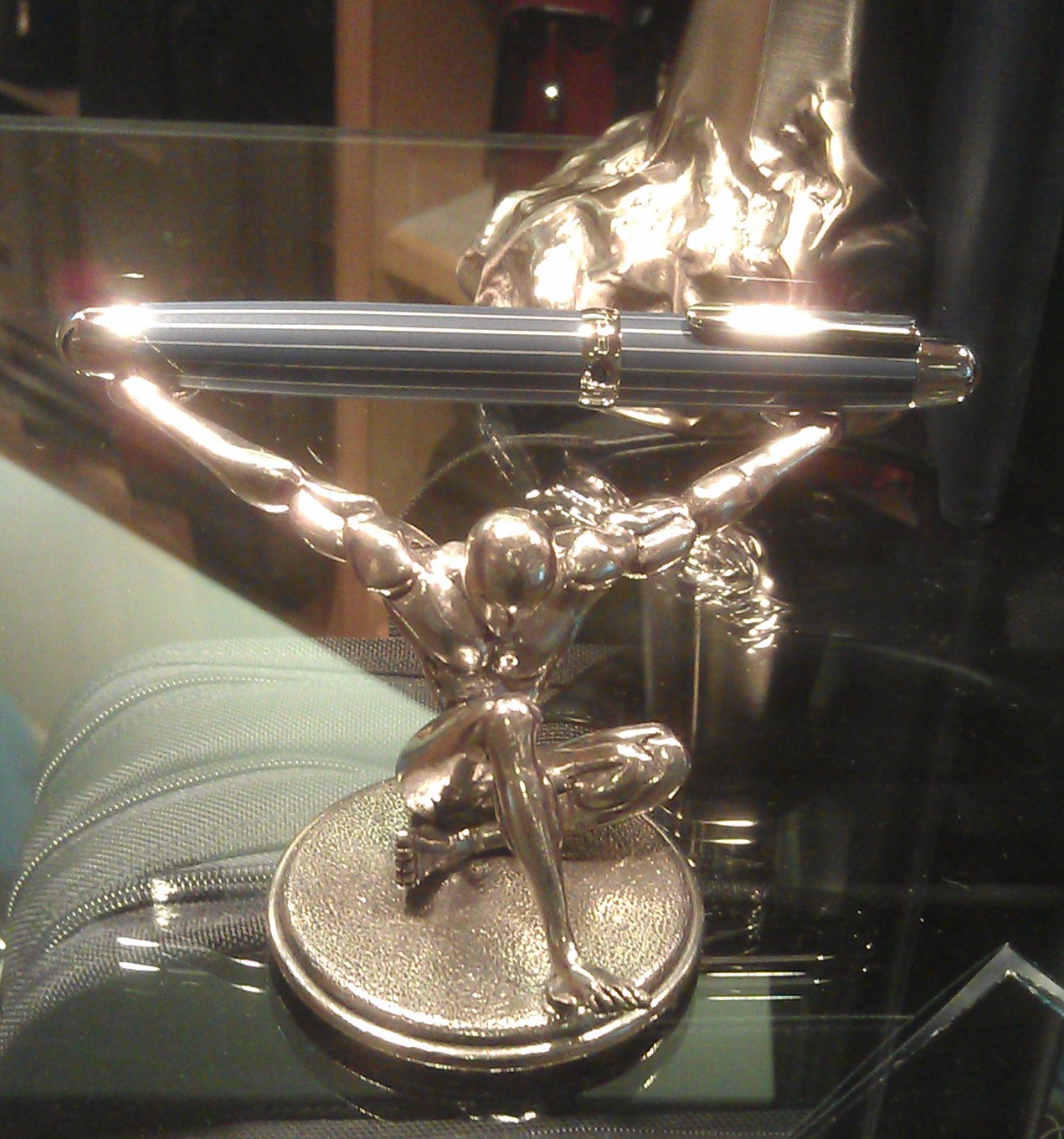
Atlas?

Atlas?

I probably use too many words. Even using so many, I sometimes find myself struggling for clarity, or to express myself accurately. Precision and poetry are two very different tools to tell a tale. I tend to be very frank, to the point of lacking common boundaries. I also tend to favor ‘pretty’ language, to the point of sacrificing clarity for something that ‘sounds better’ to me. My TBI has a thing or two to say about the way I use language and why, another tale for a different day. I bet it can be difficult for people to understand me, more often than I’m aware.

I’ve been more about questions than answers for a while now… how nice for me, I suppose, only… some questions function best immediately preceding an actual answer. lol I mean… “How do I get to the train station?” is likely to be most efficiently followed by actual directions, or a simple “I don’t know” than anything else.  I’m honestly not sure I’d do that well on it, if it were a test.  With me it might be something more like this:

Person “How do I get to the train station?”

Me “I rarely ride the train, these days, although I prefer it to flying. Well, unless you count the commuter trains…”

Person “How do I get there?”

Me “You’d have to get downtown. If you want Amtrak.  If you’re just using the light fail, you could grab it a lot of places. Where are you going?”

Person “To the train station. How do I get there?”

Me “To the train station? Or down town?”

Person “To the train station!”

Me “Oh, the same way as if you were going to go down town – you take the light rail.”

Person “Where do I catch the light rail to the train station?”

Me “Right here.”

Once upon a time at a train station...

Once upon a time at a train station…

Oh, yeah. So me. I do try to answer the questions I am asked as simply as possible, although it wasn’t something on my radar until a couple years ago. I often thought it was strange how jacked up people could get over ‘a simple conversation about a [train station]’.  Someone who loves me very much, enough to care that I be able to communication easily with other people, finally sat down with me and explained what he saw in our conversations – with actual sketches, diagramming of sentences, and propositional calculus; I got it.  Fixing it is an entirely different matter. Sometimes it is as basic as a preferred sentence structure, a syntactical detail, that confounds real understanding simply by being unexpected to the listener, or inexplicably uncommon in general speech. lol Sometimes ‘pretty’ gets in the way of conveying information. Pretty is distracting.

One of the bits of weirdness I am working on is a clear preference verbally for ‘phrasing things in the negative’. For example, if asked “How are you?”, I would be more likely to say “Not bad, thanks!” than “Good, thanks!”.  It’s pretty consistent with a variety of types/intentions of questions, too. I regularly reply to questions using negatively phrased replies, that seem to satisfy the question, mostly by way of dismissing it, rather than providing information. I don’t think I have a spare lifetime to study the phenomenon, instead I am simply working on changing how I reply to questions.

(Is it important whether the challenge I have with answering questions is a byproduct of a traumatic upbringing, or a brain injury? How many hours of my life have I wasted trying to source something solely because I wasn’t satisfied with it, instead of simply acknowledging my dissatisfaction and acting to change?)

The title? Oh, that – well, simply this: Dune would have been a very different movie, wouldn’t it, if, when Paul is asked “Tell me of your home world, Usul,”  he had replied “It’s not like here.”  I realized, upon considering it, that finding balance, contentment, satisfaction, and meaning is a different journey, and a different experience, when I am living what it is – rather than what it is not.

Words are funny things. The meaning of any given word may vary depending on context, or differences between world maps of speakers. Language has subtlety, and adaptability; it changes over time, based on common use.

Words.

Words.

Consider ‘critical thinking’. I found myself having a challenging conversation with someone about the nature of critical thinking, versus being ‘critical’. It took quite a bit of careful defining of terms, and semantic exploration to figure out where the core miscommunication could be found that resulted in such an adversarial dialogue about a word.

someone else's critical thinking word cloud.

someone else’s critical thinking word cloud.

I’ll probably be spending a lot of time on this one, there is certainly more to understand than I can offer up today with any coherence. When I study, I start with basics. So, this morning it is a refresher on critical thinking, in general, as well as reading up on criticism. Where the two share emotional territory seems to be the sticky bit for understanding and communicating.

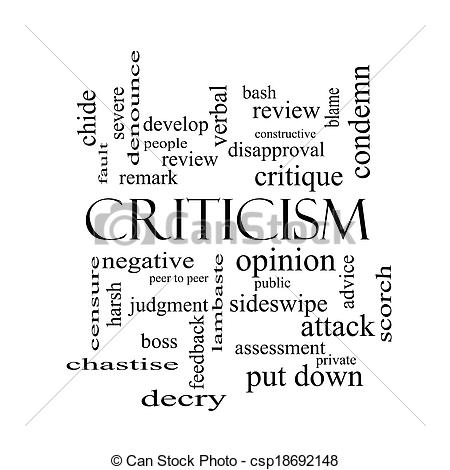
Someone else's word cloud for criticism.

Someone else’s word cloud for criticism.

My superficial initial reading suggests that the heart of the matter may be that critical thinking is a process of self, directed inward, and largely ‘about’ developing clear, rational thinking practices that result in a usably correct understanding of the world.  Critical thinking seems less about what I communicate to the world, than about what I understand of the world, myself, and how I got to that understanding.  Criticism is generally directed outward, ideally with an intent of providing a possibility for an improved outcome, improving a process, simply reaching a meeting of the minds, or improving upon a future outcome through communication of observations of less-than-ideal current conditions. (In my less-than-ideal experience of life and the world, criticism is often used for less wholesome purposes: directed at individuals to cause pain, to control behavior, to denigrate, to reinforce ‘place’ in a hierarchy, to enforce one’s own sense of self, or to support one’s own ideas, understanding, or context in life by tearing down what someone else understands. These uses of criticism have nothing whatever to do with building, achieving, or growing. Criticism is a favorite emotional weapon of the callous, the cruel, and the controlling. Emotional weaponry has nothing to do with critical thinking.)

It could be as simple as this, critical thinking has never made me cry, not even once, not ever.

There are ways to adequately, rationally, communicate disagreement without making someone cry. There are certainly ways to share improvements on an idea with hurting someone’s feelings. Criticism isn’t my first choice for either of those communication needs.

This weekend I am balancing my own critical thinking, and my desire to improve on that, and the very different need to communicate if/when I disagree with a statement, an outcome, or see an opportunity to improve on a task in progress. I won’t be using criticism. Today is a good day to change the world.
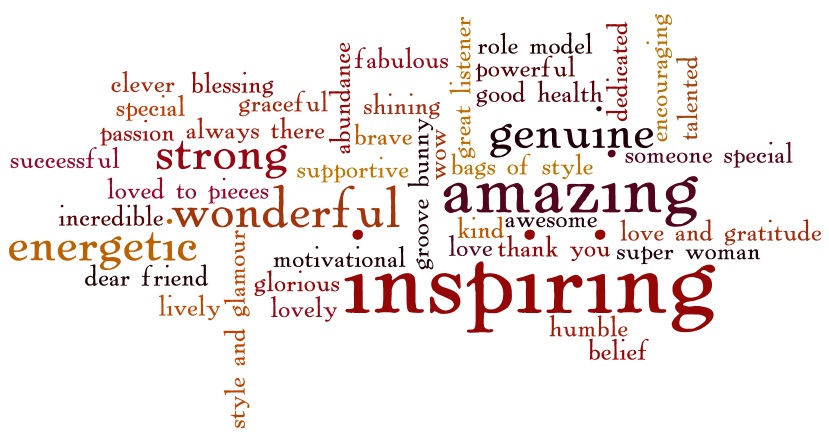
 

Appropriately, this one is all words. lol

I often ‘don’t feel heard’.  A gripe about me I’ve been hearing a long time, and a source frustration and suffering for me, has been that I ‘talk too much’ or too fast, or use too many words, or don’t pause to breathe, or give the other guy a chance… if you’ve met me, you’re likely among that good company of people frustrated trying to get a word in edgewise. I’m not bragging. I work on this – a lot – trying to train my brain to recognize and honor the subtle cues that someone I am talking to has something they would like to add to the conversation. I try to build the awareness to support the will to give someone else a chance to talk.  It’s not an area of strength for me, and is associated with the also incredibly poor social habit of interrupting people. There. I said it. I talk too much, for too long, and I interrupt people to do it.

It is interesting how rarely a woman will call me on it. They usually coast, conversationally, and use whatever white-space there is left when I do have to breathe, or finally finish a thought. The men in my life pretty reliably voice their frustration, irritation, or anger with my issue. It comes to me as feedback that I talk too much, or that I use too many words, or that I ‘never give someone else a chance to say something’, or that I deliver too many points without time for responses… it all comes down to – wait for it – they don’t feel heard, themselves, because I am ‘always’ talking.  I don’t feel heard = me talking = they don’t get to talk = they don’t feel heard.  This sucks for everyone.

Another point of interest along this particular scenic route is the behavior if I happen to be silent. Because I do stop talking, and that comes up with fair frequency. What happens when I am silent? Concern. Why am I not talking? What am I thinking? Am I okay? It’s rare for me to be able to sit quietly, unprompted for words, even by people who express a nearly desperate desire for me to stop talking.  I find that bit very frustrating, myself. It doesn’t appear to be different for women or men. I apparently talk so nearly continuously that it is a cause for concern to others when I am not talking. (I am not actually aware of myself talking that much of the time.)

Yesterday, and unsurprisingly, but also unexpectedly, my therapist joined the phalanxes of men in my life who have found it necessary to communicate that I talk too much. He was also by far the most cautious and gentle about it, leading me to my own conclusions without hurting my feelings or resulting in my feeling that what I have to say lacks value. He used a metaphor. I love metaphors. His was that of dancers. His observation was that although he very much wanted to ‘dance with me’ he felt he was more audience to my dancing, some days.  It was a good metaphor and he got through to me that the shared experience of conversation is collaborative, and participatory.  He also got through to me that men are not having that experience with me, and do want it.

SO… it isn’t just that I need to be sure to take time to breathe, or stick to one thought, or keep my words brief, or any of a dozen other tiny details I’ve tried for so long to ‘fix’. I get it. It’s about inclusion, and sharing the experience. It is more than a little embarrassing to be so painfully aware that for all these years I wasn’t actually understanding what was being requested.

I’ve had this general experience before. Coached, or criticized, over some larger process/task to the point of chronic frustration, tears or anxiety, and still unsuccessful at ‘doing it right’ – and finding out much later than there is a key underlying principle that I didn’t understand, or hadn’t learned, that suddenly makes it so much simpler.

This morning I don’t start the day bitter than one more man has told me I talk too much. Instead, today I start my day with a better approach to conversation, and a better understanding of how to be considerate, and respectful of others, how to support people more comfortably in dialogue, and even feel I understand being compassionate, sharing, and connecting and building intimacy, better than I did yesterday.  🙂

Today is a good day to ask a clarify question and wait for the entire answer. Today is a good day to smile, and let the other guy talk for a few minutes. Today is a good day to listen with my entire attention on the person talking. Today is a good day to enjoy dancing.  Today is a good day to change the world.
Well…here we all are. Here I am, anyway. There are opportunities to wonder about the rest of it. It’s been a year, to the day, since I started this blog. I was somewhere very different as a person one year ago. My understanding of myself was – and remains – incomplete, but certainly I am in as different a place with that as a journey of 365 days could possibly make, for me. Very different, indeed. Change, as comical as it looks on the page, is a constant.

People do change, therefore they can change.  It is not a given that they will change. That last is rather dependent on their own desire to change, for their own reasons, succeeding based on their will and actions.  These seem obvious enough observations, but I did not have that understanding a year ago.

We are each having our own experience. That, too, seems damned obvious to me in 2014, but I have an understanding of myself that recognizes and acknowledges that this was not ‘always’ my understanding of things.  It’s difficult to be certain quite when I became really sold on that understanding – that we are each all having our own experience. It feels like I ‘always’ understood this – but I can prove in my own journals and past writing that I did not, and also that the lack of this understanding in prior years was something that really had an effect on my ability to learn compassion, to build intimacy, to provide emotional support – even impeded my ability to listen well to others and respect or value their perspective.

Every step I take illuminates another step to be taken – like walking with a flashlight in the dark. I can recall, at some past points, saying something casual or flippant about ‘being a work in progress’, generally to minimize some mishap, or the consequence of some poor decision. This past year I’ve spent a lot of time learning what a very active thing progress actually tends to be – there is so much more to it than being aware it needs to happen, or reading up on some process for getting it done.  ‘Work in progress’ is an incredibly active thing, with a lot of verbs involved, and a hearty helping of will and action, and practice doesn’t lead to mastery, it leads to good habits and improvements over time.  I do not always feel up to the task, and I am surprised and even satisfied with myself for how far I’ve come in a year.

I feel powerfully committed to myself (that’s very new), and to building a good life, good relationships, a good heart, a compassionate nature, and to leave when my time is up able to say the world is, in some small way, the better for having endured my humble efforts. This is the most concise statement I know how to make about ‘who I am’ at the end of this one year.  I doubt I’d have made such a statement in any earlier time in my life.

Words like ‘mindfulness’ and ‘compassion’ have become everyday parts of my vocabulary over the past year.  I am learning new things; listening, caring, understanding, empathizing, sharing – no strings, less baggage.  It still seems strange to me that so much of what I’ve needed all along has come from within… and that ‘taking care of me’ isn’t about being ‘selfish’, defensive, territorial, or confrontational, but is very much about living a contented life, and enjoying a sense of well-being, by ensuring I see to my own basic needs with as much commitment and skill as I do the needs of others.

I am spending time today contemplating this one year journey because, as journey’s go, it’s been it’s been one of the most meaningful I’ve ever taken, and one that I understand more clearly now to be both ongoing, and worthy of more active participation. It’s my life, after all.  Sure, had I understood some things more clearly earlier in life, I’d have made some different choices perhaps, or had some very different conversations, but there is still so much ahead – many more moments, opportunities to choose, to talk, to act – to change. My will is truly my own – when I use it.

So are my words. This year I’ve used this blog to explore my world of words in a more honest way, with greater vulnerability, learning to share my experience without using emotional weaponry, and with consideration of possible outcomes beyond words on a page. Using my words to understand my experience more clearly, myself, without endless rumination or becoming mired in some momentary drama, and without over-burdening the emotional resources of my loved ones has been eye-opening regarding the limitations of words and language, and how it can direct my experience – and how I can learn to use those words to direct my experience,  myself, from within.  (Thanks for helping with all that, by the way, I appreciate you, and the time you’ve taken to share this journey with me in some small way.)

Soft jazz in the background, a latte gone cold on the side table, a soft gray morning sky on the other side of the window, the household sleeping… just one year? The distance between where I was a year ago, and where I am this morning can’t really be measured in time or distance.  The journey isn’t even completed – there is so much more to learn, to do, to experience, to share, to understand, to contemplate, to enjoy… This is just one moment of many. 

There is a lot to enjoy. This has definitely been a year to explore how very true that is.  There is a lot to enjoy.  Enjoying life is also a choice.

Here's to free will and good choices!

Here’s to free will and good choices!

Today I…