
I woke up with a thing stuck in my head. Not an actual object physically lodged in my skull, just a thought lingering in the background as though it had been the topic of conversation, or the content of a dream I had. It happens to also be the wallpaper of my laptop, and a reminder that whether – and how – we use our words really matters. For human primates, spoken language is our primary form of direct communication. Written language follows pretty closely, I suppose, and language is a powerful tool that can bring us closer – or drive us apart. It can reveal profound truths, or build terrible lies. It can soothe hurts and cause real harm, too. The thing stuck in my head as I woke, though? It was this:

Words matter. Meaning matters. Using words to directly communicate our experience or needs to each other matters. It’s definitely more efficient (and generally more clear) than less direct forms of communication, when used skillfully, with a bit of care. Of course, like any sort of “magic”, it can be turned to evil purposes, and be used for gaslighting, manipulation, deceit, misdirection, or to directly do injury (or persuade others to do injuries to one another).
I drove up the highway still thinking about words, language, and communication, and how difficult something that seems so simple at first glance can really be. We live in challenging times, and communication is both the cause of some of our difficulties as a species (and society), and also the solution. Weird, right? Hell, we can’t even be certain of sharing the same “dictionary”, as individuals; the nuances in how we each understand a particular word can vary our understanding so much as to be not at all related, undermining our ability to understand each other, and even limiting our ability to recognize that we have not understood.
Here’s an example. When you use a word like “liberal” or “conservative” what do you actually mean by that? Is it straightforward? Is it is a common and broadly shared definition of the term? (What makes you so sure of that?) When you use it, are you actually clearly communicating an idea – or is it “coded language” carrying more (or other) meaning than the definition that will be found in a published dictionary? Could you be more clear? Are you being less clear by intention? Is it actually “your word” expressing your own thoughts, or are you repeating someone else’s talking point, parroting a phrase or slogan, conveying a message that is not truly your own?
…Do you even know what you’re really talking about?…
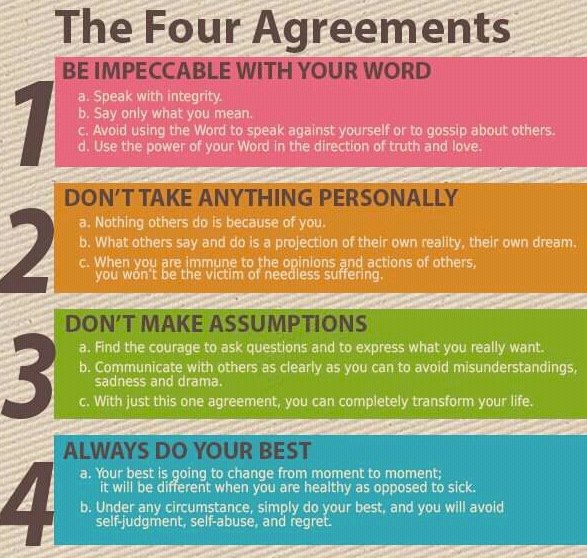
My thoughts bring me back to The Four Agreements. Not my first walk down that path, either. This peculiar little volume has some powerful ideas in it. These ideas are framed in a spiritual sort of context that isn’t a good fit for everyone’s thinking (including mine), but the basic messages being communicated are profound, and worthy of consideration. One of these “agreements” is the recommendation to “be impeccable” with our words. The book makes it clear that what is meant is to be clear, accurate, truthful, and also kind, compassionate, considerate, gentle, and aware of the potential for lasting consequences when we speak to each other. Communicating well takes practice, and maybe a lot of that, quite probably “forever”. Totally worth it, though. Skillful communication is a healing thing that brings people together, when used to connect and share and build.
Why am I even on about this, this morning? No idea. I woke up with a meme in my head. lol I woke up to some sort of interrupted internal discussion of the power of words and how we use them. I drove to the more distant co-work space I sometimes work from, still thinking about words, language, and communication (and my own commonplace difficulties with good communication). I hadn’t yet exchanged words with another human being at all. I’m thinking about it even now.
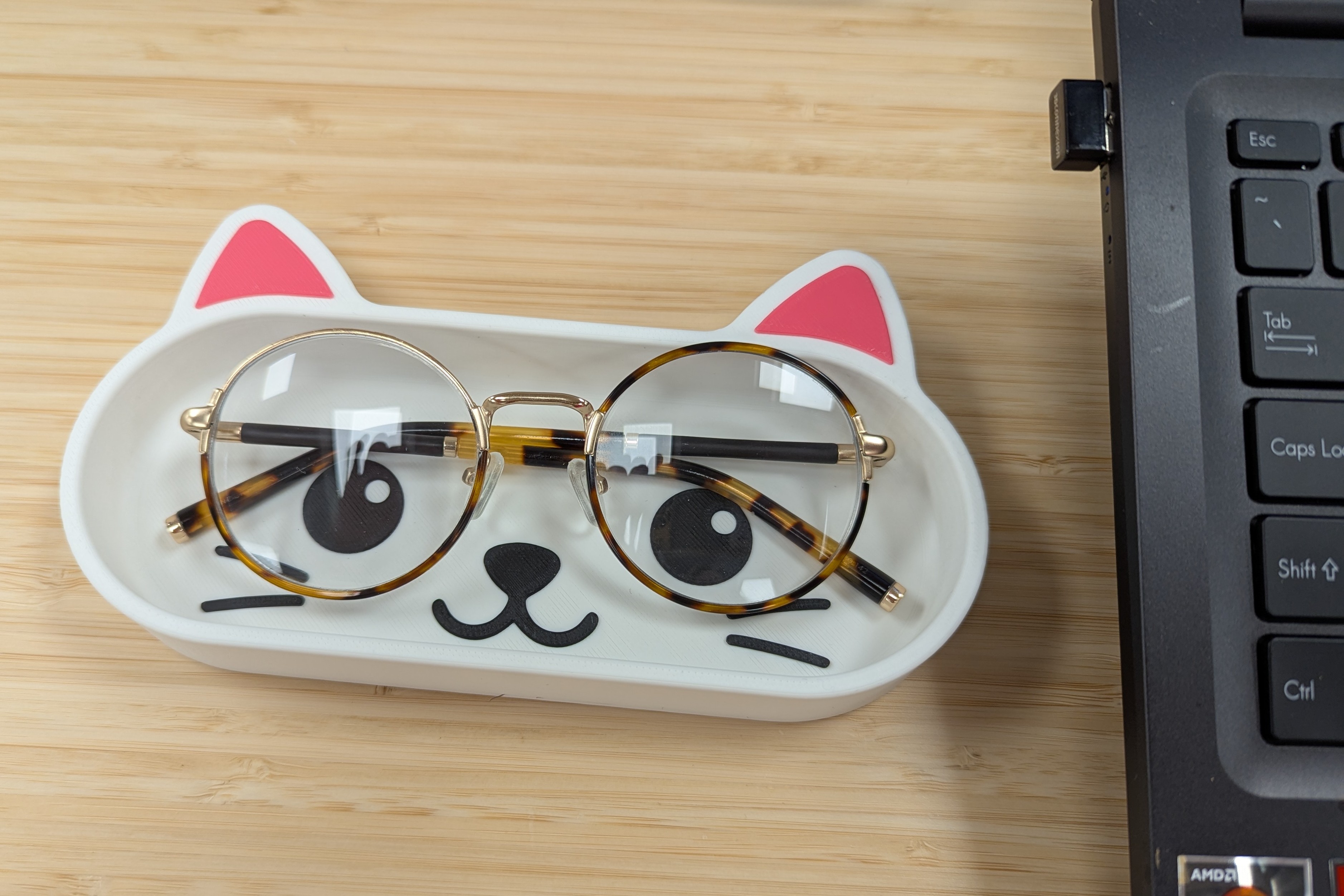
My Traveling Partner pings me a greeting in the form of a cute “sticker”, and shares some words about a quality of life improvement project he’s working on – improvements to our media library, and how it is organized – and I reply. Successful communication. How do I define that success? We understand each other, and feel loved. Win. I glance down at the wee tray my Traveling Partner made to hold my “regular” glasses when I have my computer glasses on, and feel wrapped in love. Another form of communication, not in words, but in actions. Those matter, too.
I smile to myself, and sit with my thoughts in the quiet of the office. I’m grateful for the solitude, the quiet morning, my Traveling Partner’s love, a job that pays the bills (or will, once the paychecks start coming), a pleasant little home, and the ability to use words and language. Powerful stuff. I think about all the books I have yet to read, and the poetry I have yet to write. I think about delightful compliments I have been offered, and useful feedback I’ve been given that I have used to grow and become more the woman I most want to be. I contemplate the dark power of sarcasm, insults, and angry words, and the lasting damage these can do. I think about promises given, promises broken, and how much it matters to keep our word. I think about the way unexpected kind words can lift us up from difficult moments. I think about how sharing our experiences with each other through story telling and anecdotes can teach, entertain, or bring us together. Words are powerful indeed.
I sip my coffee and for a moment, I deeply miss my Dear Friend, with whom I might have shared these thoughts, and further discussion. Words connected us over great distances and many years.
I breathe, exhale, and relax. I begin the day with words, and I’ll likely end it with words, too. I take a few minutes to meditate, letting the words fall away for a time, just being, and breathing. Now, it’s time to begin again. I glance at the clock, and prepare for the work day ahead. I remind myself to choose my words with care – because words matter.







 Evening Light