
Archives for posts with tag: long-term consequences of domestic violence

I’m sipping my coffee and ignoring (as much as I can) the chronic pain of my osteo-arthritis, which radiates upward from my spinal fusion, which was done years ago, when the state of the art was quite different than it is today. I knew then that my surgery was a new approach to the problem, and that some outcomes were unknown. The goal was to prevent me from ending up in a wheelchair partially paralyzed, and to allow me to continue to serve on active duty (Army). I guess for most values of success, my surgeries were a great success. I’m still walking. I did continue to serve (was even deployed to war in the 90s’), after a period of convalescent “retirement”, although I got “RIF’d” after that war (which broke my heart, but is an altogether unrelated story). So, generally, I’ve nothing to regret about that surgery if I’m just thinking about those details. But…

…There were consequences – of both the injury itself, and the surgeries that followed. The arthritis started to develop in my spine about 3 years after my surgeries. I didn’t understand why I was in so much pain all the time, and it took a rather stupid amount of time for that to be appropriately diagnosed; I was young. Medical bias being a real thing, many doctors were persistently just as “mystified” as I was. What could be causing my pain? How could I have arthritis at my young age? I still feel frustration and annoyance by that lack of curiosity, and lack of diagnostic skill (or persistance). Pain they could not feel themselves did not matter to them.

Then, there were the other things… the persistent chronic itch below my left shoulder blade, that I couldn’t quite reach and that scratching didn’t ease. A “phantom itch” that still bothers me occasionally (CBT really helped with that). A chronically cramped muscle down low on my back, on the left side of my body, most likely a result of the disturbed section of musculature attaching to my spine being put back “not quite in the right place” during my surgery (to make room for the hardware that was there for a year) and which healed into a new, less than ideal, location. This, too, still bothers me, often. Most of it I had to “figure out” in pieces, with limited help from too many doctors, and a lot of study. Sexual challenges (both neurological, and also to do with practical matters like lubrication) that were awkward to discuss were another thing; I was past 60 before a physician finally said, with some surprise, “of course that’s related to your spinal injury” after looking at my records, surgical reports, and images, and listening to me with great care. She seemed so matter-of-fact about it, I ended up enraged for days that no one else had said as much. I went through some shit over that issue with more than one lover, I can tell you. Turned out it wasn’t “my fault” or “a lack of desire”, or anything I could actually do much about; I have a spinal injury. Duh. I spent a few days moping around pretty pissed off about it.

What I thought I understood.

Why am I on about this, today? It’s to do with perspective and knowledge, and how those create our understanding (or don’t). I knew coming out of my surgery all those years ago that I had a permanent “30% stenosis”, and I felt that I understood what that meant. I mean, words having meaning, and I knew the meanings of the words…so… I understand? Don’t I? I thought I “got it”. My lack of real understanding was stunning, and it would be decades before that changed. It wasn’t actually a doctor that changed my understanding. It was math – and a moment at the dining room table with my Traveling Partner; a “lightbulb moment” to do with circles, that was completely unrelated to my spine, my injury, or my pain. lol (Pay attention in school, kids – math matters, and it’s useful stuff.) Something clicked.

What I hadn’t understood, in spite of seeing the images, reading the reports, and discussing with doctors, was what my stenosis meant in my case, specifically. For many years, I imagined 30% percent stenosis as a uniform 30% reduction in a circular area. (I felt pretty stupid when my understanding changed.) Firstly, the spinal canal as a “tubular structure” is not a beautifully perfect mathematical cylinder wherein a slice would appear circular. Not at all. It’s quite different than that. Also, and more importantly, my injury (which crushed two vertebrae, and broke off a spinous process which was then forced into my spinal canal by the impact and subsequently could not be removed) and the repair of that injury did not result in anything like a uniform reduction in area all the way around. Not even close.
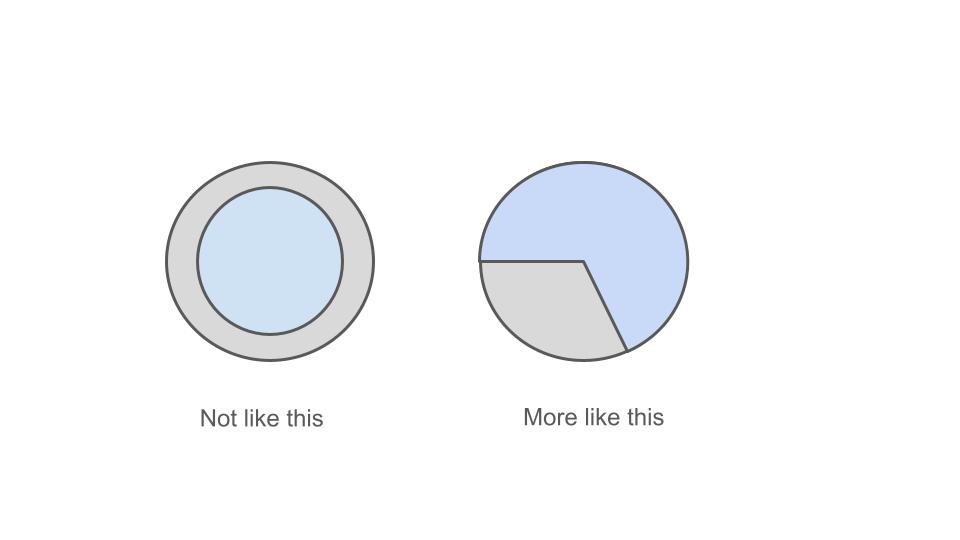
Geometry for the win. lol

Reality doesn’t care what we believe. Our pain doesn’t care what we think we understand about our body. Reality is. Pain is. Conditions are what they are regardless of our understanding. So, for years I had struggled with symptoms that made no sense to me – because I so poorly understood my condition – and which I could then not clearly articulate to doctors, who may also not have understood my condition, because (let’s just be real about this, eh) doctors are also human and also have limitations to their own knowledge (and limitations on the amount of time they can spend reading patient histories with the care needed). I understand more/better now, but… I’m still limited by all the things I do not know. I still live within a reality that I perhaps only partially understand because of those limits.

…And reality doesn’t care at all what I understand…

Our perspective and our knowledge limit our understanding – but reality goes on being real, regardless of what we think we know or how we think we understand the world around us.

I breathe, exhale, and relax. Living with the pain is pretty much a requirement. There is no option to live without it, at least not now, not really. I do my best. Maybe that reality will change at some point in the future? Technology changes. Medical progress is made. I’ve learned to practice fairly skillful pain management in the meantime. I’m not complaining, not really. Good self-care and skillful pain management may not add up to a “cure for pain” – but it does help.

I sip my coffee thinking about my Traveling Partner, his injury, his surgery, his progress… he’s come so far, so fast, relatively speaking (although I know it doesn’t feel that way to him). We both deal with pain, and I don’t personally see a future where that’s not a thing we deal with, each having our own experience, each doing our best. I feel fortunate to have a better understanding of my injury than I once did. I’m grateful for a conversation at the dining room table about math and circles and ratios and areas, and grateful for a partnership that understands pain and makes room for love anyway. Grateful for love. Things could be worse.

I look out the window. My mind wanders away from the pain I’m in – probably a change for the better. It doesn’t do to dwell on the pain. Don’t get me started about this fucking headache. I sigh quietly and glance at my calendar, and the clock. It’s time to begin again.

Many many years ago, in what now feels like an altogether different life, lived as if by an entirely different person, I made a choice to “save my own life” through extreme means (in that moment). My ex-husband was coming after me with a very large knife, in a small apartment in Germany. The front door was locked from the inside, and I could not open that door to escape down the stairwell. I dashed to the patio, barely ahead of him, and rolled over the balcony rail. He reached me as I dangled there in that moment between actions, and his face wore a look of astonishment and alarm, “Don’t!” he demanded urgently. “I have to,” I said quietly, and then I let go.

I hit the slick paved patio below quite hard. My ears rang, I felt something snap. I “saw” an explosion of lights behind closed eyes. I felt nauseatingly dizzy. I saw him looking down, then retreating from the balcony rail quickly – I knew he was on his way and I panicked. I jumped up from the pavement, disregarding all sensations, and climbed a fence and a hedge to get to the nearest neighbor whose lights were on. I couldn’t remember a word of German in that moment other than “polizei”, and so that’s who they called. The police arrived, locked and loaded, and told the neighbors (whose English was better than my German) that an ambulance from the American hospital had been called. The police went after my ex husband, and once they found him he was arrested.

When the ambulance arrived, the medics quickly determined I’d likely broken my back (and there I was sitting upright in a lawn chair, flexing my spine uncomfortably and commenting that I could not figure out why I was so “uncomfortable” – I didn’t understand that I was in shock). They insisted I be still. They put me on a back board, and on a stretcher, and rushed me to the ER. I wasn’t there long, barely long enough for X-rays, and for the Military Police investigators to arrive to interview me, while the doctor reminded them that I was heavily medicated and badly injured, and to keep their questions to a minimum. A helicopter arrived, and I was medevacked to the big regional Army hospital to the north, where there was a larger team more capable of treating spinal injuries. That was when I realized I was actually badly injured. The flight was short, and the strange air mattress they had me on was more comfortable than the back board or the hospital bed. When we arrived at the big hospital ER, they went to take me off that air mattress (I guess it belonged with the helicopter) and I cried and pleaded that they please let me stay on it. I still didn’t know “how bad it was” (or wasn’t) and I was starting to feel pain, again.

…It was pretty bad. My back was broken in two places, a spinous process from one smashed vertebrae had gotten shoved into my spinal canal, and I had a concussion and a broken wrist. I’d be in that hospital for a couple of months after 16+ continuous hours of surgery to fuse the damaged vertebrae and install bizarre and uncomfortable hardware to hold those surgical sites still while healing happened. (A year later, that hardware would all come out… except for a ferrous surgical wire that to this day prevents me having an MRI; the wire was woven through the fusion to hold things together.) I’ve got a long scar down my spine, a visible reminder, and an uglier, shorter one on my left hip where the bone grafts were taken to build my fusion. I don’t care about the scars; I lived. I’m still walking.

Funny thing about all of this; the longer term consequences were not within view. I had no idea that I would struggle to form healthy attachments or build trust with lovers, possibly ever again. I didn’t know that the nightmares would plague me for decades to come – some to do with the domestic violence, some to do with the medical terror of the surgery itself, during which the medical team had to wake me up to verify that I was responding to stimuli. There have been few things more openly terrifying in my life than being awake during spinal surgery, intubated, on life support, surgical incisions open, and being asked questions that required answers. There have been other consequences… the pain of my arthritis reminds me regularly of the choice I made. A choice to live, sure, but also… a choice that came with profound consequences. I paid a high price for this life of mine.

I pause for a moment to reflect on the value of a life. This life. My life. The choice I made to keep it, to trudge on, to try again, reaches so far back beyond that despairing moment in 2013 when I thought to abandon it. It has been a worthy journey, consequences and all. Sometimes it’s hard. Sometimes it’s easy.

…Some nights I still have nightmares. Some mornings I still wake up in pain. When I look back, though, I don’t regret that terrible lonely desperate choice to let go of a balcony rail and fall to my… freedom. Some choices just extract a big price. It’s a question I think few of us ask or answer before we choose; will the price be worth it? It’s hard to know, isn’t it? It’s probably worth wondering, for at least a moment… but there’s no map on this journey. We’re each walking our own hard mile.

Choose your adventure. Pay your price. Begin again. The journey is the destination.

It’s an okay morning. Saturday. Good cup of coffee. Had a pleasant frosty-morning walk through bare wintry vineyards as the sun rose, this morning. Returned home once my Traveling Partner pinged me that he was awake and starting his day. Could be that was a mistake (in timing)… I rushed home rather eagerly, to enjoy the day with my partner, and I may have been working from expectations and assumptions that were a poor fit to the reality of the morning.

I got home and he was just making his first cup of coffee, immersed in the emotional experience of being angry about the condition in which parts had arrived, and the likelihood that the parts he had ordered are not in any way actually usable for the order he is working on. His anger over the situation seems reasonable. He shares his feelings. He shows me the parts. His anger is evident, and he is actively working through it. (The way out is through…and…we become what we practice. Hold that thought.)

…I have difficulties with anger, particularly the expressed anger of male human beings with whom I am in a relationship (it feels uniquely terrifying and threatening even when only expressed verbally), and it makes it sometimes very difficult to endure the experience of being in proximity to that visceral emotional experience in the moment… It could be that this alone makes me potentially unsuitable for long-term partnership. I find myself thinking about that today. Today, my partner explicitly challenged my overall value as his partner due to my “lack of ability to be emotionally supportive”.

My sense of things is that I listened with consideration, compassion, and care for some length of time while he vented his feelings (my watch suggests about 40 minutes, but I don’t think that matters as much as that he didn’t feel supported). Maybe I don’t really understand what my partner needs from me when he’s angry about something? Listening doesn’t seem to be it. Even listening deeply and offering support, or asking how I can be helpful (if I can at all), doesn’t seem to meet the need. Commiserating with his position doesn’t seem to meet the need, and often seems to prolong the intensity of the emotional storm. Attempting to “be helpful” or offer any “troubleshooting” perspective is usually unwelcome (and most of the time I don’t have the specific expertise to offer that in the first place). It’s often been my experience that eventually, however supportive I am seeking to be, one common outcome is that at some point, the anger that is “not about me”… becomes about me. Terrifying, even in a relationship where there has never been any violence. The anger feels threatening. This is a byproduct of violence-related trauma in prior relationships. Decades later, I’m still struggling with this. It seems unfair to my current (or future) partner(s).

When a person with PTSD embarks on making a relationship with another human being who also has PTSD (or similar concerns), there are some additional complications that sometimes make living well and harmoniously together more than a little difficult to do successfully – and it’s less than ideally easy, no matter how much we may love each other. Sometimes love is not enough. Maybe that seems obvious? It probably should be obvious. I sit with that thought for a few minutes, uncertain what it is really telling me. Maybe nothing new. I mean… I know, right? It’s hard sometimes. (“This too will pass.”)

…Resilience is a measure of our ability to “bounce back” from stress…

Using meditation and mindfulness practices is one means of building improved resilience. Resilience lets me “bounce back” from stress more easily, and allows for greater “ease” in dealing with stress in the moment. Resilience supports improved intimacy. Resilience along with non-attachment is a good means of learning not to take things personally. Resilience makes some practices produce better results – “listening deeply” can be incredibly difficult and emotionally draining without resilience, for example. Resilience is like a glass of water, though; once the glass is emptied, no amounting of drinking from it will result in slaking thirst. I’ve got to refill the glass. (It’s a wise practice to keep it “topped off”, too; that’s where self-care comes in.)

G’damn, I really need some time away to invest in my own wellness and resilience. Quiet time taking care of the woman in the mirror for a few days, without any other agenda or competing workload. My resilience is depleted. Even “doing my best” is not enough right now – I feel comfortable acknowledging that. Can’t efficiently move forward from one place to another if I don’t recognize where I am right now – and start there. In this particular instance, it is less about physical fatigue than emotional and cognitive fatigue. I’m “brain tired”. I’ve been lax about my meditation practice, and it’s clear how much that does matter. I’ve taken on too much, and can’t seem to dig out in order to get to the practices and experiences that support my wellness; I’m scrambling just to get “all the other shit” done, that seems to have been given a higher priority than my emotional wellness or mental health. I can’t blame anyone else; it’s called “self-care” for a reason. I’ve been giving 100% of what I have to offer to work, to the household, to my partner, and not leaving much “left over” to take care of myself.

I find myself wondering if I would do well to leave for the coast a day earlier. It would probably be good for me. Probably not good for my partner who has been missing me, and potentially feeling un-cared for and lacking an adequate portion of my undivided attention and emotional support. I’ve only got the same 24 hours in a day that everyone else has – and figuring out how to parcel that out is sometimes difficult. I could do better. Seems like everyone needs a piece of me… and the only person who seems ready to yield what they feel is their “due” is… me. Fuck. That’s how I get into this quagmire of cognitive fatigue and emotional fragility in the first place, though. Taking care of myself really needs to be a non-negotiable – at work, at home, and in life, generally. I could do better.

…When I take better care of myself, not only is there “more in my glass” to share with others, the glass even gets bigger and holds still more… and I know this

We become what we practice. When I practice calm, I become calmer. When I practice good self-care, I become cared-for, resilient, and confident in my worth. When I practice deep listening, I become a better listener more able to “be there” for others. Understanding this is important. It is true of unpleasant emotions, too. If I “practice” losing my shit in a time of stress, I become more prone to being volatile. If I “practice” anger by way of confrontation, venting, or tantrums, I become an angrier person less able to manage that intense emotion appropriately. True for all of us; we become what we practice. How do I become the woman – the person – I most want to be? Sounds like I need to practice being her …and when I fall short? I need to begin again.

I finish my coffee. Breathe. Exhale. Relax. Begin planning the packing and tasks needed to prepare for my trip to the coast. I remind myself to take time to meditate, to check my blood pressure, to stay on time with my medications. It’s a lot to keep track of some days, but the pay off is worth it; I feel better, enjoy my life more, and I am more able to be there for my partner when he needs me. I’ve just got to do the verbs.

Time to begin again. Again. It’s slow going, sometimes, but I do become what I practice.