Archives for posts with tag: RTFM

This is a traveler’s tale, and a metaphor intended to provide perspective on a common challenge (for mechanics, travelers, and human beings, generally). 

Imagine, if you will, a person with a vehicle. The vehicle is used. The person intends to be the mechanic, and plans to “fix up” the vehicle for long-term use. The vehicle is not “chosen”, just happens to be the (used) vehicle at hand. It’s got… “issues”, some wear-and-tear, and some obvious damage. It’s the only vehicle available to the person-now-mechanic, no trade-ins, no swaps – it is what it is, and it’s got to last a lifetime.

The mechanic doesn’t have a manual for the vehicle, but other mechanics generously share what they have learned over time. He doesn’t choose to put this knowledge into practice; he’s sure he’s got this, and can simply do the troubleshooting and handle the repairs, although he doesn’t actually know much about the vehicle (in spite of having been the only “owner”, and using it regularly). He frequently complains about how crappy his vehicle is, and when offered advice generally finds ample reason to disregard it, or contradicts with some reason the advice doesn’t apply to his vehicle at all. 

This mechanic – on top of not having a repair manual for this vehicle – has never repaired a vehicle before, never done much troubleshooting, never had any training on vehicle repair (and most of what he “knows” about maintenance is incorrect). His toolbox is… empty. He has only his vehicle, which needs repairs, and his less-than-fully-committed desire to fix it (and continue to use it). He regularly swears at, and about, the vehicle, calling it names, dismissing its value to him, and expressing no particular gratitude for having a vehicle that runs, at all, even though it regularly manages to get him from place to place pretty reliably. 

Friends of the mechanic – mechanics themselves – offer the mechanic tools to add to his toolbox and make suggestions about how to proceed, based on their own experience learning to maintain and repair their vehicles. He slowly acquires some wrenches, a socket set, and assorted other basic tools for getting the necessary work done. Nothing much gets done; he doesn’t yet know how to use the tools, nor how to repair the vehicle (having overlooked, forgotten, or disregarded all the information and suggestions provided to him). He’s too embarrassed to ask how various tools work, or how best to use them. (He doesn’t want to “look stupid”.) He walks around his vehicle each morning with a frown, giving it an occasional kick, or knocking on it randomly with a wrench. He knows nothing. He’s pretty convinced he can – and must – do this entirely on his own, though all of his tools and knowledge have come from other mechanics, as it is. He doesn’t apply that information, nor learn those lessons. He stubbornly insists he’ll do this himself… then does nothing, because he doesn’t know what to do, which tool to use, or how to proceed. 

…He’s not even really sure what’s wrong, he just feels “everything is worthless and terrible”, without recognizing that much of his situation is his own doing… 

The mechanic continues to drive his damaged vehicle which runs poorly. He continues to bitch constantly about what a piece of garbage his vehicle is. He becomes angry with the frustration of mechanics around him who don’t understand how it is he feels so helpless…and they become angry with him. (Have they not provided the information? The tools? Some guidance? Haven’t they offered to help?) He’s sure they “don’t understand” his situation. His vehicle is a broken piece of shit that is worthless!! How do they not see that? Why don’t they tell him how to turn his broken vehicle into a luxury sports car in three easy steps?! Why didn’t he get a better vehicle in the first place?? How is it not obvious to every mechanic around that he’s at a unique disadvantage that surely they can’t understand!? Each morning, he wakes up, goes to his broken vehicle, and crossly goes about his business, frustrated and filled with despair. He often wonders if maybe he just sucks as a mechanic – but he’s yet to actually undertake any repair work, or try to repair his vehicle. Mostly, he just uses it and complains about its condition. Sometimes he lets it run out of gas, then complains about how the vehicle let him down, again. Sometimes he parks it carelessly, then complains about new damage when rolls downhill and hits a fence post or a tree. Sometimes he performs some maintenance task, but rejects all the instructive advice he was given, does the task incorrectly, and then complains that it “didn’t work”. 

…Doesn’t he deserve a luxury sports vehicle..? 

…Sure seems like everyone else has a better vehicle than he does…

It’s a metaphor. We’re the mechanics of these vehicles that are our mortal lifetimes. This fragile mortal vessel succumbs so easily to illness, injury, or simple fatigue. This delicate soul which inhabits our mortal form is easily damaged by trauma, disappointment, and sorrow. If we don’t practice good self-care, our experience over time degrades. We develop poor practices to cope with unpleasant circumstances. Our health may fail. Life happens – a lot – and there is much to endure. If we don’t “read the manual” (in whatever form that sort of information is available to us), we’re at risk of not caring for ourselves skillfully. When we don’t have the tools to care for our bodies, minds, and hearts, we may find ourselves broken, and feeling pretty lost and beat down. When we don’t practice the skills we do learn, those skills degrade and provide less value. When we reject help, or tools, from those around us who care and who have greater knowledge or experience, we slow our progress on life’s journey. 

…The journey is the destination…

We don’t know what we don’t know. There’s a lot to learn. Life is short – so short. I’m not saying being a mechanic is easy. We don’t even get to choose our vehicle! We get what we get – and it’s used by the time we realize we’re the only mechanic available to service it! 

  1. Practice using your tools. 
  2. Read the fucking manual. (And pay attention to useful information when offered.)
  3. Use the most appropriate tool for the task at hand. 
  4. Keep your tools organized and ready to use.
  5. Ask for help. 
  6. Accept help when offered – especially if you asked for it! 
  7. Do your best. 
  8. Take a break when you feel overwhelmed.
  9. Be grateful for the vehicle you have – it could be worse. (You could be walking.)
  10. Enjoy the drive. That’s the whole point. 

Becoming a skilled mechanic takes time and effort. Maintaining your “vehicle” in peak operating condition requires real work. Give yourself the time, and do the work. Mastery requires practice – a lot of practice – and there are no shortcuts. When you fail (and you will), learn from your mistakes – and begin again.
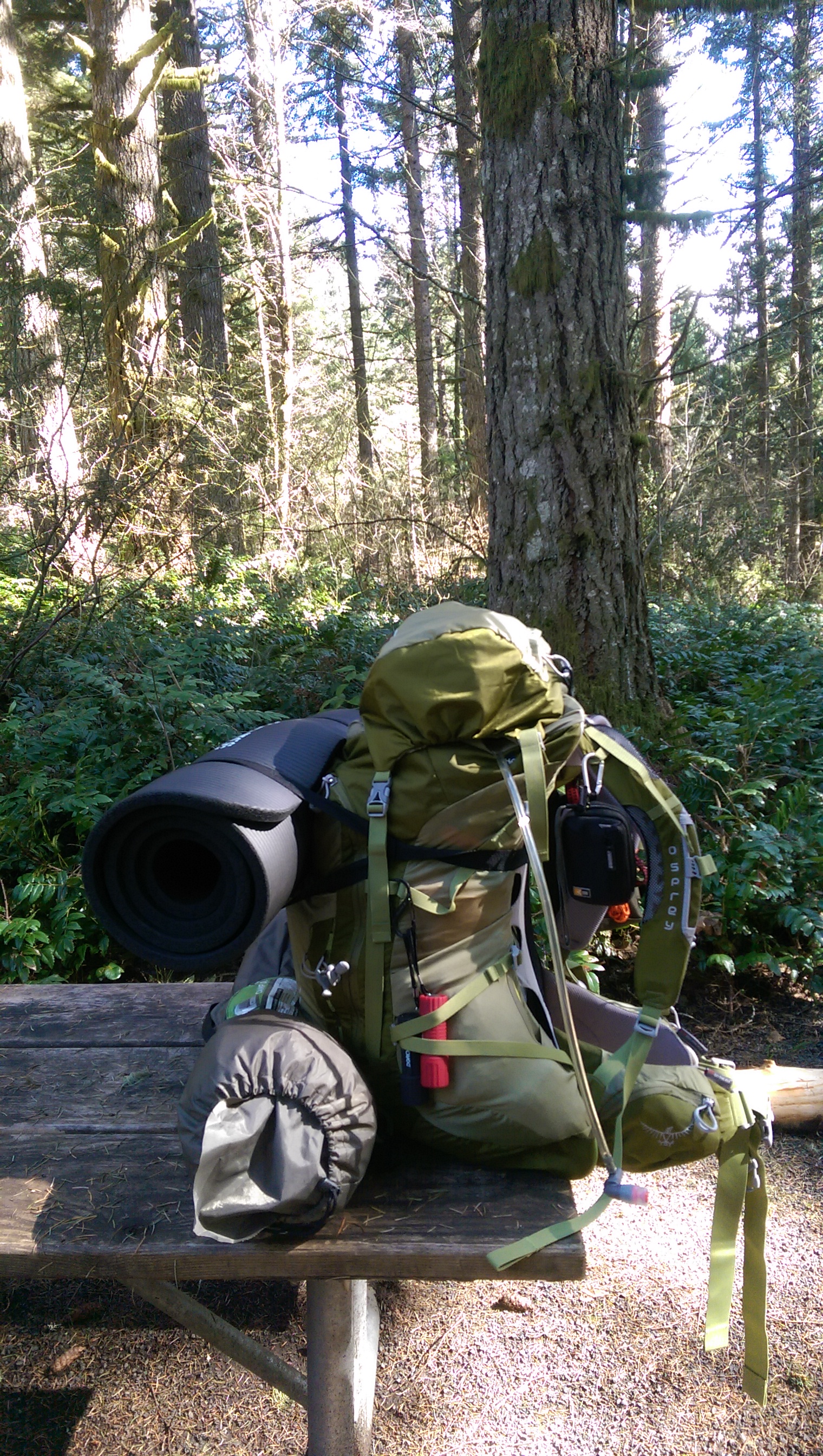
Lovely morning for walking, it is cool and there’s a mist clinging in low places. My thoughts wander here and there, and my musings are guided a bit by pain, which I mostly treat as “inconsequential noise”, trying to keep it in the background.

I find myself thinking about pain as a warning light on my “dashboard” in a driving metaphor for life. When we’re children, in a sense we aren’t even driving our own car, or managing the maintenance of it, at all. We’re dependent on the knowledge and care of the adults around us. Ideally, once we’re “old enough to drive”, we’ve also been taught what we need to know to be a “skillful driver” in life. We need to know when to refuel, what to use for that purpose, and what our vehicle requires for maintenance. Before we ever get on the highway, it’s helpful to ensure the vehicle is safe to operate.

… There’s no owner’s manual in the glove box…

On life’s journey, as the driver of our physical “vehicle”, we do well to pay attention to those dashboard lights… Do we have a full tank (enough energy and stamina)? Is our “check engine light” on?(Seems a suitable metaphor for mental health.) Is there some sort of warning chime pinging away to alert us that some physical detail is amiss? (Thinking about the seatbelt warning, or open door warning as metaphors for pain, perhaps.) I think you get what I am going for at this point, probably. There’s a lot involved in skillful driving before we ever get on the road… And it’s similar in life; before I can even begin again with a next step on life’s journey, it’s a good idea to make a point to check out the “vehicle” for readiness.

…It can be as simple as noticing my tank is on empty before setting off on a long drive far from the nearest gas station. Fuel up! Get enough rest. Eat healthy, nutritionally dense meals with an appropriate balance of macro nutrients. Drink enough water. Take medications on time.

…It could be more complicated… Is that check engine light on? Flickering mysteriously? Maybe it’s time to consider emotional health, stressors, and “work: life balance”? Maybe it’s a good time to see a therapist or spend quality time with a close friend?

…Has “routine maintenance” been handled properly? Good quality sleep, healthy exercise, and good self-care really improve the longevity of the “vehicle” we’re driving down life’s highway.

Once we’re no longer children, it’s a bit like being handed the keys to our first car. There’s a lot to learn and a lot of good practices to build. It’s more important to take good care of our vehicle than most of us understand when we first get behind the wheel. No owner’s manual. No map. For some drivers, not even a sense of where to go, until long after the journey is underway, and we’re many miles beyond and away from where we eventually decide we’d like to be.

Drive carefully. Pay attention to the road ahead. Check your fluid levels. And for fucks sake, do something about those dashboard lights! lol It’s a long drive, and you’ll want to be able to count on your car.

I sip my coffee in the morning sunshine, parked at the trailhead after my walk. I mostly got the rest I needed, but this broken down hoopty I have to rely on these days needs a bit of care. My “check engine light” flickers now and then, and there’s nearly always some warning indicator pinging at me to take care of something. It’s mostly pain and pain management, and I mostly treat it as though it’s the warning light that’s broken, rather than deal with the potential there’s some more serious shit going wrong. Putting it in those words, I find myself concerned that I am being stupidly short-sighted about something potentially serious that could eventually “leave me stranded by the side of the road”.

… I love metaphors…

I sigh quietly and sit with my thoughts, before making a note to communicate with my doctor about my pain and my persistent headache (again). I don’t want to waste time on detours, but I do want to count on this vehicle for a good long time. Self-care matters, but sometimes we need more.

… It’s already time to begin again…

Generally speaking, it makes a lot of sense to cook from the recipe, particularly considering I am neither a trained cook or chef, nor am I an amazing natural talent in the kitchen. I’m just a person cooking food. 🙂 The traditions of my family’s kitchens are not astonishing. They are a fairly commonplace hodge-podge of German, English, French, Slavic, and Mediterranean cuisines, with hints of flavors borrowed elsewhere. Ordinary “American food”. I was fortunate to be exposed to more foreign flavors and food experiences through my military service, and family members who traveled the world in their own endeavors. I enjoy food. I’m less of a fan of kitchen work (chopping, preparing, measuring, cleaning up, doing dishes), but… if I don’t cook, I have far fewer choices of what foods go into my mouth!

…If I want to reproduce a food, meal, or flavor I fancy, I pretty much have to follow the recipe with care, though, is my point…

“Follow the recipe” sounds rather a lot like “follow instructions”. There is, for sure, a time and place where/when not following instructions may be the wiser course, but let’s be real; those times/places are by far the exception. In general, it makes sense to follow directions, instructions, recipes, how-to guides, care manuals, safety warnings… all of that.

I had a powerful lesson in following the recipe over the holiday weekend – and it was tasty and delightful. I (re)learned how to make scrambled eggs (that are actually worth eating)! Doesn’t sound that exciting, I’m sure. It was delicious (but now I can’t say I don’t like eggs). I also (re)learned to make really good waffles. So much yum. 😀 Super delicious, and I got there by reading with care (in this instance equivalent to listening deeply), following the recipe, and practice. Totally worth it!

…Then, I ruined the wire whisk for my Kitchen Aid mixer by throwing it into the dishwasher carelessly (acting on the recollection that it is dishwasher safe – it isn’t – from a much older model that had an all-stainless whisk attachment – that still had care instructions, by the way, that said “hand wash only”). Well, shit. Harsh reminder that “rules is rules”, and in some cases (often with safety instructions or care instructions), those rules are there for a legitimately good reason. In this case, the dishwasher efficiently removed the coating from the zinc-containing base metal of the attachment’s hub (the wires themselves are still stainless), creating a safety/health concern, and also just generally an icky inky mess any time I touch that whisk.

I woke to a polite note from my Traveling Partner, who had emptied the dishwasher this morning. It included a frowny face, and a reminder that he’d specifically reminded me not to put these accessories in the dishwasher, and asking me to toss the ruined accessory and order a new one. Fuuuuuuuuuck. Damn it. Shit. I’m annoyed with myself. Learning new shit sometimes means unlearning old shit – and guess which one of those things does not come naturally to me?? (If you guessed that I may have some challenges unlearning habitual behaviors, you are correct!)

Follow the recipe. Yes, maybe you have a tweak in mind that could be really good… I’m not saying don’t explore or adventure, just noticing how much more successful I tend to be, in a great many circumstances, when I follow recipes – whether those are recipes for waffles or recipes for success is not relevant here. Recipes. Instructions. Warnings. Care guides. RTFM. Even I know that. Here’s the thing; I’m learning that there are elements of recipes one can adjust more or less to preference or with wild abandon… and others that can’t be adjusted without wrecking the result. Some substitutions work. Some don’t. Some changes affect flavor. Some changes don’t. Some changes result in the chemistry of the recipe breaking down completely (go ahead, leave out all the eggs, cheese, proteins and starches from your “casserole” – let me know how that one goes). So. There’s that. One more challenging bit of skillful adulthood to tackle. LOL

…Note: there’s really no version of “changing the recipe” that applies comfortably to actual safety instructions. Just saying, be safe.

So, this morning I’m sipping my coffee and shopping for a replacement wire whisk, and feeling grateful to have a partner who is fairly patient with me day-to-day, and feeling grateful to have reached this place where I am also patient with myself. There’s a ton of practice involved in changing old habits or frankly-less-than-ideal behavior. My results vary. I definitely have to begin again, like, a bunch. It is a process.

Heading into the new year, I’m not even upset over it, just mildly frustrated, a bit disappointed with myself, and eager to begin again. 🙂

I talk a fair bit about journeys, paths, traveling, my Traveling Partner… these are literal experiences, and also metaphors. I figure mentioning that is worthwhile, now and then. I use these concepts to give context to bigger questions. “Journey” is pretty vague… by intent. There are so many sorts of experiences of journeys, you see, everything from paved freeways with plentiful amenities along the way, and handy GPS, to unmarked trails through wild spaces, no map, no milestones, no safety net – you need something, you better bring it. The options are numerous, as are the choices.

How we prepare, and what we bring – as tools or baggage – matter to every journey we take, and ever day we live life.

Maps are handy… definitely bring one of those along on any journey… if one exists, at all. Sometimes, some journeys, there is no map and we’re utterly on our own, blazing our own trail through life’s wild spaces. It often feels that way, even when we have an actual usefully accurate map in our hands. Think that one over. How often has someone given you useful worthwhile truly helpful advice, or recommendations, that you disregarded… discovering too late that it really was just the thing to have done, to get the result you were seeking? 🙂

Sometimes I over-do the planning, packing, and preparation, and get part way along my travels heavily encumbered by a ton of crap I did not need to drag along with me. Baggage comes in a lot of forms. I definitely try to set as much of that down as I possibly can. “Traveling light” has this tendency to make long miles feel shorter. Everything we carry with us feels heavier over time. We become fatigued with the weight of what we carry, particularly if it does not serve an immediate necessary purpose.

The nature of the journey we set ourselves upon matters, too…

Sometimes the journey is a rough trail, steep, muddy, and treacherous…

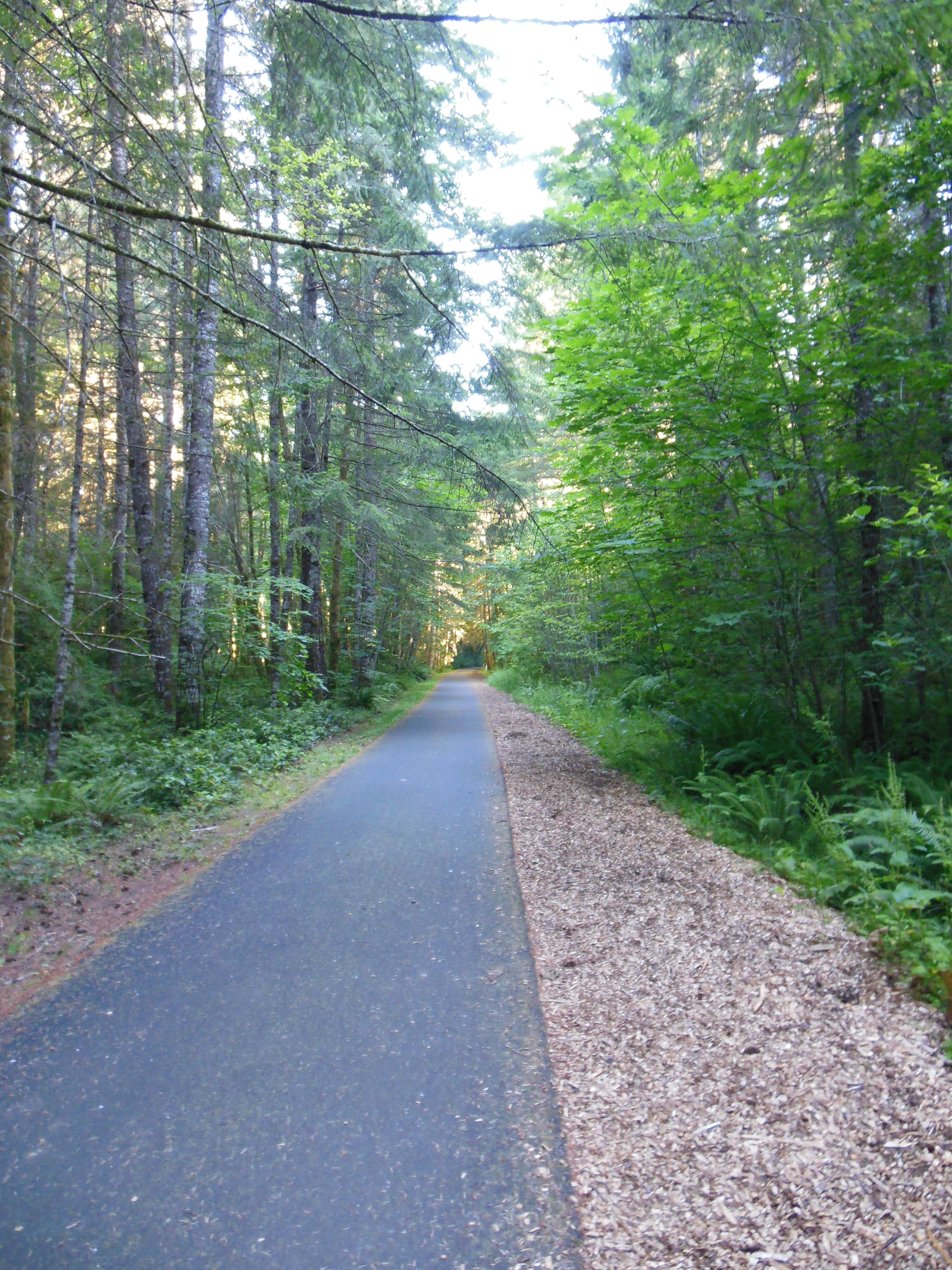
…Sometimes the way ahead is obvious, the journey level, and paved…

I’m just saying, as metaphors go, journeys offer a nice assortment of meaningful options to reflect upon. 🙂 Where will yours take you? Do you know where you’re headed?

It looks like a good time to begin again… “Don’t forget to bring a towel!”

Be who you are. I say it. Other people say it. I think when it is said, it’s generally well-intended, and a sincere expression of an understanding of being that implies being all of the best of who we are, and hopefully still contains a kernel of awareness that reducing ourselves to our own worst qualities, as we understand those ourselves, is not at all the intention. But… just in case… I’ll go ahead and say that, too; being who you are implies being who you are wholly, with skill, and with your fundamental good-nature and humanity intact. Don’t just dissolve in a heated moment, becoming your inner most slime mold. lol That’s less… yeah. It’s less. Less well than you could choose to do. Less pleasant among all your character qualities. Less ideally you than even you would have you be. Yep. Still a shit load of verbs involved there, and some willful decision-making, and the needs to manage your chaos and damage with a modicum of adulting – and you will fail. Sometimes. Other times, you will rock the shit out of all that adulting, and friends and loved ones will be astonished by your general awesomeness and ability to love and treat others well. Mostly, I’ve found, I fall somewhere between those two extremes, day-to-day. Doing my best. Capable of improving on that. Working to improve over time, and become more the woman I most want to be.

Authenticity is a big deal. You really are you, and not someone else. Becoming the person you most want to be isn’t about faking something, or wearing a mask, or playing dress up. When I say I want to become the woman I most want to be, I mean in all the best ways I see myself, and then maybe improving on that – in a bunch of other ways I would like to see myself, but don’t yet, because I’m legitimately not that, yet. We become what we practice. If I want to be accepted as being gracious, calm, and loving, it is necessary for me to practice actions and behaviors that are gracious, calm and loving. Those qualities don’t become “who I am” until there has been so much practice, sufficiently skillfully, and entirely sincerely, that over time the behaviors themselves become my default behavior, and the thinking behind them has become, over time, my natural way of thinking. Am I “faking it” in the meantime? Nope. I’m practicing. Still has to be “the real deal” – I can’t grit my teeth, clench my jaw, and go through the motions (that’s not practicing a behavior, that’s enduring having to comply with a commitment, perhaps, but it’s not “practice” – which requires a certain amount of “buy in” and willingness to change). “Fake it to make it” isn’t a thing I do, myself, because I don’t think that works for me. The key is in the word “fake”. I prefer to rephrase that well-meaning sentiment as “we become what we practice”.

Don’t be fake. Get real.

Who do you most want to be? Behave as though you are already that person – because those behaviors align to your values. (If they don’t, is that really who you want to be, or are you just saying that because someone else wants that of you? Something to think about.) Sure, there is awareness and effort involved, and every day choices matter a lot. It helps, too, to have an understanding of who you already are. Ask the hard questions of yourself. Look yourself in the eye and call shenanigans on your own bullshit – leave all those other people out of it, they’ve got their own hard mile to walk.

Being authentically this person that I am doesn’t permit me to be nasty to people and just say “well that’s who I am, accept me” in any comfortable way (I’ve seen a lot of people take this strategy, though). I find, instead, that it forces a certain uncomfortable obligation to be authentically vulnerable about where I could improve, or change, based on my own understanding of myself and what I want of me. Yep. Being authentically me, accepting of myself, and non-judgmentally aware of “who I am right now” doesn’t alleviate the burden of self-reflection and personal growth, and it doesn’t allow me to break my social contract with the world (which is basically an agreement to treat others well, based on certain common standards). What it does do is place my growth and progress in life in my own hands, based on my own choices. I can choose to be the worst of what I am capable of – or the best – or I can fall somewhere between the extremes. I can choose to progress, to do nothing, or to fall behind. I can act using my own will and agency, or allow learned helplessness to stall me in the moment. All choices. I can choose authenticity – or I can choose to go through the motions, resenting my lot in life.

Thoughts on a Wednesday morning, as I prepare to begin again. Real-ly.