Archives for category: Anxiety

I’m an artist. A painter, primarily. I have a regular “day job” as an analyst, and have for many years – it’s just easier to support my lifestyle and my creative endeavors with a bit of steady employment, versus attempting to use my creative endeavors to support my lifestyle (for me – your results may vary). I sat down with my coffee this morning, after a lovely “camera walk” at a new (nearby) location and a coffee with my Traveling Partner, and I began scrolling through the past year’s pictures taken hither and thither with the purpose of updating my “all the art” photo album, and the “new art since 2010” album. Google Photos politely and helpfully took me to the last items that were updated to each album as a starting point to the scrolling.

…That was more than a year ago…

I scrolled… and kept on scrolling. I scrolled through pictures of flowers in my wee garden, and pictures of garden efforts that were varying degrees of success. I scrolled through seemingly endless pages of pictures from camera walks over the course of the year. I scrolled through pictures from multiple business trips and a trade conference. I scrolled through pictures of weather, and pictures of “why not?”. I scrolled through pictures snapped in retails spaces of items to share with my Traveling Partner for inspiration, or to gauge interest. I scrolled through holiday pictures, camping pictures, lunches, brunches, and coffees with friends. I scrolled through pictures of birds, squirrels, racoons, cats, dogs, snakes, and deer. I scrolled through pictures of beach trips, birthdays, and miscellaneous adventures here or there. I scrolled through pictures of my partners shop as it developed over time, and pictures of projects he completed there. I scrolled through a handful of selfies, and numerous pictures taken in order to confirm “is this the one you want?” while I was running errands. You know what I mostly did not scroll through? Pictures of new paintings. There just weren’t many. Two? Four?

I look over my shoulder at work in progress, and the most recent completed work… minimal. 7 pieces? 9? Not even 1 per month for the 14 months of pictures I scrolled through, and most incomplete or not photographed. Damn. It’s no wonder I’ve been feeling (for quite a while) this certain specific feeling of being “crowded” or “imposed upon” by the day-to-day demands of living a full life. I’ve failed to nurture this part of myself, and that’s honestly a massive self-care failure. I could do better. Time to reflect on the experience of painting so much less for the entire time I’ve had a dedicated studio (in any living space in which that has been the case, frankly)! It makes no fucking sense. I created the space to work in… why am I not working in it?

…Is it a lack of inspiration? That seems unlikely given the number of hastily dashed off notes to myself about things I want to paint, and the number of pictures I’ve taken specifically with compositions on canvas in mind.

…Is it lack of time? That’s an easy out; life is busy, work takes time out of my day, and there’s certainly plenty of work to be done to maintain our quality of life…but…do I really lack the time? I suspect not – but I’m sure not using the time I have to paint (or, let’s be real, to write on the regular).

Is it lack of will, interest, or materials? All pretty practical, but no. I’ve got the materials, the space, and the time available… My interest hasn’t waned. I can’t dismiss “lack of will” entirely; if I had sufficient will-to-act, I’d be in the fucking studio painting, would I not? I find myself wondering what’s up with that?

Being true to the artist I am, I see the effort, the will, and the self-care time going more to walking with my camera, out on some trail, breathing the fresh air, getting some exercise – and these are good things. I can’t complain that I’m treating myself badly. Those walks definitely nurture my creative side – and a camera is far more compact to travel with than paint boxes and an easel. It is a very different sort of work, though. For me, painting (note: I’m primarily an abstract impressionist, more or less…) is a way of communicating things I don’t have words for (and that’s really saying something considering “all the words”). When I stop painting, I start trying to force emotions into words I don’t have. Perhaps unsurprisingly, this eventually tends to result in mindless nonsensical chattering of streams of consciousness that are distracting, confusing, or meaningless for whoever happens to be stuck listening to me babble. (Do I sound as if I’m being hard on myself? Consider the burden on someone who lives with that, though… how tough would this be on my Traveling Partner, a very reality-bound engineer-sort?)

…Perhaps that’s the key. This partnership. This amazing love I share with my partner. I am reluctant to yield moments I could stand near my partner just breathing the air he exists in for something so self-centered as painting. That’s not fair to either of us – surely I would resent that over time, and that could undermine this profound love I feel for this singular human being. We both want to hang out together approximately every minute of every day – realistically we both also recognize that won’t actually work. It’s also not particularly emotionally healthy. So. There’s that.

I guess I’m just saying, I really noticed that I’ve “failed myself” a bit on this detail. There are paintings and ideas for paintings in my head, living in a space that has become crowded with them, distracting me and making it tough to properly communicate whatever else is going on (most especially related to any of those notions/thoughts/ideas).
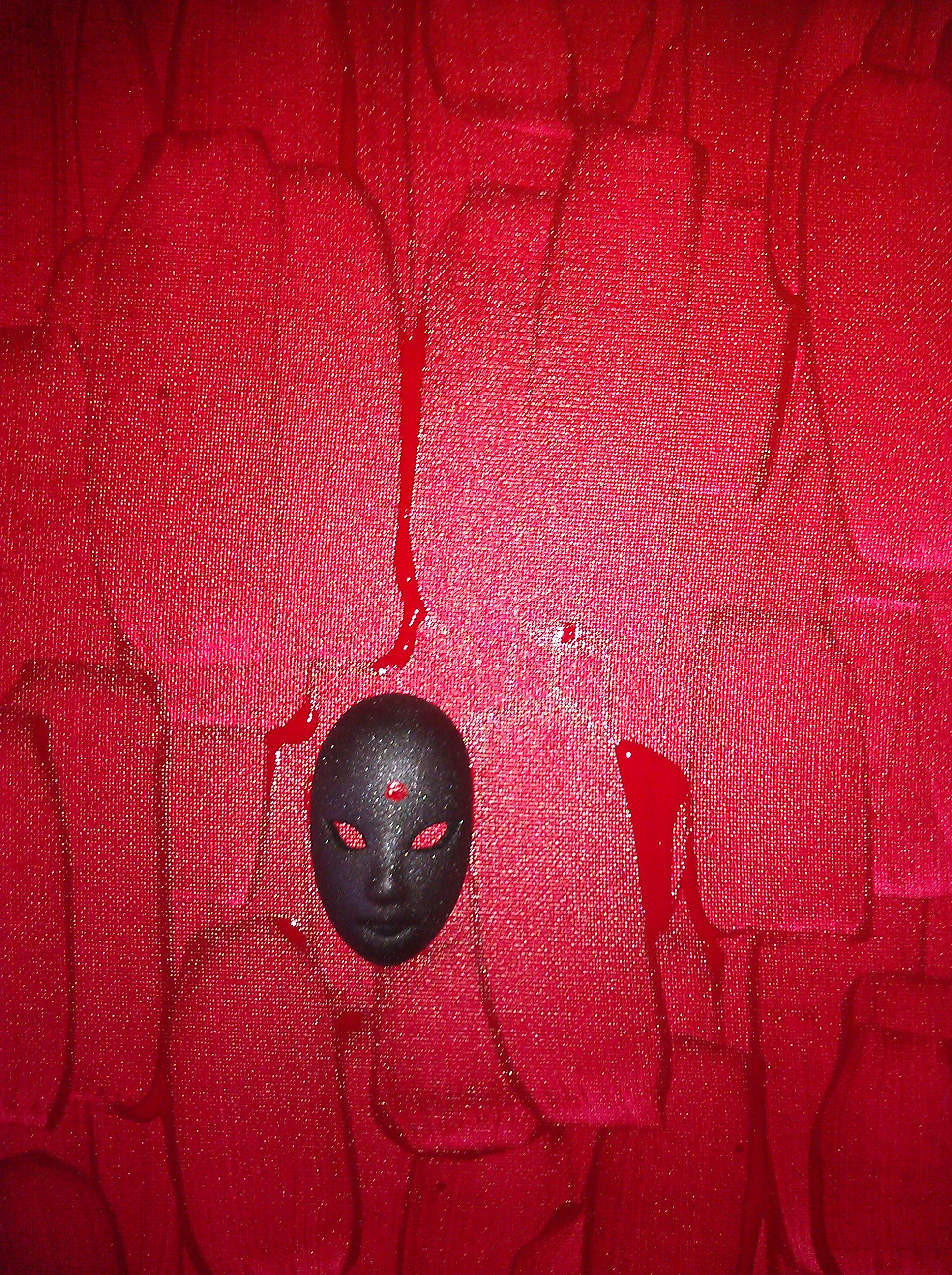
“Anxiety” 10″ x 14″ acrylic on canvas w/ceramic 2011

The other day, in response to a moment of stress and heightened background anxiety, I retreated to the emotional comfort of my studio… and got to work on a new piece. Fuck that felt good!! “She discovered the answer was within her all along…” Omg. So trite. So… ridiculous. I think on the number of years I painted on the floor…or in some corner…or on a kitchen counter or dining table, any space I could use that had enough room to work. I could do better for myself. I felt so much less anxious just getting some color on canvas… something to think about.
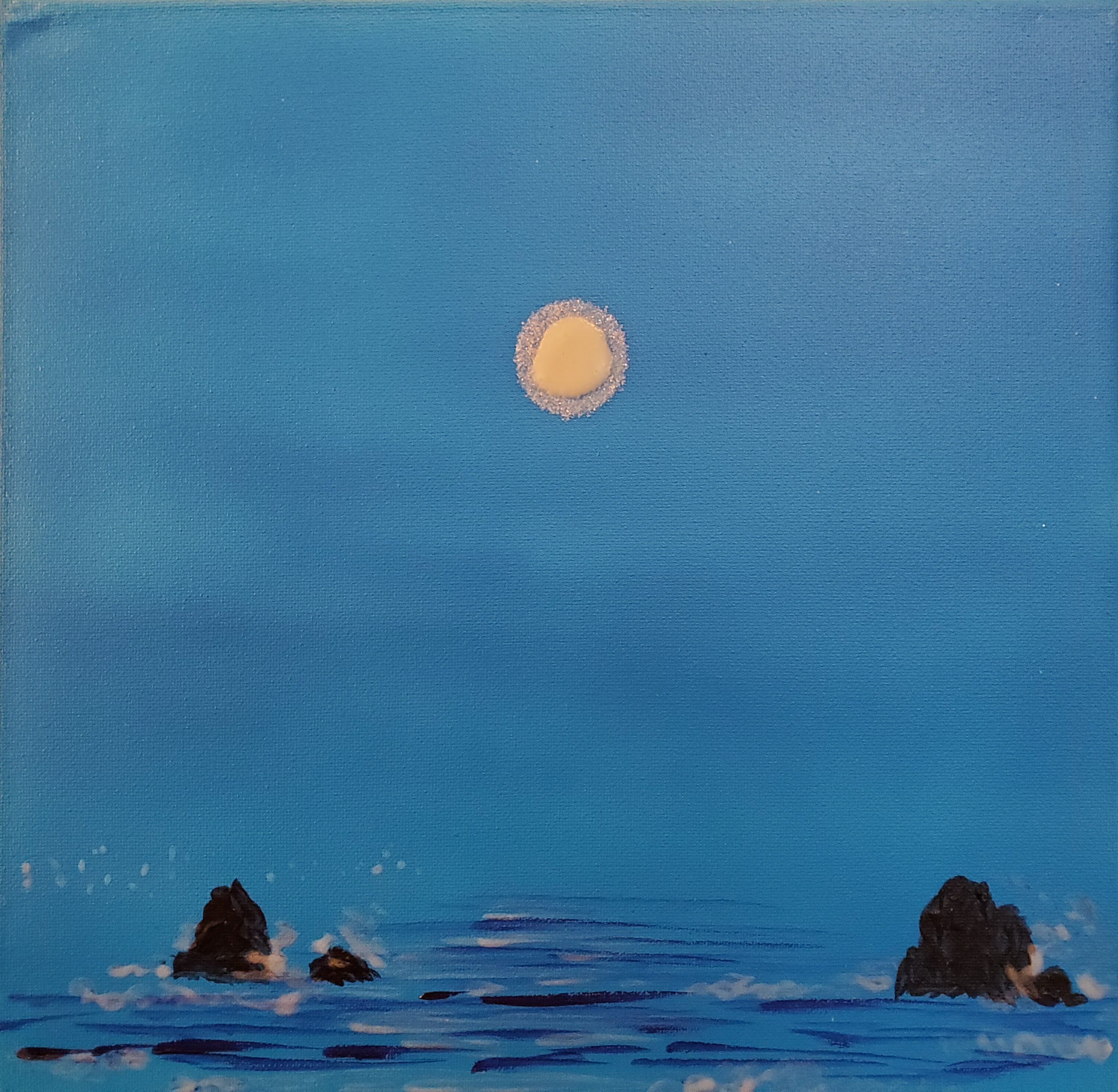
Meta Luna, 12″ x 12″ acrylic on canvas w/glow & glitter, 2022

So… new job, new habits. It’s a new beginning and I’m not wasting it. I made a point to start getting my hands manicured again – and I’ve stopped tearing at my cuticles (again) or biting my nails (again). Nice. I’m keeping an eye on work hours and setting health boundaries with my time. I’m putting my errands and to-do items at the top of my list each day and refusing to allow myself to push myself further down among my priorities. Feels good.

…This is perhaps a lot of words to say “it’s time to begin again”… 🙂

“Lazy” Sunday morning sipping coffee, feeling the lift of recent inspiration, and contemplating a recent discussion with my Traveling Partner on the topic of “second hand stress”. It’s a thing, Google it. (I got 462 million hits on that search term, with the first page of links mostly being pretty useful and informative – at least as of October of 2022). Here’s one article. My partner shared this one with me. I found it decently informative, with some useful suggestions for observing and managing second hand stress. Cures? lol. No. There is no “cure” for stress, if by “cure” you mean “some reliable means to wholly and permanently eliminate the subjective experience of stress”. That’s not a thing. Stress, in general, is something we experience for reasons. It has a purpose. There is no “make it go away” approach that suits every need in every moment, there just isn’t. I definitely recommend letting go of that notion. It’s not helpful.

“Anxiety” 2011

Learning to differentiate between stress (and anxiety) that rises to the level of becoming disordered, from the useful experiences of stress or anxiety that could prompt us to make a change, follow through on circumstances, or move away from danger, is an important bit of growth and personal development. For those of us with already-identified anxiety disorders of one sort or another, it becomes doubly critical to be able to distinguish between needed, useful, “positive” stress, and the chronic disordered sort that creates so much chaos and unpleasantness. Saying so doesn’t make it easier. (Keep practicing.) It’s fucking hard.

Learning to skillfully practice non-attachment and to avoid becoming fused with the emotional states of those around us is another incredibly useful (necessary?) skill for managing stress and anxiety. This is definitely an area that I personally need improvement on (for real). The very same love that draws me to my Traveling Partner and fills me with such delight and warmth and affectionate regard also (sometimes) sucks me into the trap of becoming fused with his emotional state – and when that emotional state happens to be one of frustration, annoyance, anger, sadness, or other “negative” emotional experiences, it can result in my becoming mired in despair and sorrow, or fear, or feelings of inadequacy (when I find myself unable to “fix it” for him). That is the sort of thing that can quickly build a mood-wrecking spiral of emotions in our relationship, as we trigger each other, back and forth, our individual experiences of anxiety and stress feeding on each other and just making things so much worse. Becoming skilled at emotional non-attachment without having to “run away” from an uncomfortable experience has the added result of making us that much more able to support one another.

…I gotta work on that…

Listening deeply is a skill that can be helpful for sorting out whether an experience of stress and anxiety is entirely my own… or a mix of my own and my partner’s emotional experience, or actually just nothing to do with me at all. Sometimes it is hard to listen to someone (particularly my partner) tell me that I’m causing their unpleasant emotional experience – but that doesn’t take away from the truth of it. Sometimes that’s just real, and saying so has nothing to do with intention or blame-laying. On the other hand, it’s their emotional experience, and regardless of cause that’s theirs to manage.

Because love matters more. “Emotion and Reason” 24″ x 36″ acrylic on canvas w/ceramic details and glow 2012

We’re each having our own experience. We each have our own “emotional climate” and “emotional weather”. We each live our own life, alongside those we love. We are not the being others see us as; we’re who we are. Individual travelers on life’s sometimes-shared journey. The perceptions of others don’t necessarily align with our perceptions of our self. Similarly, those people so dear to us, that we love so much..? They aren’t who we think they are, or even who we see them as; they are their own unique self, independent of our impressions, experiences, assumptions, thoughts, or recollections. Funny how often we think we “know” someone “better than they know themselves” and funnier still how rarely that is actually true. Worth thinking about.

The tl;dr? “Second hand stress” is a real thing. Our partners deal with it. We deal with it. Our colleagues deal with it. We deal with it. Every one of us. All the time. Our results vary. Breathe. Exhale. Relax. Let it go.

Begin again.

I am sipping coffee on a Sunday. Good coffee. Pleasant Sunday. I am reflecting on what makes some moments “special” and others so seemingly “ordinary” and wondering if there is really any difference outside my own subjective impression of each moment.

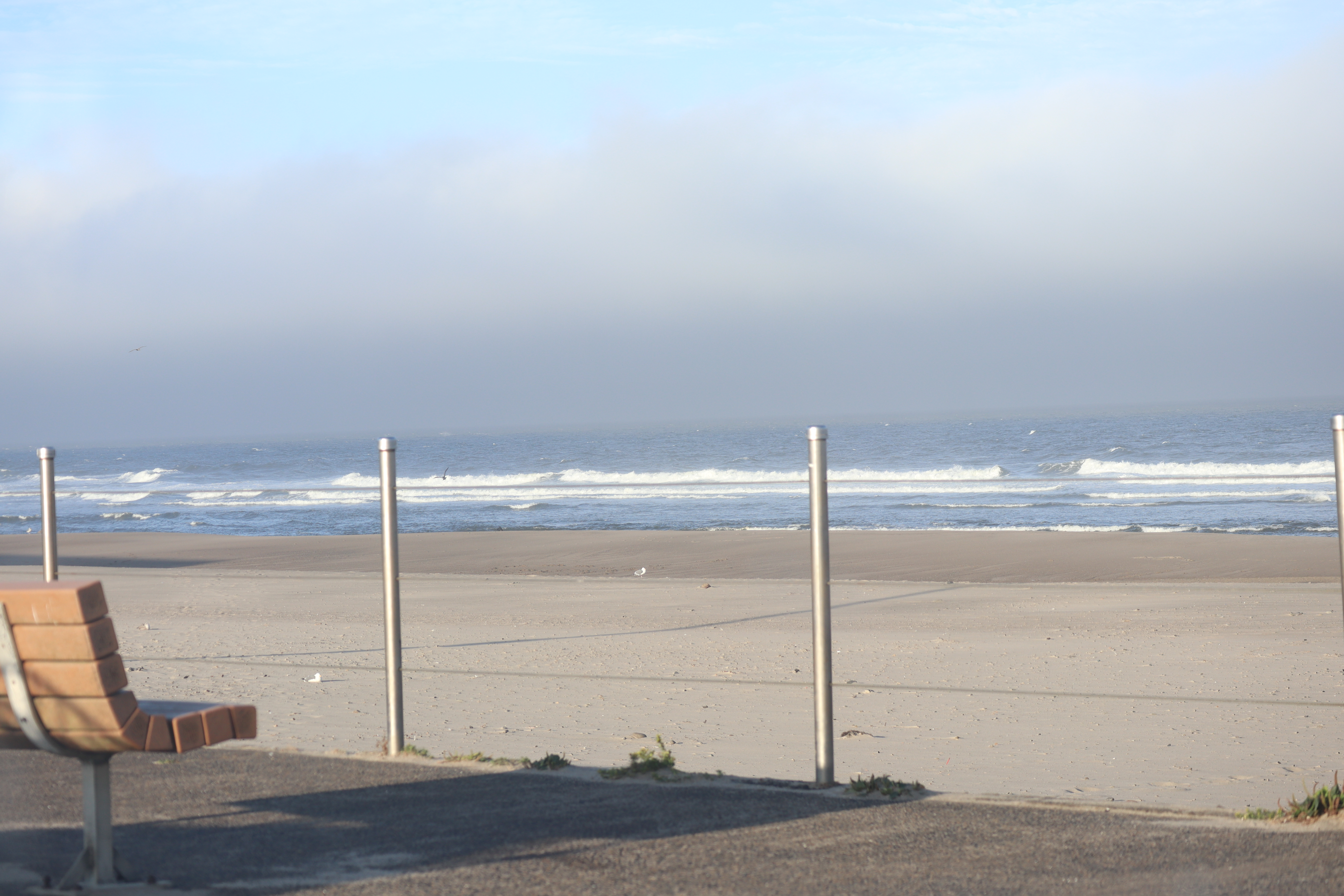
I recently went to the seashore for “a bit of a break” and some “me time” away. I walked the beaches and nature trails. I took pictures. A lot of pictures. Many of those were pictures of entirely ordinary birds standing or walking along the beach, or parking lot, or some strip of not-quite-lawn. Why did I bother? They weren’t special or fancy birds… just gulls, crows, jays, and little brown birds of a variety of sorts. What’s so special about those birds? Nothing, right? It was getting the picture at all that was special (to me) – taking pictures of birds is hard. lol

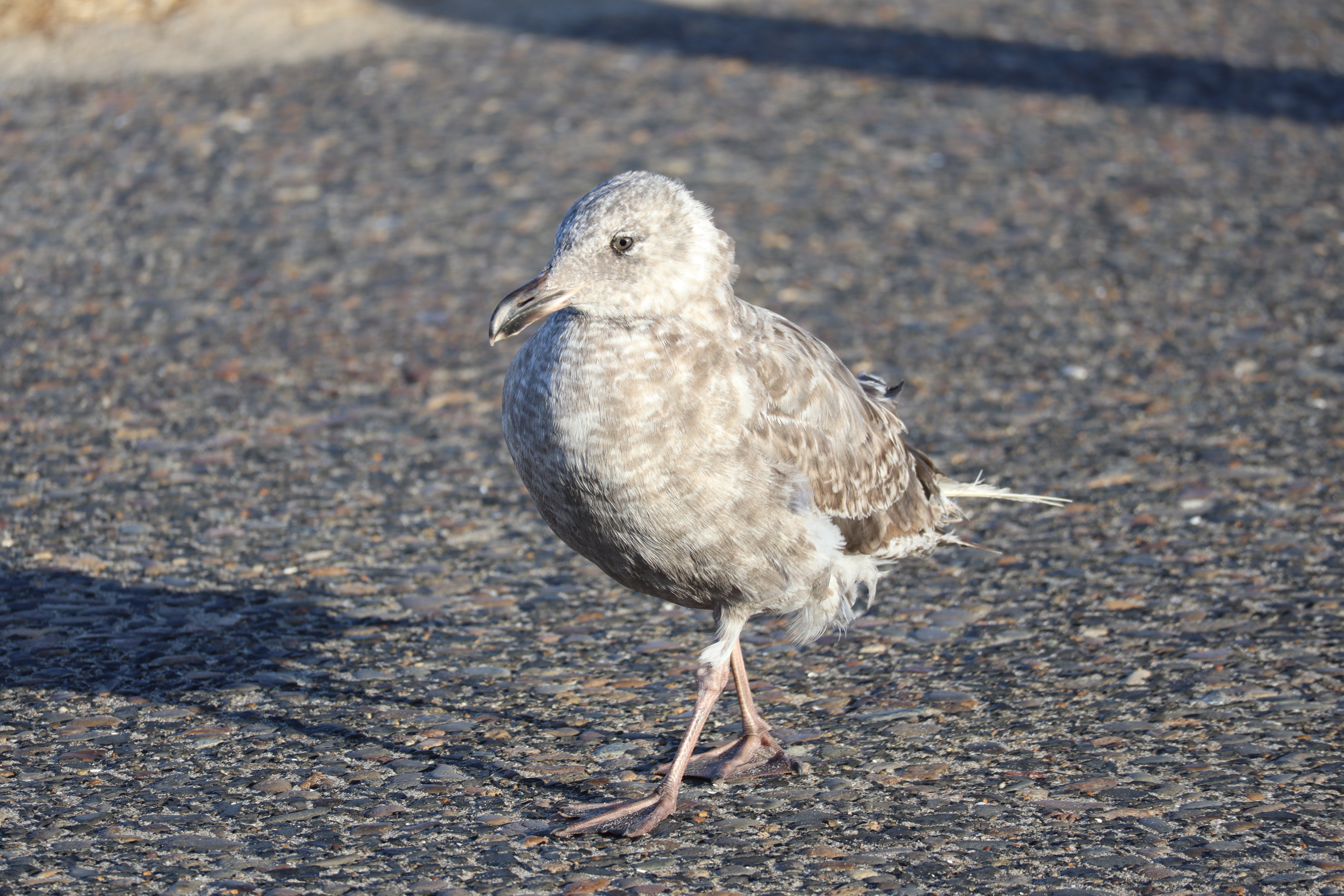
A dandy gull strolling along in a parking lot. He was aware of me, and unconcerned, just walking along.

Were the moments themselves particularly “special”? I don’t actually recall them as unusual moments in any way, aside from being part of this particular beach trip. If I were to glance quickly at one of the many hundreds of beach photos I’ve taken over the years, I’m not sure I could easily identify one trip from another. They illustrate a more general experience of “going to the coast” and “being at the seashore”. Special inasmuch as it is not the routine day-to-day experience of life…but often very similar to each other (if for no other reason that I am always me when I go do these things, and generally I am doing them with similar motivation and goals in mind).

This crow was not interested in being photographed and quickly walked away when it noticed my gaze.

In a certain sense, isn’t every moment “special”, in that there is a predictably finite number of them for any one of us? We don’t even have the advantage of knowing in advance how many there will be – only that they will eventually just run out, often unexpectedly.

Even for little brown birds on mellow summer days; moments are finite and limited.

It seems far more likely that all moments are special than to assume no moments are special – it’s easy enough to identify one or two special moments (just look for lingering significance or fond memories!), which immediately debunks the proposition that “no moments are special”. So… moments are special in a quantity somewhere between “some” and “all”. Tough to know going into a particular moment how special it may prove to be, even immediately afterward. Some moments are so spectacular it’s probably obvious that those will become lasting fond memories for someone (or recollections of profound tragedy – “special” isn’t always “good”, right?).

Thoughtful? Distracted? Just having a moment?

This last beach trip was special, for sure. I was out on the coast giving my Traveling Partner room to work on complicated CNC build details without me being underfoot, or becoming a distraction. That’s not what was special about it (for me), although it is always wonderful to know I am missed when I am away. What made it special was the combination of finding new awesome locations to take pictures, new trails to wander, and also – that’s where I was when I got the call from my new employer with their offer, and knew that I would be returning to work soon.

I got the news sitting in my car, parked, watching the waves roll in, just after getting off the phone with my partner, after receiving an automated rejection email sent in error. lol

When I was mired in the worst of my bullshit, baggage, chaos and damage, I often felt as if “nothing is special”. That feeling (and experience) has a name, anhedonia. Life feels gray, meaningless, and very much as though nothing matters and no effort will change that lack of meaning. It’s grim. It’s bland. It’s very hard to pull oneself out of that pit. I had it wrong. I mean, obviously (anhedonia is an experience of disordered thinking/feeling). It’s just that I’m sort of blown away by how wrong I’d gotten it (as a result of poor mental health) – because it’s apparent now that the truth is so much closer to “everything is special” (even to the point of potentially numbing us to the “specialness of the ordinary”).

I smile and finish my coffee. I’m happy to be where I am these days. I delighted with the pictures I’ve been getting of birds. I’m okay with the birds themselves being entirely ordinary. Most things are. Moments, too. I’m done with insisting that anything “special” also be entirely out of the ordinary – that seems, now, to be a needlessly high bar to set for what is special to me. Sure – love is special, and very much out of the ordinary… but a great cup of coffee, a picture of a bird that turns out well, or a gentle relaxed Sunday morning are all pretty ordinary experiences – and also comfortably special. I’m good with enjoying the specialness of the ordinary, and embracing contentment and joy.

It’s time to begin again.

I am sipping my second coffee of the morning, listening to garden videos, and reflecting on a recent profoundly pleasant compliment a colleague paid me. I realize I am allowing myself to maintain layered distractions, which doesn’t really work well for me. I pause the video to sit with my thoughts and focus on my writing. The coffee? Not much of a distraction, really, although I must admit I am not being especially mindful to juggle my coffee and my thoughts. Would be more mindful (and focused) to do one or the other (and I often sit silently sipping my first cup in a quiet room, or out on the deck, with that in mind).

Compliments feel really good. They also, rather oddly I think, feel like “validation” – as though indeed I had “earned” whatever lovely words came my way. It’s hard to get comfortable with the idea that these lovely words and pleasing compliments are no more personal (or “real” or “true”), than the unwelcome slights or criticisms (or trolling) I may be exposed to in the course of a day. It’s all very subjective, and tends to say more about the person giving the compliment (or insult) than the intended recipient. It’s an opinion. Often an unsolicited opinion. It’s for sure much nicer (even welcome) to hear pleasant compliments than to have to deal with insults, just saying; there’s nothing personal in either one.

On the other side of the interaction, it sometimes feels very gratifying to savage someone with words when we are hurt or angry. It’s reliably unkind. Generally unnecessary. Rarely actually useful. Certain to damage a relationship (if any exists). I know, for myself, the wiser choice is to consider my anger and hurt, discover the source of my pain and deal with it myself honestly, and let go of lashing out at some other person. Even if I feel I have been “wronged” in some way, it’s rarely worthwhile to seek some kind of paybacks or punishment, however emotionally satisfying it may feel to do so in the heat of the moment.

Compliments are altogether different. They feel just as good to give as they do to receive. Giving someone honest positive feedback, or offering a pleasant observation, and seeing them light up (because it does feel good to be appreciated) is a lovely mood booster. I tend to choose to give encouragement often and quite freely (while also keeping it authentic and real). I avoid adversarial or authoritarian sorts of criticism or negative feedback, mostly because it feels pretty shitty to receive it, and rarely gets put to any sort of good use as a result. There are better ways to communicate concerns, boundaries, needs, and expectations than through negative feedback and criticism. That’s my own position on it. Obviously, you do you – but if you explicitly prefer negative feedback (sometimes called “painful truth”), let’s not hang out, shall we? LOL It’s just not fun. We both have better things to do with our time. 😉

Every sunrise is a new beginning. What will you do with it?

I woke early-ish, but pretty near to the sunrise. I dressed quickly, and was surprised when I noticed my Traveling Partner already awake and up for the day. Generally, half the point of my morning camera walks is to give my partner a bit of time to sleep deeply without having to endure my snoring! He didn’t-quite-invite-me to stay home this morning, pointing out that since he was up I didn’t have to go… I really enjoy my camera walks and time out on the trail or alongside a meadow in the mornings, though, so I went. For me. It was nice. Chilly, though, and it is clearly autumn. There are fallen leaves on the street. The air has “that fall smell”. It wasn’t raining, though… I thought about driving out to the nature reserve to get pictures of water birds and nutria on the marsh, but changed my mind as I drove when I passed a flipped over wreck of a one-car collision that must have happened sometime late yesterday. I lost my enthusiasm to drive any distance – and almost turned around to return to the safety of home. Instead, I went to the nearby meadow trail that I favor on weekday mornings. The sunrise was lovely.

I am focused on the garden today (at least for now). I’ve got plants to plant. Seeds to sow. Beds to clean up for fall. Seeds saved from earlier crops to clean up and put in labeled packets for later planting. …I’ve got a list…

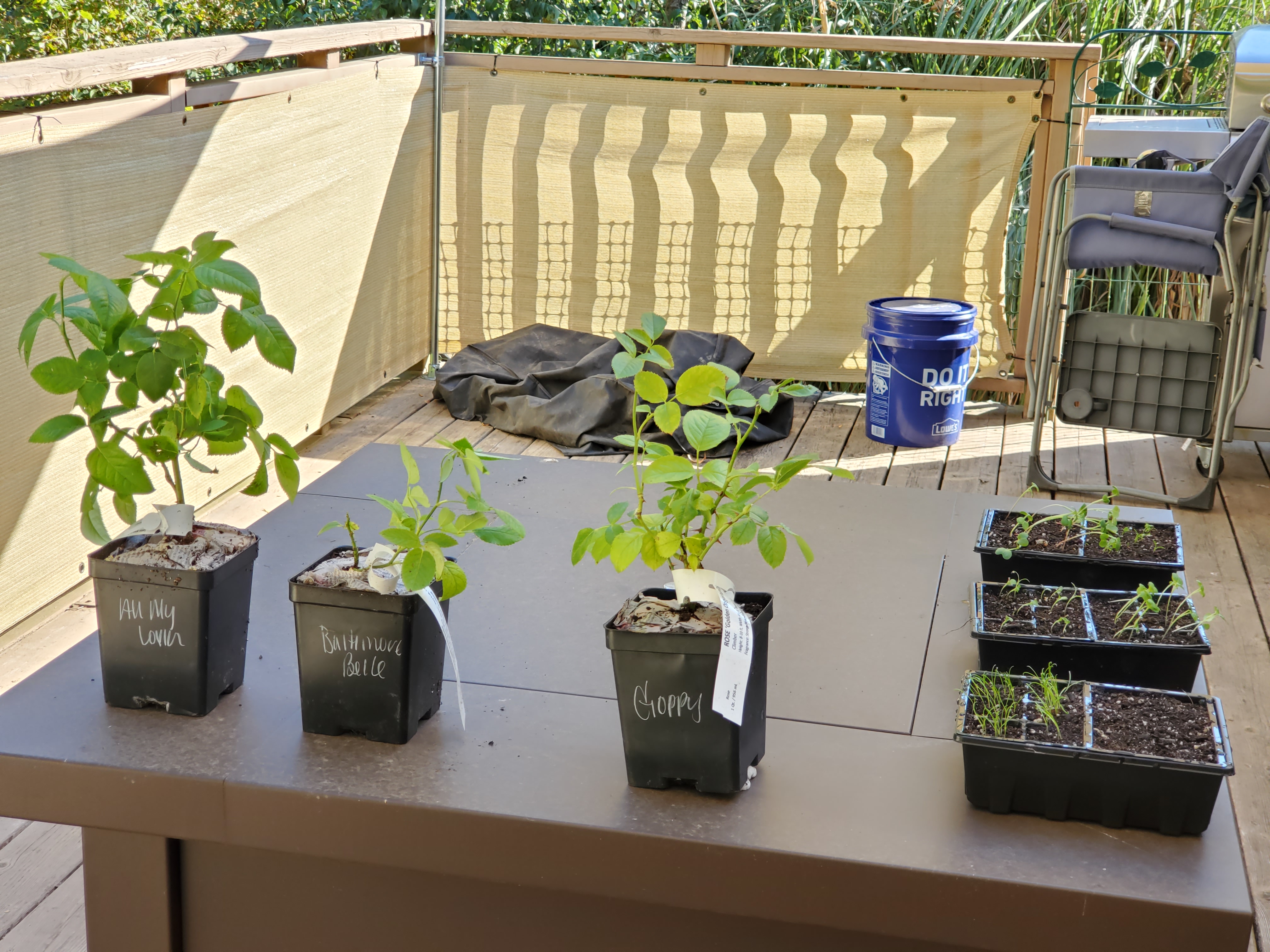
New roses waiting to be planted, and seedlings almost ready to be planted. There’s probably a metaphor here somewhere. 🙂

I guess what I’m saying is that this coffee has gone cold, and the garden isn’t going to take care of itself; it’s time to begin again. 🙂

I’m on my third coffee this morning. I slept poorly. My Traveling Partner slept poorly. I slipped away early in the morning hoping he would be able to get some better sleep, but that didn’t work out ideally well. I am sitting in the studio, drinking coffee and considering the causes and the potential outcomes, and wondering how best to be helpful.

“Being considerate” may very well be one of the most powerful skills (and practices) that a person can bring to social relationships (of all kinds). I have found it sometimes a bit difficult to define “consideration” – in spite of placing it high on my list of things to look for in relationships. I see people who are “considerate” practicing deep listening, explicit expectation-setting, skillful boundary setting, asking clarifying questions, testing their assumptions, yielding their natural desire to be “right” preferring to be kind, making an explicit effort to refrain from “centering themselves” in every circumstance or conflict, and being very comfortable making a prompt apology when another person points out a transgression. That seems like a lot to manage, but it really does all map to “consideration” – as in, genuinely considering what those around them are going through or may need.

Let’s be clear on one point; I don’t see considerate people being doormats or open to being abused or mistreated. They use boundary setting and expectation setting with great skill and comfort. They consider their own needs along side the needs of others, and make a point of practicing good self-care, too.

Lacking fundamental consideration leads people to casually mistreat others without intention – and often without noticing, and sometimes following-up by callously doubling-down on that mistreatment by attempting to deflect blame (by way of excusing their actions as “unintended”). Doesn’t really “make things right” to do things that way, and feels still more inconsiderate. People who are inconsiderate are by far more common than people who are considerate! It has become socially “normal” to see (or have to accommodate) inconsiderate behavior from others. People are busy. Self-involved. Dealing with their own shit. Struggling to heal trauma. Uneducated about the impact their choices/words/behavior has on others. Unaware how much difference consideration can make. There’s a lot going on with inconsiderate people. Most of it is even shit everyone has going on in life. One thing that isn’t going on with inconsiderate people; they are not being “considerate” (probably a huge timesaver, I don’t know…).

Consideration and considerate behavior isn’t “natural” to human primates; we learn it from our social group(s) – and therefore must teach it to our companions, explicitly. Children generally get taught “sharing” – a part of consideration. Every element of consideration probably needs to be explicitly taught. As a culture we’re clearly falling down on the job, there, based on the general rise in inconsiderate behavior, basic rudeness, and prevalent violence. I’m pretty certain that very considerate people are likely less prone to violence. It’s something to think about.

Today, I’m struggling with “my nature”; I tend to be very considerate (of others), but also tend to fail myself on the self-care and boundary-setting side of things. Knowing my Traveling Partner did not sleep well, I consider what I can do to be helpful, or to at least minimize the potential for stress or conflict in our relationship due to the both of us being fatigued and in pain. It’s complicated. What does he need? What does he want? Can I provide those things? Is guessing at them wise? What about me? What do I need, myself? Can I meet his needs and my own? When do well-intentioned inquiries about what he needs become invasive or pestering? How do I prevent my own boundary and expectation-setting needs from being swept aside in the pursuit of a gentle day together (under difficult circumstances)? What is reasonable, and what is excessive? How far do I take “not taking things personally” before it becomes entirely necessary to “push back” or point out a boundary – and how do I do that gently enough to also avoid sounding “bitchy” or unreasonable?

My anxiety simmers in the background, and that’s not at all helpful. Consideration, like “mindfulness”, is something that takes quite a bit of actual practice (at least for me). It’s not my “default” human behavior. It is, however, something I value quite a lot – enough to keep practicing. Enough that it matters to achieve mastery – and balance.

It’s a new day. There are opportunities to be a better person than I was yesterday. There will be verbs involved, and practice required. My results will no doubt vary. It’s a good time to begin again. 🙂