Do you ever wake up thinking, “good grief what a stupid fucking world we live in”, more in disappointed astonishment than anything else? Yeah… Looks like that kind of day. Distressing dreams, though I slept deeply and well, and only woke once briefly. I don’t dare look at the news this morning. I’m sure it will be more of the same bullshit: pointless dick-measuring by egotistical grifters in office, pettiness, violence, AI slop to dodge, and… sponsored content. No thanks. I’ll just have this coffee and then start the work day.
Yesterday evening I watched a favorite action movie to put myself in a better mood (totally worked). Why do people love action movies and superhero movies? Maybe because, generally, the good guys win – and it’s usually clear who the good guys are. Why movies about underdogs who make it? Because people want to feel, for a moment, that it is possible for anyone to overcome the impossibly unfair “rules of the game”, if only they “really try” (and get some lucky breaks). Time travel movies? Those fill a need to believe that some moment in the past was significantly better – or perhaps that some moment in the future may be – and that it is possible to get there. We don’t look too closely at the role we each (and all) play in the state of things as they are, here and now. (Who did you vote for in the most recent elections? How many letters or calls have you made to your representatives since then making your voice heard? Where are you protesting? What are you practicing?) I sigh to myself. I’m grateful for this cup of fairly average coffee; it’s hot, it’s coffee, it’s here, and it is a reliable small pleasure in life, no wishful thinking required.
I breathe, exhale, and relax. Yesterday got off to a difficult start and I felt tired and worn down all day. A night of rest helped immensely, and today looks brighter. The world hasn’t changed (much) in 24 hours. It’s still a fucking mess. I’m okay. This moment is okay. This cup of coffee is okay. The quiet conversations of the baristas working the early shift is calm in the background. One barista, about my age I think, calls me “hun”, and it is clear she worked a long time as a waitress in local diners; it is a particular kind of friendliness. A lucky bank-shot drops the tissue I used into the appropriate waste recepticle, without having to get up to pick it up off the floor. Small things can really color a moment or change the feel of an experience. I let myself enjoy the moment as it is. Here. Now.
How’s your moment? What will you do with it?
I take a breathe, which turns into sneezing and a couple more lucky tissue tosses into a waste recepticle I should probably step to, instead. I am feeling mostly completely over the flu, now, but I’ve got congested sinuses first thing in the morning to deal with, and some coughing as I call it a night, and a less than ideal limitation on my voice, which starts to give up on me about 45 minutes into any meeting that I attend. It will pass. All of it will pass, and it isn’t even strange for me; once that shit had moved into my lungs, I knew this was coming. I know it will pass – so long as I continue to get the rest I need, and practice good basic self-care. There are verbs involved and I do play a role in my successful recovery. I have to continue to make healthy choices as I get well.
I breathe, exhale, and relax. I take some time to meditate, just here in this warm coffee shop, before they turn on the background music for the day. I soak in the feeling of things being okay, here, now, without looking beyond this moment, or this place. Thoughts cross my mind like clouds in a breeze, observed but distant. Another breathe, another thought, another exhalation, another release of background stress or some element of anxiety. I relax. I sip my coffee. This simple practice is such a pleasant start to a day.
It is a busy month. I’ve got an old friend coming to visit over a week, about 10 days from now, and a return to the office in San Francisco at the end of the month, between those we’ve got to move our stuff from one storage place to another storage place. For me, this feels “busy”. I know people who would embrace such a “relaxed” calendar as “down time”. It used to be that I would ferociously push myself to approach life at a much more intense pace, with multiple events or activities on my calendar every day. I felt constantly harried, pushed, and often overwhelmed, my eye always on the clock. My temper flared with my impatience or my frustration, and I carried multiple sources of reminders, from sticky notes and calendar entries, to alarms, reminders, and notifications set in this or that app (once apps were a thing). I lived in my Franklin-Covey dayplanner. lol I thought it was a requirement of life, or perhaps unavoidable. I learned over time how many choices I was making, and I learned to make those differently, and accept who I am. I don’t like feeling “busy” or rushed, or harassed, or hurried. I like to focus, and work through a single task with my mind on that task while I’m doing it. I do my best work that way. It was a comfort to allow myself to move away from the internal “I’m great at multitasking!” lie and feeling chronically overconstrained and chased for my time and attention, to choosing what to put my attention on, and setting boundaries about my time and attention. I make different choices. I’m less anxiety prone, less forgetful, less irritable, less overwhelmed. This is better for me.
…It’s not a sprint, it’s not even an endurance race, it’s a very long walk on an undefined trail – without a map, just a hint of a sense of a destination in mind. lol Good thing I like to walk!
I’m not yet walking in the mornings, again. I do miss it. It’s quite cold right now, though, and my Traveling Partner has asked that I take better care of myself, and not be out in the cold and darkness, walking when I’m not at my best. That seems reasonable and sensible, and I agreed to “slow down” and take care of myself. It seems to be working out for the best. I’m still looking forward to mornings out on the trail, but circumstances play a part, and it may be February before that happens, just because there is a lot going on, and I’ll no doubt need my energy for those things in the short-term.
…I remind myself to mask up for travel at the end of the month; I’m fairly certain I was exposed to the flu on the aircraft that returned me home. I at least observed definite direct exposure to someone ill, when some mother’s half-wit feral adult-ish boy-child lumbered through the aircraft gracelessly, coughing down on other passengers as he passed by, not even covering his fucking cough with his sleeve. Rude. I was annoyed at the time, and that made the moment somewhat more memorable than other casual exposure was. I’d likely have gotten sick even if I never saw that guy coughing all over everyone so carelessly… I was on an airplane; the air is recycled.
You’d think we all learned one thing during the COVID pandemic – that wearing a mask (properly), washing our hands, and practicing a measure of social distancing reduces exposure to contagion. I mean, are you kidding? How is that not all so super obvious, given a moment of thought? …Or are you among the “you can’t force me to wear a mask!!” group, or the “the vaccine has more risk than the disease” group? Maybe you’re simply one of the “you can’t tell me, I’ve got my rights!” people seeing conspiracies everywhere? If you are, I mean you no harm. I’ve simply got my own opinion about these things (just like you) and I am doing what appears to be most effective and appropriate, with greatest potential benefit to my entire community. It’s not about me, really, is it? It’s about taking steps to create and maintain a healthy world in which humanity and all manner of living thinking creatures can thrive. Right? …Although I do prefer to take the steps that reduce my own exposure to illness, and increase my chances of survival, myself, because I have found life worth living. (Shit – I need to pick up more masks! I jot down a reminder on my shopping list, then remind myself to ask my Traveling Partner if we already have some at home and I’ve just forgotten where they are.)
…It took a while to get here…
I frown cynically at my coffee cup – Starbucks. Yeah, yeah, okay. I know. Conspiracies pull people in because – more than anything else – some prove to be actually based on real shit going on. Governments actually do some terrible things (looking your way ICE, and DOD) – and lie to hide those terrible things from view. That’s real. Honest ethical behavior in governance is rather unfortunately rare, and very unreliable. Conspiracy theories develop because corruption, lies, and bad behavior really exist, and are often covered up intentionally by the self-serving individuals who benefit from the bad acts. That’s real. When does a “conspiracy theory” become simply some terrible thing that a government, agency, enterprise, or individual has actually done? As an example torn from current events… “conspiracy theories” about Epstein now seem less like distortions of fact than legit actual coverups. People who were associated with him, or who have powerful friends who were associated with him, scramble to cover their involvement, but… It’s likely that it will all come out, eventually. Just like Watergate, just like MK Ultra, just like the Tuskegee Study. It’s even harder to pull off a really grand conspiracy in the digital age than it was in the days of snail mail and paper documents. I snicker to myself, pretty certain that the elected elderly of our gerontocratic government still don’t get that. You can’t hide secrets from the future.
I sigh quietly, thinking again that maybe there should be an age limit to holding office? I mean, seriously? I’d retire now if I could afford to – I’ve got plenty of my own shit to do, and so little free time. Why the hell do we persist in electing people to office who are old enough to be reliably out-of-touch with current science and the real, lived concerns and struggles of everyday people? I’m not saying we’d do any better to fill the government with Zoomers… they lack life experience and depth of knowledge (although, I can imagine scenarios where that might be an advantage) and their childhood basic socialization was impaired by the pandemic. I think the ideal is somewhere between the extremes; sufficient lived experience to have begun building wisdom, but young enough that resilience and passion prevent cyncism and resignation… 35 to 65 maybe? If the “full retirement age” is 67, wouldn’t it be easiest to simply make that the end point for a career as an elected official? I’m not chucking asparagus at my elders – far from it – but look where we are with a gridlocked partisan government of elders faced with the real issues springing up from new technologies they have yet to embrace and understand fully? This isn’t working. I sip my coffee and think about that. There could also be a case made for only electing people who have retired from successful first or second careers, who are “taking a step back” into governance, maybe as a measure of “return on investment” by bringing their years of experience into administration that benefits everyone? I still see potential improvements in our shared experience that could come from an age “cap” on elected officials, in the sense that advanced years definitely come with some cognitive and intellectual limitations for many people. It’s complicated, isn’t it?
I correct my posture and shift restlessly in my seat, as I write and drink coffee, killing time before the library (where I’ll be working) opens (it doesn’t open until 08:00). This is a nice start to the day; I hope the entire day is similarly pleasant. I smile quietly, thinking of my Traveling Partner sleeping at home. He seemed pleased yesterday that I found an option for my morning that neither had me knocking about the house noisily, nor out on the trail before dawn, while I’m getting over the last symptoms of the flu – a solution that also allow him to sleep later than I do. Today also being a work day for the Anxious Adventurer, my beloved will have the house to himself for awhile, and being winter there is no chance at all that people will be mowing or making a ton of noise. I envy his many opportunities to enjoy solitude at home, but it also vexes me that he has to endure that solitude far more often than he needs it. It’s hard to find the right balance and maintain it. I’m glad he’ll get some rest today; I know he needs that.
The minutes tick by. I’m content to let them, and powerless to stop them anyway. I think about the weekend ahead; I’m overdue to take down the holiday decor. I usually do it on New Year’s Day, a sort of ritual for starting the new year with “order” from the merry chaos of the holidays. This year, having been quite ill for a couple weeks, I just didn’t have the energy for it. This weekend, I’ll get that done. My new friend from work may come down to visit on Sunday… maybe. We take turns canceling plans for “reasons”, and enjoy a friendship that respects that. We’ve both got disabilities that make changes of plans rather common. We’re not frustrated by it, because we see each other, and we “get it”. She’s a “Millennial” (as is the Anxious Adventurer), and once we set clear expectations for each other regarding communication we’ve had no stress over it (neither of us treat text communication as “real-time”, prioritizing IRL interactions over texting, but neither of us care to pick up the phone, either). I grin, thinking about how much I enjoy her conversation… haven’t yet given her a pseudonym. I think about her for a moment, her smile, her current buzz cut colorful hair, her humor, her drama, her story to tell… After a few minutes, I realize this is not going to be an easy one. She’s chaotic, and has a good heart – like me. We like so many of the same things in a similar way, it sometimes feels a little eerie…we’re fun together. I realize that in some other life I could perhaps love her differently, but that’s not where/who we are in this lifetime. Romance isn’t what we’re looking for out of this, and friendship is definitely something we are enjoying, and which meets a real need (at least for me). I sip my coffee. The Chaotic Comic… I smile, because the words bring to mind her face, and the alliteration amuses me. This will do nicely.
I breathe, exhale, and relax. The cafe turns on their mediocre background music (sorry Taylor Swift, I can’t listen to you every day, just not my thing, personally). I pick up my phone and turn on private background music – Bluetooth straight to my hearing aids. lol Sometimes I fucking love the modern world. 😀
The clock ticks on – and it’s time to begin again.
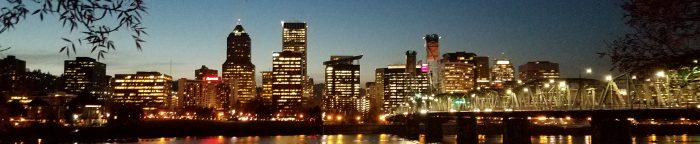


 Evening Light