Archives for posts with tag: there are verbs involved

I finished my very early morning walk in the darkness. I arrived at the office still very early. Still dark. There’s a busy day ahead, and plenty of uncertainty about the future to exist within, and to get beyond. I breathe, exhale, and relax. Sip my coffee. Office cold-brew, and it’s fine. Not great. Not bad. Completely unremarkable in every way. Another big, deep, breathe, and I exhale slowly, completely, and feel myself relax (again) as I do. My head is stuffy (which is what woke me early this morning). I’m feeling sort of cross for no obvious reason.

Do you find yourself wondering, ever, why it is I so often focus on just these random-seeming here-and-now details and observations? I mean, what’s the point, really? It’s all about those new beginnings; it is far more likely to get me somewhere if I begin where I am. That’s it. No mystery, it’s just a more effective choice to begin where I am, rather than begin somewhere else (whether that somewhere is in my thoughts or on the road to a destination). It’s rather difficult to go from Baltimore to L.A. if I’m standing in the wilderness of Montana. I can anchor myself in the present moment by making observations about my experience, here, now. It’s not a fancy practice, as practices go, but grounding myself in this moment, right here, through observation and awareness, is a very useful tool for establishing a feeling of perspective, and giving me a starting point on the next moment that is definitely connected to the moment I’m in. I’m struggling with my anxiety a bit this morning.

My stuffy head is vexing me. I woke around 03:30, and clearly wasn’t going to be able to sleep; I couldn’t breathe. I got up. Now I feel my anxiety surge – and each time it does, it is eased by blowing my nose and restoring my breathing. It’s almost comical. I notice the anxiety before I notice I can’t breathe, again. It is easy to conflate the anxiety with other potential causes – the world of 2025 contains plenty of anxiety provoking moments, events, and circumstances. I could get all spun up over this or that bit of doubt, fear, or insecurity and lose myself in my anxiety, but it’s really all about the breathing, right now (at least, that’s the situation this morning). Other mornings it is more about pain management. It’s frankly very rare that my anxiety is driven by some real world experience that is not about something to do with this bodily very human existence. lol It’s nearly always my body screaming at me through my emotions to do something about some uncomfortable physical experience.

I chuckle and think happy thoughts of my Traveling Partner sleeping at home. He is peculiarly sensitive to my breathing; if I am struggling, he’s aware and uncomfortable. I’m glad I went ahead and started my day, and I hope he can get the rest he needs. Maybe I didn’t wake him as I left? I sip my coffee and smile. Without any added context, thoughts of love create such beautiful points of bright light in a human experience. This love we share feels like a “firm foundation” for a good life.

There is real uncertainty, and real cause for anxiety now and then, those are ordinary commonplace parts of the human experience. I breathe, exhale, and relax. I let the thoughts come and go, and consider the moment and the day. “The winds of change are blowing,” said my Traveling Partner yesterday, while we talked about work, the future, and a certain “funny vibe” in the office. Change is. Am I ready? (Is anyone, ever, really “ready” for unexpected change, or change they don’t look forward to, or did not choose?) I don’t know how much longer this good thing may last… but… we never do, do we? Whatever it is, however good or bad, it is as temporary a thing as everything else. There is damned little permanence in a human lifetime, and trying to cling to what is, in defiance of what is ahead, isn’t an effective strategy.

I smile to myself, and in my thoughts I unfold the vastness of the menu in life’s Strange Diner. Any time now, it may be time to begin again… I wonder where this path leads?

This is about Ozempic and whether/why it amounts to “cheating” to achieve a weightloss result, and “aesthetic culture”, and moral failure, and self-control, and all manner of other related things that just happen to be all tangled up together in my own experience of life as an American woman carrying “a few extra pounds” (more than a few, unfortunately), viewed through the lens of my own experience(s). I’m providing this wee summary to more easily allow you to simply move on if the topic lacks interest for you, personally. 😉

…You could just watch South Park “The End of Obesity”…

When Ozempic became “a thing” in the news (early in 2022), it was mostly due to celebrity endorsements for weightloss and shortages having developed because it had become commonplace for people who are not diabetic to be prescribed a GLP-1 (which is what Ozempic is) for the sole purpose of losing weight. I’m not criticizing – whether you’re grossly obese, or just a few pounds over your “ideal weight”, we live in a world that puts a lot of emotional effort into blaming and shaming “fat” people, and puts a ton of emphasis on “thin is beautiful”. Thin sells products. So do feelings of guilt, shame, and envy. The conversation in the media immediately began swirling around who should have these GLP-1 drugs available to them, and why, and the 100% ridiculous (and unaffordable) cost of them to individuals (and insurers). Celebrities whose transformative weightloss was a topic of discussion were picked to pieces over did they use a GLP-1 or lose weight “the right way”? (Who decides that? It probably shouldn’t be a matter of public opinion.) The articles about terrible side effects followed. What I found interesting at the time was that the first GLP-1 approved for treating type 2 diabetes was approved in 2005. No fanfare. No media hype. No alarming back-and-forth about side effects. All that developed much later – after it was clear that GLP-1s could “cause weightloss” as a side effect, and they became popularly prescribed off label by GPs to clients who could afford them in spite of the offensively high retail price (long before insurers would cover them for weightloss).

…2005… They were in use for decades without any remarkable controversy. Safely. Huh.

When I started thinking about them and whether I might benefit from them, myself, I was only aware of them because of the media hype to do with weightloss, and that was where my own interest was centered. In spite of my type 2 diabetes, a GLP-1 hadn’t really been discussed. To be fair, I was not “open to” the diabetes diagnosis, in spite of serious difficulty managing my blood sugar (it seemed to clear up any time I corrected my diet by more or less eliminating sugars, and got my weight down a bit).

At one point, faced with quality of life and health threatening weight, and my difficulty managing it, (and my Mother’s similar challenges) I got serious with myself and managed to shed almost 150 lbs over about 18 mos. Over time, in part due to stress, in part due to health and mobility challenges of various sorts, I gained some of that back (and I’m not at my ideal weight). I lost a lot of it, again, then gained it back, again. It’s been a challenge and it’s a serious health concern. But – I did lose all that weight, without a GLP-1, or medical intervention of any sort. It is possible for many people (and for some people it just isn’t). I say this because my thinking on weight, weight management, and various medical options regarding weight management are built on my own experience, and are nuanced.

My thinking evolved over time, and I tried a lot of things to manage my weight when it became a problem. I was self-critical and hard on myself after I gained weight in my 30s. I wasn’t overweight “all my life”. I was healthy, fit, and a “curvy muscular” woman when I was in the Army. I was faced with a culture of “fat phobia” that tended to promote an unhealthy leanness that I could never catch up to with my muscles and curves. Emotionally, that was hard on me. I struggled to see my own youthful beauty. Society’s messaging was harsh and unyielding. Be thin. Non-negotiably, thin was “pretty”. Thin was “sexy”. I even achieved thin for awhile – it wasn’t healthy for me to be a size 0 at 5 foot 6 inches tall.

I’m bouncing around a bit here, sorry. The tl;dr is that I was “coached” over a lifetime that my weight was my own to manage, that the acceptable beauty standard was “thin” – preferably like a pre-teen girl – and that failing to achieve that standard was most likely a moral failure or a lack of effort on my part.

We each walk our own hard mile. I know I can (possibly) lose the extra weight I’m carrying, with a serious reduction in calories and an equally serious increase in exercise. That’s the basic deal; eat less and exercise, right? I’m also quite human. Mobility issues and disabilities often make exercise difficult or complicated (no jumping rope on this f*ed up ankle, I’m just saying – I’ve got limitations). Other medications prescribed for chronic medical issues can change the efficiency of my metabolism (or rob me of my will and energy). Food and great dining are truly among life’s most profound sensuous pleasures, and it can be difficult to say no to some treat. That’s just real. “Emotional eating”? Another challenge. The cost of healthy calories? Yet another consideration. Losing unhealthy weight is not universally easy.

I decided against Ozempic for losing weight, figuring I’ve lost weight before, I’ll just keep at it, you know? The side effects sounded pretty terrible, too. And the expense?! Nope. Not worth it.

My blood sugar was still an issue. I was also struggling with other health concerns, including chronic fatigue, irregular (high) blood pressure, fairly ordinary middle-age stuff like that. My doctor was insistant this time; my diabetes needed to be managed. We tried this, we tried that, I eventually ended up on metformin (common), which immediately reduced my quality of life with near-daily diarrhea that had the potential to force me to stop going out on the trail for long walks. It was problematic. That’s how I ended up giving a GLP-1 a try – for my diabetes. (That I refused to acknowledge for far too long, and now deal with the consequences of that stupidity.)

Within 60 days, my blood sugar stabilized – normal. Then my blood pressure. I felt somehow younger and more energetic, too. Weird. Yes, I also lost the near-constant focus on food, eating, meals, sweets – in fact, meal planning to cook meals for my family became almost impossible for awhile. lol I just wasn’t thinking about that. Huh. Wild. I did lose some weight. Quite a bit, actually. Then – relatively recently – on a stable dose that serves me well with few side effects (and those I do experience are manageable) – my weightloss stalled completely. I still get all the other benefits, but a new reality unfolded; for those of us who take a GLP-1 for diabetes, there may not be quite so much aggressive weightloss coming quite so easily. There are still verbs involved. I still need to do an appropriate amount of healthy exercise (human primates need exercise, that’s just part of what we are as creatures). I still have to manage my calories. Frustrated with my lack of weightloss, and watching my Traveling Partner manage his post-injury weight gain (and closing in on his goal weight quite efficiently) I finally put the pieces together…

…I can be a little slow sometimes…

It’s the calories. I’m still eating calories that support the weight I am right now. I started on the GLP-1, reduced my caloric intake as a byproduct of starting on that medication and losing interest in grazing, snacking, sweets, and impulse eating, and lost weight until I got down to the weight supported by the calories I’m actually consuming. Well… that’s fucking obvious. LOL So… now I have to reduce my caloric intake down to the quantity that will support my goal weight. Of course. Nothing to see here. So ordinary it is almost not worth mentioning.

You know what is worth mentioning? It’s just mean to be shitty to people because of their weight. It’s definitely rude and inappropriate to comment on it. You know what else is worth mentioning? It’s also not your fucking business how someone is managing their weight, their health, or even what their personal aesthetic is. Do you think someone is “fat”? Well, okay, you have an opinion. Let it go. If nothing else, just shut up about it. It’s most likely not your concern, at all. Is taking a GLP-1 “cheating” if the only reason someone takes it is to lose weight? I’m not sure that’s anyone else’s business in the first place. It’s inappropriate to be taking it for vanity weight loss if there are shortages that prevent people who need it for their health and wellness from getting it. Still not your business (or mine) who is taking it and why. Like any other medical question, that should be a conversation between patients, doctors, and caregivers. (And it would be nice if we could all take a wee step back and stop hassling each other over appearances.)

Taking Ozempic has changed my life a lot. My poor impulse control, for example, just generally (a byproduct of head trauma and brain damage) is now notably improved (like, just not a problem), which was an unexpected bonus. I’m not distracted by the thought of food or thinking about the next meal, which means I can more easily focus on what I’m doing. I have more energy, which means I get more done – including the exercise I need to be healthy. My health concerns are mostly well-managed – and this has also resulted in being able to discontinue several other medications, which means my body isn’t having to process all those other drugs. My quality of life has improved, and sure, I lost some weight. There are still verbs involved. I still have to watch what I eat, still have to get healthy exercise and take care of myself. It’s not a fucking magic trick, it’s just a treatment for a medical condition.

So, here I am, 16 months after starting on a GLP-1, still human. Still working, walking, and being. My results vary. I still have to practice healthy practices. Still have to eat right and exercise. Ozempic isn’t a cheat code to perfect health, or achieving my ideal weight – it’s just a medication. It does have serious side effects, which seem to be more of a problem for consumers taking larger doses solely for weight loss, than for people taking it to manage their diabetes (something to consider). For me, the side effects have been mild, and limited, and tend to be easily managed by eating a healthy diet that maximizes plant fiber, protein, and includes plenty of water. I supplement my magnesium. I make a point to drink a yogurt beverage with reliably good quality active cultures (several varieties). I feel good on this GLP-1; it changed several “small things” and has had big results (for me). It’s not for everyone, I’m sure.

One day at a time, one step at a time, I walk my own path. You’re walking yours. Neither of us actually have the time to waste on criticizing other people’s choices with regard to personal aesthetic or health, wellness, or beauty. There’s too much to do in life to waste it on interfering in other people’s business, isn’t there? I hear that clock ticking in the background (here in the office, it is a literal ticking clock that I hear). It’s already time to begin again…

I am in some pain this morning, but nothing like the worst of the pain I am sometimes in. My coffee is good, better than average, not my best cup of coffee. I sit quietly with my thoughts and my coffee, after my walk, giving my illness-weakened body a little time to recover from the walking, before I get started on the housework. It’s a cycle, this thing we call “life”. Many cycles, actually, on a journey without a map. It’s easy to narrow my focus to just this space, here, and to allow life to become the cycles, and little more: sleep, walk, coffee, write, work, rest, cook, clean-up, sleep again. We are so much more than the practical task-handling endeavors that are necessary to build and maintain the quality of life we enjoy. Getting ahead sometimes means so much more work, and doesn’t always feel “worth it”. Falling behind happens in an instant of thoughtless ease. Finding balance is sometimes difficult, and I sometimes sacrifice self-care on the alter of providing for others (not a healthy approach long-term).

…I am fortunate and grateful for a partnership that encourages self-care and provides mutual respect…

My Traveling Partner inquired about the towels this morning – were there more clean washcloths somewhere? I’d fallen behind on the laundry, and committed to doing that today. When I arrived home, he’d already started a load of laundry. Having help feels good. Going into the kitchen, I see dishes piled in the sink… no one thought to do the dishes while I was down sick. I frowned at the dishes while I made my coffee. I’ll get those done, too. (Definitely feeling better.) Pride of place, a sense of responsibility, and a desired quality of life tend to be enough to keep me at it, but omg, sometimes it is just much. (I will admit that one practical factor in my lifelong decision to remain child-free was my total lack of interest in doing all that work for some other human being, most especially without help!) It’s hard to take the breaks I sometimes need, to maintain my own health. Finding balance is complicated… Why is that so complicated?? I think it comes down to a couple of things: perceptions, perspective, and reality.

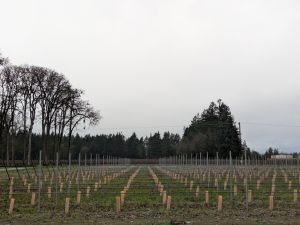
One perspective on a morning walk.

How we perceive things around us changes when we’re ill, or under stress, and our priorities may change in the moment. How people around us perceive things may be something we have to consider, too, depending on their needs and expectations. When we’re sick, we may care a lot less about the vacuuming, or clean kitchen counters. When we’re exhausted, we may not care at all about whether the shower is actually clean. All very human, eh? But, once we’re back at our best, those things may suddenly matter quite a lot, and begin to be something causing us stress or a sense of urgency.

…I really dislike the “catch-up cycle” after I’ve been ill; I feel like I have to get it all done immediately to make up for any allowances and accommodations I made while I was ill (a thoroughly internalized lingering consequence of growing up in a culture of misogyny that treats the unpaid labor of women as a given, and a notable bit of baggage I am still dragging around)…

A very different perspective, focused on the details.

Our perspective on the details, large and small, is a big piece of how we set our priorities. Do the dishes in the sink matter a lot – or just matter a lot to me? Is it a health concern, or just something I don’t like to see? (Some people don’t care that much about having a handful of dishes in the sink that need to be washed and put away, other people have literal break-downs over a dirty glass sitting in an otherwise clean sink. Care to guess which one I am?* Which one are you?) Sometimes, keeping an orderly house feels more like self-care than it feels like manual labor. In circumstances such as that, it’s pretty easy to “stay caught up” and handle those tasks as a sort of meditation. Things do take the time they take, though, and housekeeping workload stands in defiance of creative endeavors. Again with the challenge of finding fucking balance. I sip my coffee and laugh at myself. I do what I can. I get a lot done – often more than I think I’m capable of, because even there – my perspective may not be a close fit to reality.

What we turn our attention to, and how we think about what we perceive, changes how we understand the world around us.

…Reality always gets the last word…

When I had cats years ago, I was quite convinced that my cats didn’t do any damage to my home, and that I kept things sufficiently tidy that there was “no cat smell”. That’s perception. I felt that the benefits to having my (much loved) cats far outweighed any concerns about cleanliness or health – lots of people have, and love, cats. That’s perspective getting involved. We don’t all see the world the same way, nor do we all share the same understanding of it. Still, the world is the world – reality largely ignores our perceptions and perspectives and just does its own thing. My apartment full of cats (and many of my belongings) definitely “smelled like cats” – but I didn’t perceive it (acclimation) and didn’t understand what I didn’t see as a potential concern (lack of adequate perspective). The reality of it was unmistakable when I moved out. (As well as difficult and costly to remedy, due primarily to my lack of awareness over time.)

I’m just saying – I have a shitload of housework to catch up on, after a camping trip, several days in too much pain to do housework, and then being sick. I can chuckle over how human that is, now. It is what it is, right? Now I see the need, because my perspective has shifted with my improving state of wellness. I feel the internal pressure to make it a very high priority – putting myself at risk of poor self-care. Cycles and balance. Fuck. Adulting is hard.

…We do become what we practice…

I sigh to myself and glare into my now-cold coffee. I’ve got a to-do list ready, and it’s a long one (but I’ve got the entire weekend to work on it). It’s already time to begin again – I’ll just be over here doing my best.

*Both. I’m rather inconveniently both of those types of people with regard to the dishes. Baggage is heavy… I remind myself to put some down.

People are funny. We like “certainty” – a lot. Which is sort of inconvenient considering just how much uncertainty there really is in life. In the world. In the way events play out over time. Change something, and other things also change. Make a choice, and events unfold differently than if a different choice were made. Seems like something that could be very useful, if embraced and understood, but understanding uncertainty is not the easiest thing… Perhaps better to simply accept it?

Uncertainty often comes with a measure of anxiety – maybe that’s why we seem to dislike it so much? (I say “we” because observation strongly supports that this isn’t a “me” thing at all; it’s quite common.) It’s often easier to just lock in on a particular way of thinking, or a particularly useful piece of “knowledge” in some moment, and insist on the rigid truth of it, compared to gently accepting a lack of knowledge and making room for curiosity (or unknown truths to come). It’s scary to be uncertain (sometimes).

I sip my coffee, thinking about yesterday. I drove home feeling more and more ill. Knowing a colleague had tested positive for COVID that very morning, and that I’d had some measure of exposure, I allowed myself the thought that maybe it was “all in my head”, just from hearing that news. My Traveling Partner looked at me when I arrived home; I definitely did not look well. So, maybe it isn’t COVID (test was negative), but I’m down with a bit of something or other. Uncertainty. I don’t even know “how sick I am”, or whether this will pass quickly. I just feel like crap. I woke after sleeping something more than 13 hours, interrupted briefly a couple times. I know better than to return to sleep without having my coffee; that’d just be an unwanted headache later. So. I’m up for a little while, sipping my coffee and thinking my thoughts, which are sort of gloomy and unsettled, probably because I’m sick and just not feeling my best. Harder to be positive.

Aches, pains, symptoms… The coffee is good, though, and I’m “okay” for most values of okay. There’s nothing really going on. It’s just a sick day at home. I’m grateful that it isn’t a whole lot worse. I’m grateful to have sick days. I’m grateful for an employer who strongly discourages working while ill. I’m grateful for a Traveling Partner who cares for me, and the Anxious Adventurer, who was willing to run to the store for sick day supplies so I didn’t have to go out and spread this around. This is a good place to be. It could most definitely be worse.

I reflect on the value of “leaning into” uncertainty, and take a moment to contemplate what could be driving my background anxiety lately. Work, maybe? I face things head-on. I look over my resume. I love the job I’ve got, but there’s still “uncertainty”. The human mind is an amazing thing; it’s hard not to be aware (on some level) that my average churn point professionally as been around two and half years for almost two decades. I think that’s on my mind as I approach my two year anniversary on this job. Instead of being fussy and anxious, I update my resume and reflect on the work, the job market, the opportunities (or lack of) for advancement. I think about “what I want to be when I grow up” (still my favorite way to frame the question of what to do professionally). Most of my job changes have been about better benefits, or more money, some have been about redirecting my skills into a different role or industry. I think about money, and debt, and the distance from here to retirement. I think about life. There’s a lot of uncertainty. Running away from it doesn’t change that. I make some updates to my resume, and look at job opportunities in my areas of interest. Curiousity is a soothing anodyne to anxiety, and I use it frequently. It has been more effective than any of the drugs I was ever given. (CBT for the win!)

I breathe, exhale, relax, and let all that go for awhile. My head aches, but I don’t know if it’s “just the usual headache”, or if it’s “viral”. Uncertainty. Doesn’t matter. Once this coffee is gone, I’m going back to bed anyway. I decide on a video game to “go with” the last of my coffee. I’ll begin again later.

How long can you sit on hold before you feel angry? Once that point comes, when the person on the other end finally gets to your conversation, how do you feel? How do you behave? What is that experience like for you? Okay… and what is that experience like for them?

…It is a Wednesday afternoon, and a busy work day. I’m on hold as I write this…

…I’m scheduling – or trying to – an important appointment for my Traveling Partner. I’ve been on hold for awhile now (22+ minutes), following our initial exploration of available dates/times. When the Scheduler returns to the call, she’s identified an available care provider in a good timeslot, on a day we can make work. I’m grateful. Is it aggravating to wait on hold for 23 minutes to complete this task? I guess, sure, (especially considering the dreadful hold music). On the other hand, not being a dick about it and just doing the needful in a pleasant (and accepting) way resulted in a better outcome – the appointment is made, and it fits in with other scheduled plans, and isn’t at some ridiculously inconvenient time, and the person on the phone was happily willing to help me (likely in part because I wasn’t penalizing that person for the circumstances). That’s as nearly ideal as scheduling an appointment can get, is it not? Why bother being angry over it? The time it took? The fact that it was necessary at all? That seems both ridiculous and petty. (Things take the time they take.)

…Patience is sometimes easier said than done, I know…

So many healthcare providers are trying to meet too much need with too few resources. Raising patient costs doesn’t close the gap created by too few doctors, nurses, technicians, specialists, or administrative and domestic staff needed to meet the need for care in a community. Anywhere. Lashing out at someone whose job is to be helpful is not the shortest path to the desired outcome, for sure. So, I generally try to do better than that when I have to be on the phone with someone (in spite of my dislike of being on the phone, generally).

…Or in slow checkout lines…

…Or queued for some event…

…Or trying to find parking in a busy area…

…Or when I’m frustrated by something but having to also deal with another human being about something else altogether unrelated…

…Or when I’m feeling anxious and other unrelated shit seems to be going wrong “for no reason”…

I guess I’m saying that when we make room to feel our feelings, then also make a committed (mindful)(self-aware)(disciplined) effort to also behave in accordance with our understanding of our “best self”, and treat others with kindness and patience, and take steps to manage the potential volatility of our emotional experience of the moment, everything that flows from that skillfully managed moment turns out better than it would have if we’d lashed out angrily, gone to pieces, or punished the people around us for the experience we are having. Long sentence, but it is what I was hoping to communicate as a single idea. It takes practice. I know my own results vary – so I am assuming yours likely will as well. Still, we do become what we practice.

…When I practice patience, I become more patient, in a broader variety of interactions…

I took those notes while I waited on hold. I made the appointment, and moved on with my day with very little aggravation. Turned out to be a pleasant afternoon. I woke up this morning, a little early, head kind of stuffy, but generally merry and feeling okay. It’s a new day. A new opportunity to practice the practices that create a good life and healthy interactions with the people in my life. A new cup of coffee.

Ah, but how to “practice” such things could be a question, eh? I’ve got good and bad news – and it’s the same news – the “how to” is “easy”, inasmuch as it is not complicated, but it is also quite “hard”, because there is a measure of trial and error, repetition, studious self-reflection, and failures that precede new attempts, involved in practicing such things. The tl;dr is that I’ve simply got to do the thing I wish to practice in the fashion I’d like to see myself handle such things – and if I fall short, I’ve got to recognize that, acknowledge it, accept it (and any consequences), understand that failure, and keep working on it – through all the unsuccessful well-meaning attempts, and the likely lack of consistant positive reinforcement from others (because, of course, they are having their own experience). Doing better than my current best is reliably always a “work in progress”, and it’s a process of incremental change over time, which can be somewhat unsatisfying. If you change what you practice though, change itself is inevitable.

We have so many opportunities to do better. We also have a bunch of opportunities to do worse – to escalate interactions that start going wrong, to inflame emotions beyond what is appropriate, to create conflict where none existed, to hurt each other when we could be lifting each other up. We have choices. Making an effort to choose wisely in each interaction, each day, is itself a choice. What are you really going for? Where does your path lead? How do you want to be remembered?

Sometimes it’s hard to wait in line (or, to wait at all) – but the payoff is the thing we’re waiting for, the wait time itself is largely irrelevant. Sometimes it’s hard to be patient in the face of silly questions or constant interruptions when we’re trying to get something done – but the quality of those interactions are often far more important in our lives that the thing we’re focused on doing. Sometimes it’s hard to listen considerately while someone is talking – even though we asked the question being answered, and wanted the information. These are all moments that could use our best self (and more practice). I sip my coffee and think about the many times I’ve made shit so much worse than it had to be. Being entirely human, I’m likely to do that again in the future at some point – but that isn’t going to stop me from doing my best each day to be the best version of the woman in the mirror I can imagine, with what I know now. I’ll simply keep practicing. We become what we practice.

Stick with the basics – it’s a great place to start.

Make it as difficult as you want, I guess. Complicate things as much as you think you must. Telling yourself it “wasn’t your fault” or that you “couldn’t help it” when things go awry doesn’t change the fact that you had (and made) choices. I personally think it is generally a poor choice to willfully make shit worse than it has to be. It’s worthwhile to practice doing better than that. I think back to the abrupt and very final end of my second long-term relationship (and one that felt, at that time, truly committed and “forever”) – it was over circumstances that spiraled around “making things worse”, until the last thread of my affection was stretched to a breaking point, and suddenly snapped. In mere hours I went from needing to “take a minute” to calm myself, to wanting to have “a couple days alone” to think things over, to “we’re done, I’m out of here”. It probably didn’t have to go like that, but it definitely did – and it was a choice. I sit reflecting on that for some minutes, and comparing that to the way my Traveling Partner and I typically work things out together (it’s very different, and I am grateful for the effort we both put into talking and listening).

“Emotion and Reason” 18″ x 24″ acrylic w/ceramic and glow details, 2012

Choosing not to make things worse is both a choice and also a practice (if you make it one). I look out into the cloudy sky and think about emotional storms, and emotional choices, and how significant emotion is in this human experience. We are creatures of both emotion and reason, and we tend to lead with emotion, and respond to emotion before reason ever joins the conversation. That’s not a character flaw, it’s what we are. Our emotional intelligence is probably pretty critical to our success (and survival), overall (depending on how you define success, sure; my definition includes a reliable feeling of well-being and contentment).

…When I practice calm, I become a calmer person across a broader variety of experiences…

Developing one’s emotional intelligence is not as easy as saying it is an important detail. I get it. We don’t typically include such things in K-12 education (when it is most needed) in a structured informative way. Few of us grow up in families with even one emotionally intelligent adult in the household, based on my limited experience and casual observation. We don’t put much time (and probably no funding) into developing tools that can be shared with people who are seeking to do this work themselves. Like a lot of things, it’s complicated by various hidden agendas and resource limitations. When I began down this path, myself, the help I needed was sometimes not easy to find. I was fortunate to find a good therapist whose expertise was a good fit for my needs (and fortunate to be able to afford it at the time I needed it most). My reading list has some items specific to emotional intelligence (although we don’t all learn through reading). It is unfortunate that some of the best work on the topic is sometimes a bit of a slog to get through, requiring what feels like “real work”. (If I were pressed to make specific recommendations, I’d probably point to Buddha’s Brain, and Emotional Intimacy for the studious, and The Four Agreements for those looking for a quick introduction with illuminating allegories.)

…You’ll have to walk your own path, and do your own work, this is not a negotiable detail…

It’s a journey with a lot of stairs to climb…

I sit with my coffee and my thoughts awhile longer. How did I even get to this place, this morning? Oh, right, reflecting on the importance of being patient (and pleasant) while on hold trying to make an appointment for my beloved. I chuckle to myself, aware how valuable those skills are in so many day-to-day interactions. My results vary. I keep practicing. I glance at the time – it’s already time to begin again.