
How long can you sit on hold before you feel angry? Once that point comes, when the person on the other end finally gets to your conversation, how do you feel? How do you behave? What is that experience like for you? Okay… and what is that experience like for them?
…It is a Wednesday afternoon, and a busy work day. I’m on hold as I write this…
…I’m scheduling – or trying to – an important appointment for my Traveling Partner. I’ve been on hold for awhile now (22+ minutes), following our initial exploration of available dates/times. When the Scheduler returns to the call, she’s identified an available care provider in a good timeslot, on a day we can make work. I’m grateful. Is it aggravating to wait on hold for 23 minutes to complete this task? I guess, sure, (especially considering the dreadful hold music). On the other hand, not being a dick about it and just doing the needful in a pleasant (and accepting) way resulted in a better outcome – the appointment is made, and it fits in with other scheduled plans, and isn’t at some ridiculously inconvenient time, and the person on the phone was happily willing to help me (likely in part because I wasn’t penalizing that person for the circumstances). That’s as nearly ideal as scheduling an appointment can get, is it not? Why bother being angry over it? The time it took? The fact that it was necessary at all? That seems both ridiculous and petty. (Things take the time they take.)
…Patience is sometimes easier said than done, I know…
So many healthcare providers are trying to meet too much need with too few resources. Raising patient costs doesn’t close the gap created by too few doctors, nurses, technicians, specialists, or administrative and domestic staff needed to meet the need for care in a community. Anywhere. Lashing out at someone whose job is to be helpful is not the shortest path to the desired outcome, for sure. So, I generally try to do better than that when I have to be on the phone with someone (in spite of my dislike of being on the phone, generally).
…Or in slow checkout lines…
…Or queued for some event…
…Or trying to find parking in a busy area…
…Or when I’m frustrated by something but having to also deal with another human being about something else altogether unrelated…
…Or when I’m feeling anxious and other unrelated shit seems to be going wrong “for no reason”…
I guess I’m saying that when we make room to feel our feelings, then also make a committed (mindful)(self-aware)(disciplined) effort to also behave in accordance with our understanding of our “best self”, and treat others with kindness and patience, and take steps to manage the potential volatility of our emotional experience of the moment, everything that flows from that skillfully managed moment turns out better than it would have if we’d lashed out angrily, gone to pieces, or punished the people around us for the experience we are having. Long sentence, but it is what I was hoping to communicate as a single idea. It takes practice. I know my own results vary – so I am assuming yours likely will as well. Still, we do become what we practice.
…When I practice patience, I become more patient, in a broader variety of interactions…
I took those notes while I waited on hold. I made the appointment, and moved on with my day with very little aggravation. Turned out to be a pleasant afternoon. I woke up this morning, a little early, head kind of stuffy, but generally merry and feeling okay. It’s a new day. A new opportunity to practice the practices that create a good life and healthy interactions with the people in my life. A new cup of coffee.
Ah, but how to “practice” such things could be a question, eh? I’ve got good and bad news – and it’s the same news – the “how to” is “easy”, inasmuch as it is not complicated, but it is also quite “hard”, because there is a measure of trial and error, repetition, studious self-reflection, and failures that precede new attempts, involved in practicing such things. The tl;dr is that I’ve simply got to do the thing I wish to practice in the fashion I’d like to see myself handle such things – and if I fall short, I’ve got to recognize that, acknowledge it, accept it (and any consequences), understand that failure, and keep working on it – through all the unsuccessful well-meaning attempts, and the likely lack of consistant positive reinforcement from others (because, of course, they are having their own experience). Doing better than my current best is reliably always a “work in progress”, and it’s a process of incremental change over time, which can be somewhat unsatisfying. If you change what you practice though, change itself is inevitable.
We have so many opportunities to do better. We also have a bunch of opportunities to do worse – to escalate interactions that start going wrong, to inflame emotions beyond what is appropriate, to create conflict where none existed, to hurt each other when we could be lifting each other up. We have choices. Making an effort to choose wisely in each interaction, each day, is itself a choice. What are you really going for? Where does your path lead? How do you want to be remembered?
Sometimes it’s hard to wait in line (or, to wait at all) – but the payoff is the thing we’re waiting for, the wait time itself is largely irrelevant. Sometimes it’s hard to be patient in the face of silly questions or constant interruptions when we’re trying to get something done – but the quality of those interactions are often far more important in our lives that the thing we’re focused on doing. Sometimes it’s hard to listen considerately while someone is talking – even though we asked the question being answered, and wanted the information. These are all moments that could use our best self (and more practice). I sip my coffee and think about the many times I’ve made shit so much worse than it had to be. Being entirely human, I’m likely to do that again in the future at some point – but that isn’t going to stop me from doing my best each day to be the best version of the woman in the mirror I can imagine, with what I know now. I’ll simply keep practicing. We become what we practice.

Make it as difficult as you want, I guess. Complicate things as much as you think you must. Telling yourself it “wasn’t your fault” or that you “couldn’t help it” when things go awry doesn’t change the fact that you had (and made) choices. I personally think it is generally a poor choice to willfully make shit worse than it has to be. It’s worthwhile to practice doing better than that. I think back to the abrupt and very final end of my second long-term relationship (and one that felt, at that time, truly committed and “forever”) – it was over circumstances that spiraled around “making things worse”, until the last thread of my affection was stretched to a breaking point, and suddenly snapped. In mere hours I went from needing to “take a minute” to calm myself, to wanting to have “a couple days alone” to think things over, to “we’re done, I’m out of here”. It probably didn’t have to go like that, but it definitely did – and it was a choice. I sit reflecting on that for some minutes, and comparing that to the way my Traveling Partner and I typically work things out together (it’s very different, and I am grateful for the effort we both put into talking and listening).

Choosing not to make things worse is both a choice and also a practice (if you make it one). I look out into the cloudy sky and think about emotional storms, and emotional choices, and how significant emotion is in this human experience. We are creatures of both emotion and reason, and we tend to lead with emotion, and respond to emotion before reason ever joins the conversation. That’s not a character flaw, it’s what we are. Our emotional intelligence is probably pretty critical to our success (and survival), overall (depending on how you define success, sure; my definition includes a reliable feeling of well-being and contentment).
…When I practice calm, I become a calmer person across a broader variety of experiences…
Developing one’s emotional intelligence is not as easy as saying it is an important detail. I get it. We don’t typically include such things in K-12 education (when it is most needed) in a structured informative way. Few of us grow up in families with even one emotionally intelligent adult in the household, based on my limited experience and casual observation. We don’t put much time (and probably no funding) into developing tools that can be shared with people who are seeking to do this work themselves. Like a lot of things, it’s complicated by various hidden agendas and resource limitations. When I began down this path, myself, the help I needed was sometimes not easy to find. I was fortunate to find a good therapist whose expertise was a good fit for my needs (and fortunate to be able to afford it at the time I needed it most). My reading list has some items specific to emotional intelligence (although we don’t all learn through reading). It is unfortunate that some of the best work on the topic is sometimes a bit of a slog to get through, requiring what feels like “real work”. (If I were pressed to make specific recommendations, I’d probably point to Buddha’s Brain, and Emotional Intimacy for the studious, and The Four Agreements for those looking for a quick introduction with illuminating allegories.)
…You’ll have to walk your own path, and do your own work, this is not a negotiable detail…

I sit with my coffee and my thoughts awhile longer. How did I even get to this place, this morning? Oh, right, reflecting on the importance of being patient (and pleasant) while on hold trying to make an appointment for my beloved. I chuckle to myself, aware how valuable those skills are in so many day-to-day interactions. My results vary. I keep practicing. I glance at the time – it’s already time to begin again.



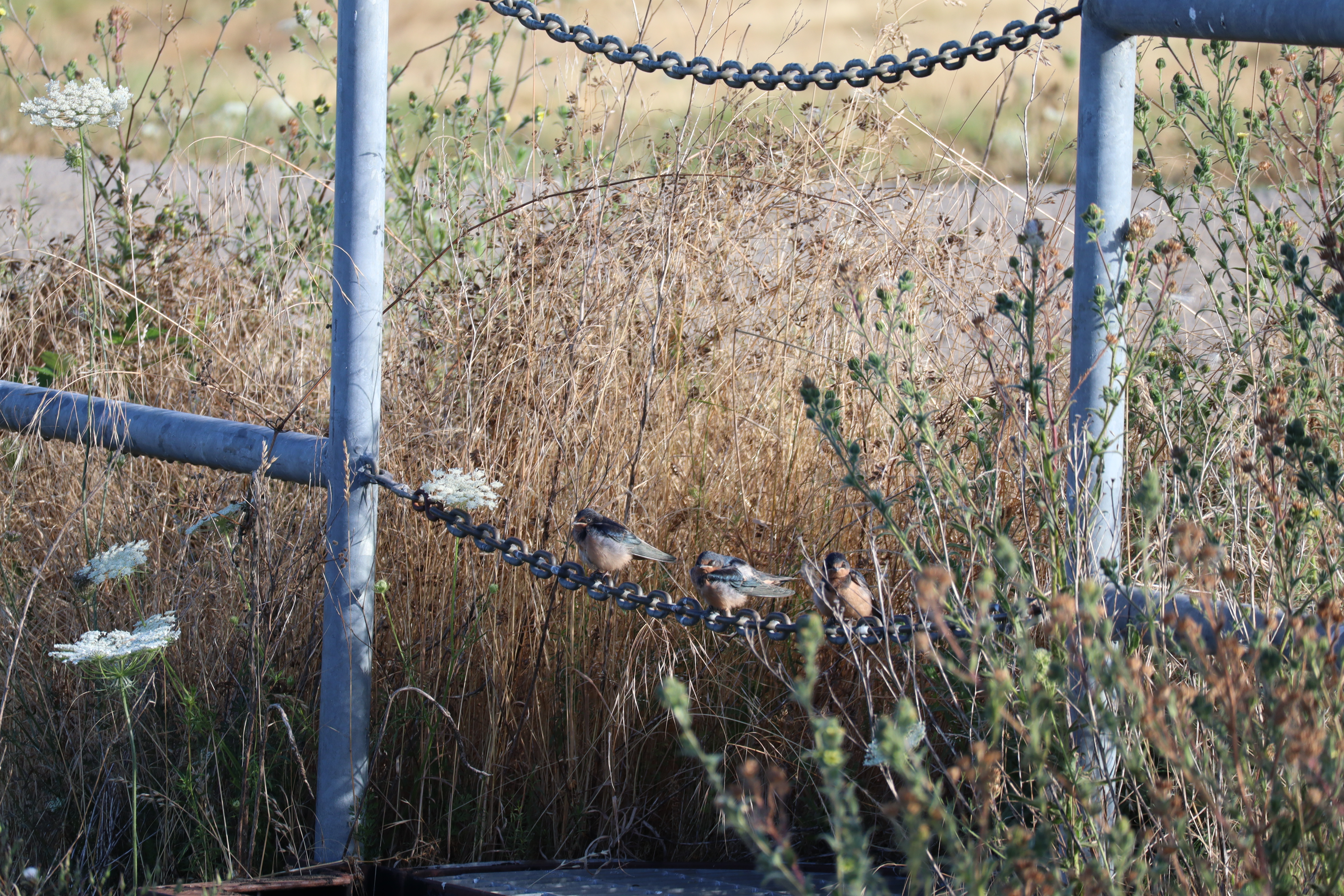



 Evening Light